



Leapfrog Works – Contaminants Extension Technical Webinar Series
This 4-part technical webinar series is designed for you to learn how to bring contaminant data directly into your Leapfrog Works 3D geological models and
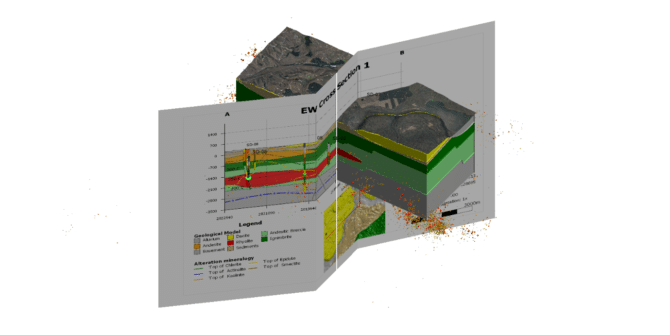
Significant section improvements for more powerful modelling
Section tools in Leapfrog are a powerful way to interrogate modelled data while maintaining a dynamic workflow. With this new release, we have made significant
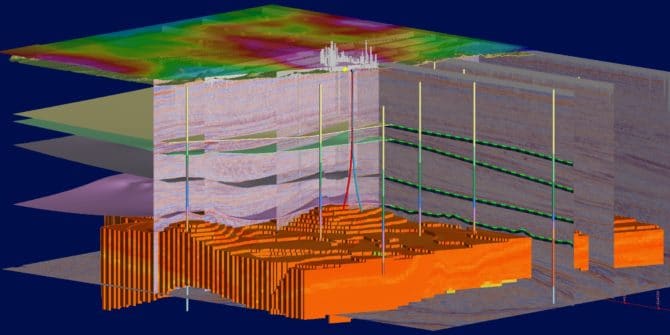
Unlocking the power of SEG-Y with Leapfrog
The launch of Leapfrog 2021.1 introduces a powerful new capability supporting the import of SEG-Y data. This new workflow enables geoscientists to visualise and conduct
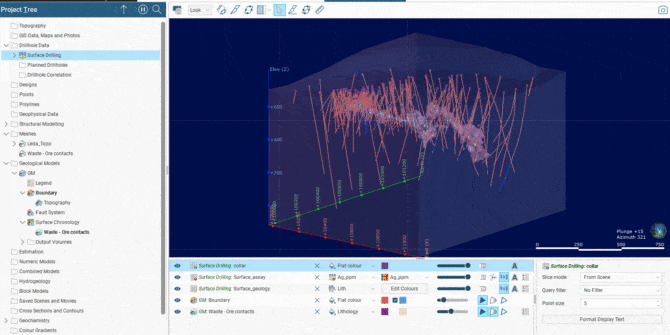
Import multiple drillhole, borehole and well data sets into your Leapfrog project
Drillhole, borehole or well data (collectively termed drill data for this blog) is at the core of every Leapfrog project. The drill data object provides
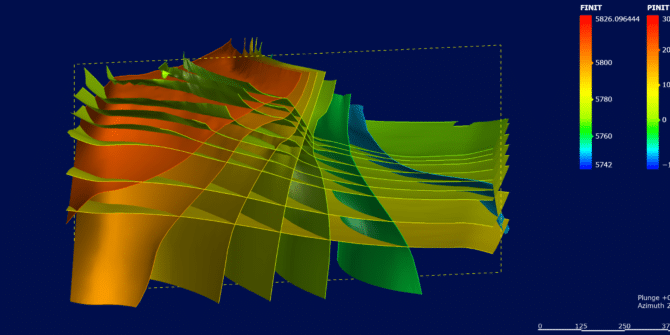
The role of the 3D Geological Model in Geotechnical BIM
Building Information Modelling/Management (BIM) is defined as ‘Use of a shared digital representation of a built asset to facilitate design, construction and operation processes to

‘Why I use the Contaminants extension for Leapfrog Works’ with Eryn Torres at Geosyntec consultants
who will explain why she is using the Contaminants extension in her daily workflows, the variety of projects and range of applications she uses it

How to convert RGB colour to HEX colour codes
Objective: I have colour codes imported as RGB numbers, how do I convert them to a HEX colour to be viewed in Leapfrog? Resolution: To
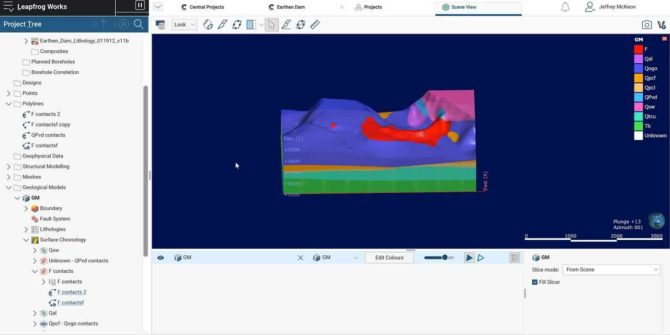
Interoperability for Geotechnical Workflows
The steps required to create a geological model in Leapfrog Works through analysing the slope stability results in SLOPE/W are presented. Interoperability is key for
