


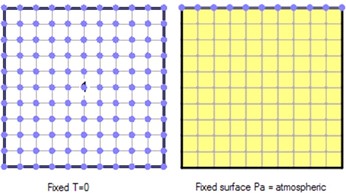
Verification – Heated Closed System
The objective of this example is to verify the simulated change in pressure of a constant volume of dry air subject to an increase in
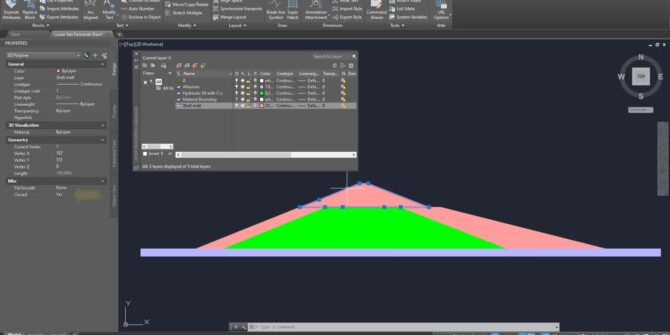
Importing Regions from AutoCAD
Seequent's Kathryn Dompierre covers the following material in this webinar: what geometry types can be imported into GeoStudio; methods for creating well-defined polyline geometry in
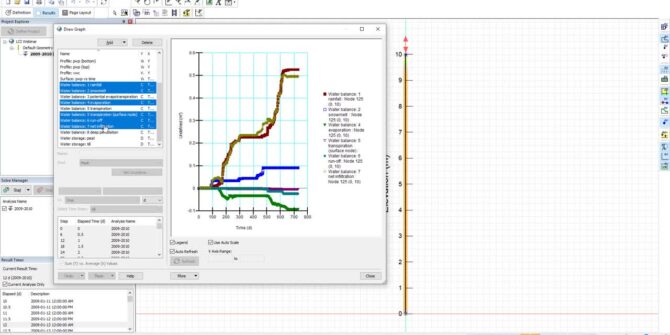
Land Climate Interaction Analysis with SEEP/W
Seequent's Kathryn Dompierre covers the following topics in this webinar: potential interactions at the ground surface related to water flow and storage; the mass balance
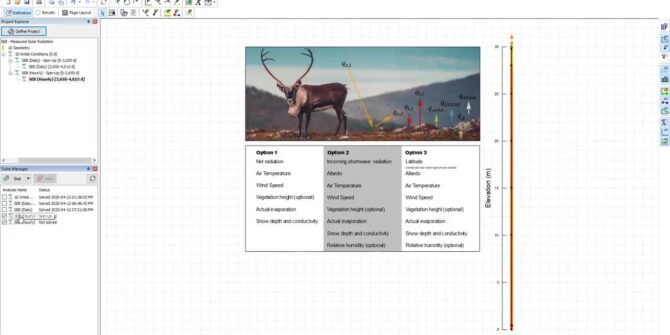
Surface Energy Balance in TEMP/W
Seequent's Marc Lebeau covers the following topics in the webinar: a review of the heat fluxes at the ground surface; how and when the Surface
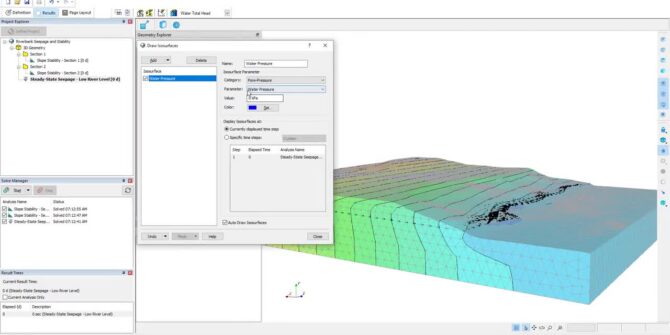
SLOPE/W Stability Analysis using 3D Seepage Results
Seequent's Kathryn Dompierre covers the following topics in this webinar: steps for setting up a 3D seepage analysis in SEEP3D; how to create cross-sections in
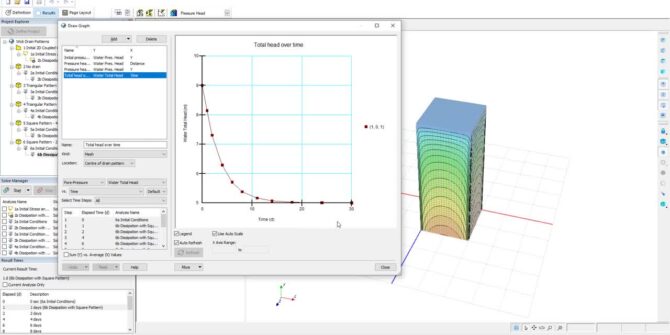
Wick Drain Spacing Analysis
Seequent's Kathryn Dompierre reviews the following material in this webinar: review of a SIGMA/W coupled consolidation analysis with no drain; replication of the SIGMA/W consolidation
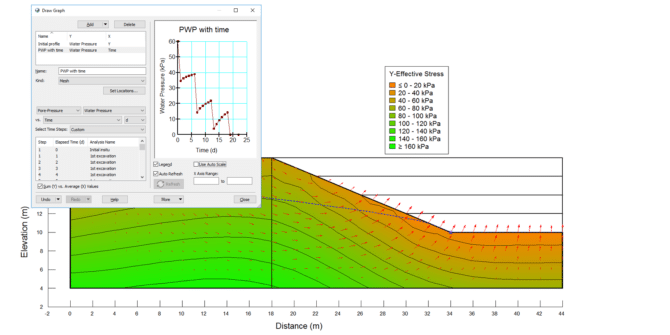
Strength Reduction Stability
Introduction Stability by strength reduction is a procedure where the factor of safety is obtained by weakening the soil in steps in an elastic-plastic finite

Tempe cell simulation
Introduction The volumetric water content function, also known as the soil-water characteristic curve or water retention curve, can be determined using various laboratory methods. If
