



What’s new
Imago
Imago 2026
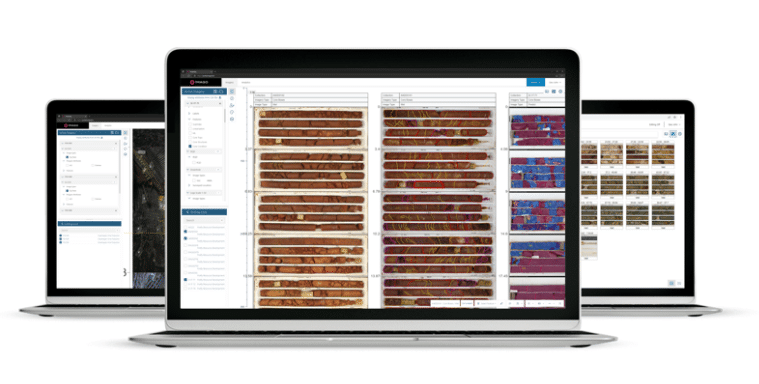
Imago is a cloud-based solution for managing, cataloguing and visualising large volumes of geoscientific imagery. Imago includes integrated extensions for image capture in the core shed, field image collection through mobile devices and a suite tools and APIs for integrating imagery.
Help and Support
Browse by topic or resource type
Help

Software downloads

Seequent ID and account management
Subscriptions, licenses and billing

IT Administrators
Product help
Support
Seequent Learning

Online Learning
Remote & in-person training
Knowledge Base

Seequent Community
Support requests
Managing your support requests
Here at Seequent we are committed to seeing the possibilities and anticipating what is next. As such, we are continuously evolving to better serve you. You can now actively monitor and manage your support request via MySeequent using your unique Seequent ID.
System requirements
Imago has minimum system requirements to ensure the best experience while using the product. To ensure you have the correct setup, we have provided an overview of the minimum and recommended requirements to operate your Imago subscription.
Imago portal
| Minimum | Recommended | |
|---|---|---|
| Web Browser | The current version of Chrome, EDGE, Safari or Firefox | Chrome |
| Display | 1280 x 720 on 14” Display | 2160 x 3840 (4k) on 32” Display |
| Controller | Trackpad, Mouse, Touch Screen | High precision mouse with wheel |
| Operating system | Windows, Mac, Android, iOS, macOS | Windows, macOS |
| RAM | 4GB | 16GB or better |
| Internet Connection | 10 Mbps download, 1 Mbps upload, latency 150ms | 150ms200 Mbps download, 20 Mbps upload, latency 20ms or better |
Imago capture for android
| Minimum | Recommended | |
|---|---|---|
| Operating System | Android 13 or newer | Android 15 |
| Model | Samsung A13 or equivalent Google Pixel 4 or equivalent | Samsung XCover 6 Pro Google Pixel 7 or better |
| Storage | 32 GB | 64 GB or better |
| Internet Connection | wifi | wifi + 5G mobile network or better |
Imago capture for iPhone & iPad
| Minimum | Recommended | |
|---|---|---|
| Operating System | iOS 16 or neweriPadOS 16 or newer | iOS 18 iPadOS 18 |
| Model | Apple iPhone 11Apple iPad Air 4th Generation | Apple iPhone 16 - Apple iPad Pro 11” 4th Generation |
| Storage | 64 GB | 128 GB or better |
| Internet Connection | WIFI + 4G mobile network | WIFI + 5G mobile network or better |
Imago connect + tools
| Minimum | Recommended | |
|---|---|---|
| Operating System | Microsoft Windows (64-bit) 11 | Microsoft Windows (64-bit) 11 |
| Storage | Hard Disk (HDD) 250 GB capacity, 25 GB free space | Solid-State (SSD) 1 TB or larger capacity, 100 GB free space |
| Memory | 4 GB RAM | 16 GB RAM |
| Display | 1280 x 720 on 14" Display | 1920 x 1080 on 17” Display |
| Processor | Intel Core i3, i5, i7 or i9 CPU, 7th Generation or later. AMD Ryzen processor 1st Generation or newer | Intel Core i3, i5, i7 or i9 CPU, 10th Generation or later. AMD Ryzen processor 3rd Generation or newer |
| Internet Connection | 10 Mbps download, 1 Mbps upload, latency 150ms | 200 Mbps download, 20 Mbps upload, latency 20ms or better |
Imago capture X for Windows
| Minimum | Recommended | |
|---|---|---|
| Operating System | Microsoft Windows (64-bit) 11 | Microsoft Windows (64-bit) 11 |
| Storage | Hard Disk (HDD) 250 GB capacity, 25 GB free space | Solid-State (SSD) 1 TB or larger capacity, 100 GB free space |
| Memory | 4 GB RAM | 16 GB RAM |
| Display | 1280 x 720 on 14" Display | 1920 x 1080 on 17” Display |
| Processor | Intel Core i3, i5, i7 or i9 CPU, 7th Generation or later. AMD Ryzen processor 1st Generation or newer | Intel Core i3, i5, i7 or i9 CPU, 10th Generation or later. AMD Ryzen processor 3rd Generation or newer |
| Internet Connection | 10 Mbps download, 1 Mbps upload, latency 150ms | 200 Mbps download, 20 Mbps upload, latency 20ms or better |
| Canon Cameras | Canon EOS R6 Mark II, Canon EOS R8, Canon EOS R50, Canon EOS R7, Canon EOS R10, Canon EOS R3, Canon EOS-1D X Mark III, Canon EOS-1DS Mark III, Canon EOS Kiss X10i / EOS Rebel T8i EOS 850D, Canon EOS R5, Canon EOS R6, Canon EOS 250D, Canon EOS 90D, Canon EOS Kiss X10 / EOS Rebel SL3 / EOS 250D / EOS 200D II, Canon EOS R, Canon EOS RP, Canon EOS Kiss X90 / EOS REBEL T7 / EOS 2000D / EOS 1500D, Canon EOS REBEL T100 / EOS 4000D / EOS 3000D, Canon EOS 1500D, Canon EOS 6D Mark II, Canon EOS 9000D / EOS 77D, Canon EOS Kiss X9 / EOS Rebel SL2 / EOS 200D, Canon EOS Kiss X9i / EOS Rebel T7i / EOS 800D, Canon Rebel T7i, Canon EOS-1D X Mark II, Canon EOS 1300D, Canon EOS 5D Mark IV, Canon EOS 80D, Canon EOS Kiss X80 / EOS Rebel T6 / EOS 1300D, Canon EOS 5DS, Canon EOS 5DS(R), Canon EOS 760D, Canon EOS 8000D / EOS REBEL T6s / EOS 760D, Canon EOS Kiss X8i / EOS REBEL T6i / EOS 750D, Canon Rebel T6i, Canon EOR R1, Canon EOS R5 Mark II | EOS R6 Mark IIEOS R8EOS R5 |
| Nikon Cameras | Nikon Z9, Nikon Z6 II, Nikon Z50, Nikon Z5, Nikon Z6, Nikon Z7, Nikon Z7 II, Nikon Zfc, Nikon Z30, Nikon D5600, Nikon D850, Nikon D3400, Nikon D5, Nikon D500, Nikon D5500, Nikon D810A, Nikon D810, Nikon D780 | Nikon Z9 Nikon Z6 II |
| Sony Cameras | Sony ILCE-7RM5, Sony ILCE-7M4, Sony ILCE-1, Sony ILCE-7RM4A, Sony ILCE-7SM3, Sony ILCE-7RM4, Sony ILCE-9M2, Sony ILCE-6700, Sony ILCE-7CR, Sony ILCE-7CM2, Sony ILCE-9M3, Sony ILX-LR1 | Sony ILCE-7RM5 Sony ILCE-7RM4A |
Imago subscription setup guide
The Imago subscription setup guide describes the process to follow once you have received your Imago subscription.
Before getting started, it’s worthwhile getting familiar with how information is organised in Imago.
Information about the Imago data hierarchy, using the Imago Portal, how to access and manage your users, and how you can begin capturing images can be found within the subscription setup guide.
Imago Data Migration
For customers using Imago’s Data Migration services, you can transfer migration data sets to Seequent with this form.
Note: Seequent uses ShareFile for bulk data transfers.
Imago hardware
Imago software helps you capture and manage your core tray images in a structured manner. Included is the Imago Capture X software which turns your camera into a robust photography station, enabling you to take consistent, high-quality images that preserve your drilling investment.
Choosing a good hardware setup for your capture station requires careful consideration, this guide will help you understand how to select the optimal camera setup.
Please note that Seequent can assist with running Imago software at your capture station, however we are not liable for your camera and hardware decisions. When considering which camera is best for you, we recommend consulting with a hardware partner.
Recommended setup
Just want to get started? We have a hardware selection flow chart which will help you make the right hardware selection for your core shed.
Setup checklist:
- Frame to mount camera at a fixed height above the core trays. See Hardware Partners.
- Dedicated diffused lighting, separate to your general core shed lighting
- Camera: Canon R8 full frame mirrorless
- Lens: Sigma 28mm f/1.4 ART for Canon EF mount
- Laptop: Windows laptop or tablet compatible with Imago System Requirements.
Hardware recommendations
Capture station
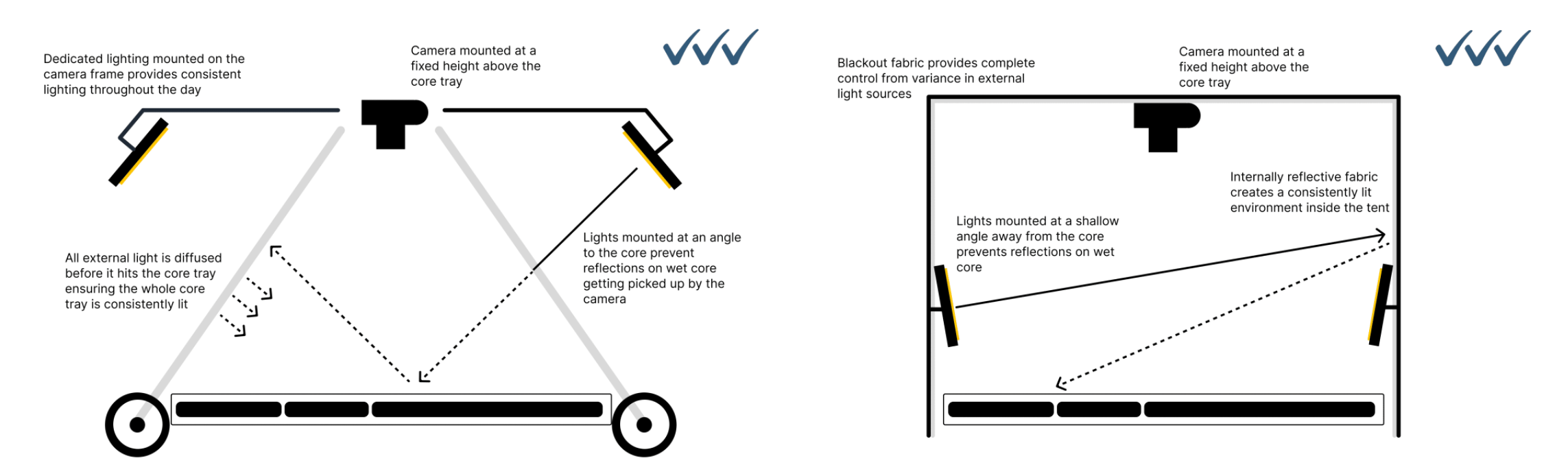
The most important piece to the hardware setup is getting your image capture station right. With a good capture station setup, reliably capturing high-quality images is easy. Seequent recommends working with one of our hardware partners who can help you setup your core shed for capturing amazing core tray images. DIY setups can still produce good results with some careful consideration.
When designing a capture station a good starting point is asking:
- Timing – Where in your core logging process are you capturing images? Are you wanting to capture multiple images during the logging process? The best time to take the core photo is after depth marks and driller break marks are added and the core is oriented, but before significant annotation has been applied, as it can obscure the rock and complicate running machine learning on your images.
- Mobility – Do you want to move your core trays to the capture station, or do you want to move the capture station to the core trays?
- Lighting – Do you have good, controlled lighting in your core shed that will provide consistent lighting throughout the day or will you need to provide additional focused lighting at the capture station?
Cameras
With your Capture Station in place, we can now look to select a camera. A good camera paired with a quality lens and the Imago Capture X software will make a large difference to the quality of images you will capture. Selecting a camera can be overwhelming but at the end of the day a lot of your camera selection will come down to your budget and preference.
In general, there are three important decisions to make when selecting a camera:
- Sensor resolution – Whilst the more megapixels the better, generally anything with more than 30MP will provide you with enough resolution to get started with. Choosing a camera with 50MP+ will be setting you up well for making the most out of your images in the future.
- Full frame vs Crop sensor – Full frame sensors will produce crisper images with more detail and generally outperform in a variety of lighting situations. Whilst we recommend investing in a camera with a full frame sensor, a modern camera with an APS-C or Crop sensor with a high megapixel count and a good, controlled lighting environment will provide plenty of detail in your images.
- Mirrorless or DSLR – DSLR cameras still have a lot to give and are generally more cost effective compared to the more modern Mirrorless cameras. A higher resolution DSLR is generally a better investment than making the jump to mirrorless.
Imago Capture X software connects to most modern Mirrorless and DSLR cameras available off-the-shelf from Sony, Canon and Nikon. For full camera compatibility see the Imago System Requirements.
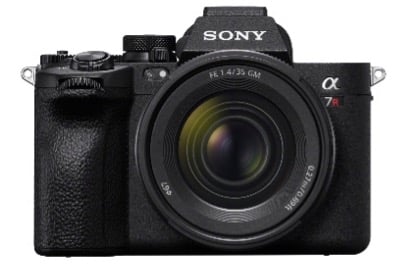
Sony α7R V
61 MP
Full Frame Mirrorless
Sony website
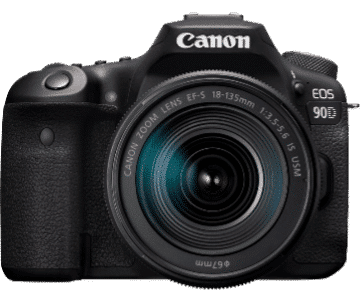
Canon 90D
32MP
APS-C DSLR
Canon website
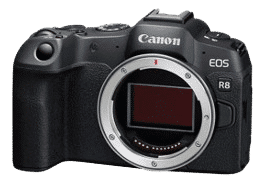
Canon R8
24 MP
Full Frame Mirrorless
Canon website
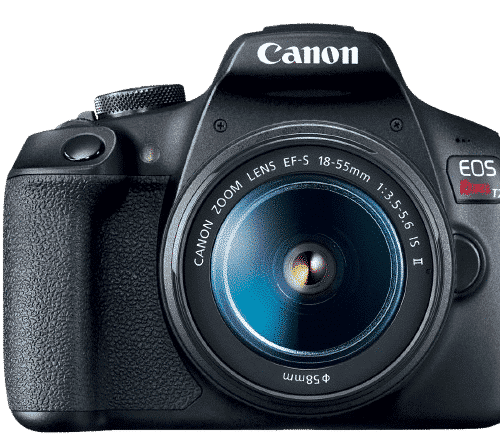
Canon T7
32MP
APS-C DSLR
Canon website
Lenses
Whilst selecting a lens might seem trivial, using the correct lens can make a big difference to the quality of your images. Our recommendation is to pair your camera with a high-quality Prime lens – this means not using the lens that probably came in the box with your camera.
With the camera mounted at a fixed height above core trays a Prime lens provides the truest view of your core trays. Other types of lenses such as a Zoom lens whilst offering flexibility in your setup can lead to unwanted distortion and fish-eye effects. Zoom lenses may be good for capturing chip trays or other generic images but are not recommended for core tray photographs with a good capture station setup.
Our lens: recommendations
For most core tray image setups with the camera mounted approximately 1m above the core tray we recommend a 28mm Prime lens. If purchasing an aftermarket lens, ensure that the mount is compatible with your camera body.
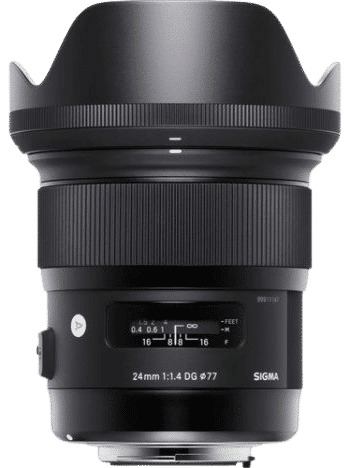
28mm f/1.4 ART Prime Lens
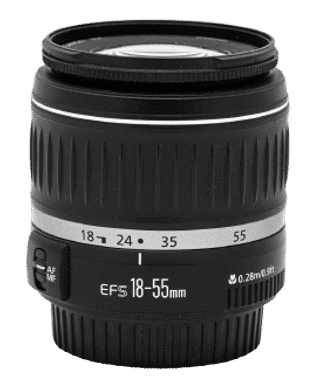
18-55 mm Zoom Lens
Hardware suppliers
Seequent provides recommendations on how to setup your own imagining stations and rigs, based on your usage need, and we have showcased two pre-built rigs made by our friends over at Discoverer.
Please note that while the choice of camera is important, it must be set up correctly in order to avoid low res images that can result from from the correct equipment with mistakes in the setup. The right setup can result in images that are dramatically different in quality than those that result from incorrect setup.
CoreSafe Core Solutions
CoreSafe Core Solutions supplies core trays and their Casper core photography system to the exploration industry around the world.
CASPER is a camera-to-the-core mobile core tray photography system. With fitted wheels that hug the roller racking, CASPER can roll up and down the racks all day. Your camera, PC, and light shroud all remain correctly configured and ready to go, even when, and every time you move it.
There is also the Table Top CASPER solution, which is much the same as the roller table version. The difference is that there is no need to match wheel heights to the railings and V Channel of the roller table.
Westernex
Westernex is one of the largest mining and exploration supply organisations in the world. The company was established 30 years ago to service the Western Australian mining industry with exploration and geological consumables.
Today, its flagship line of products – including core trays and core tray photography accessories, core saws, sample bags, marking paint and geological tools – is exported to mining corporations, exploration companies, geological teams and supply chains across the world, often in incredibly remote places.
Westernex answers an international demand for sourcing difficult-to-find products and parts, using its vast supplier contact list to become a one-stop global shop for clients.
Discover
Discoverer is an international geological supplies company headquartered in Australia that supplies drilling programs anywhere in the world. Their geological field and exploration products are used by some of the world’s top mining professionals, geologists and fieldies.
Discoverer has a Research and Development team that would welcome suggestions from the end users of their products about either improvements or new product suggestions that would make your life easier in the field. Discoverer has the following hardware options available for your Imago set-up:
Imren Sondaj Makine
- Core Trays
- Chip Trays
- Core Tray photography station
- Drilling chips photography station
- Parts and accessories of the photography stations
Imago modules
Imago has several different modules available to use with your subscription.