


By Paul Gorman
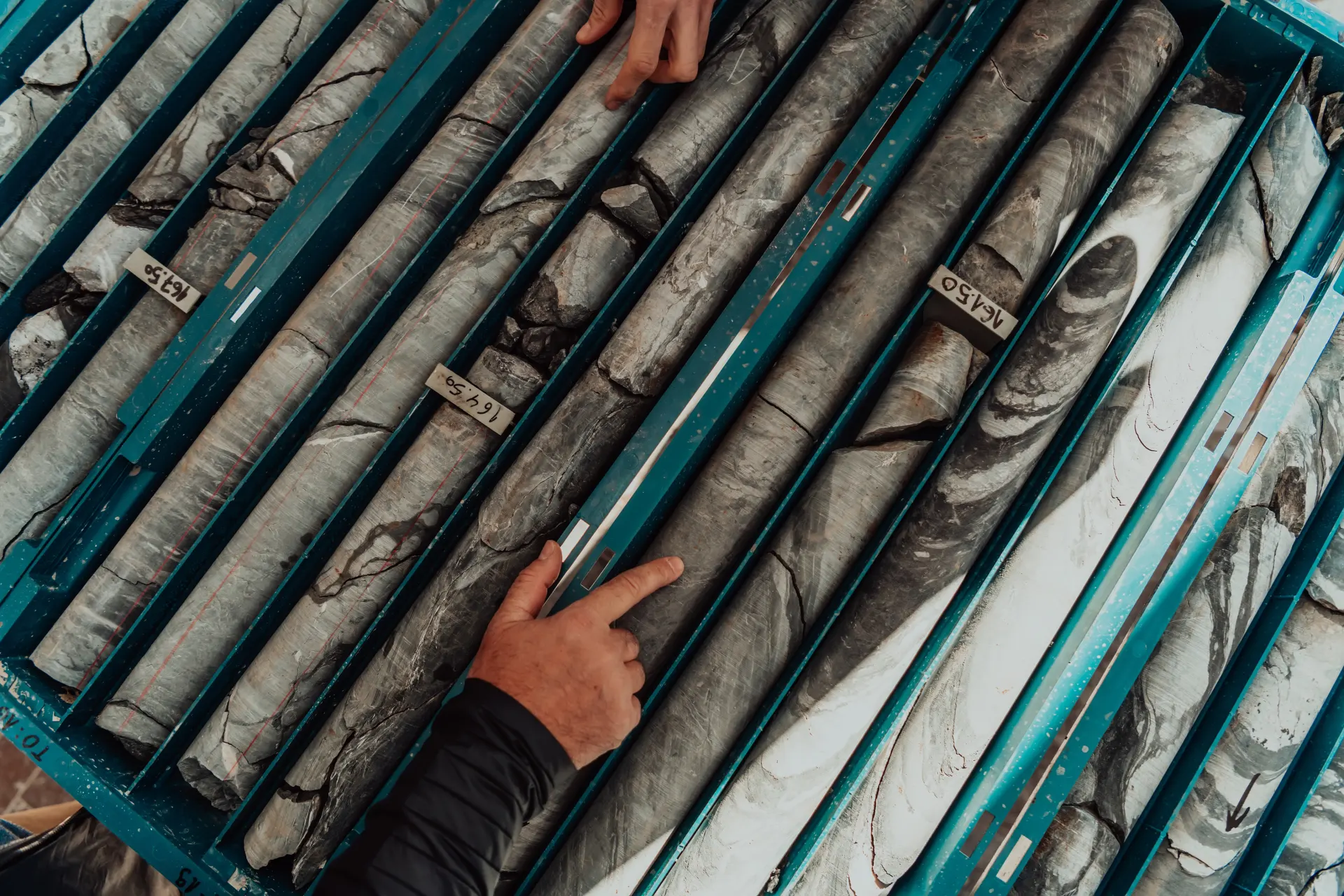
Côte d’Ivoire‘s highly complex, ancient geology makes mining of its prolific minerals a significant challenge.
Much of the country comprises Precambrian rocks up to several billion years old, which form part of the West African Craton, a huge piece of Earth’s oldest continental crust.
Within these formations there are large resources of gems and precious metals, forced up to close to the surface in super-heated fluids running through deep cracks and faults.
While weathering from tropical heavy rains helps wash away softer minerals to expose these valuable reserves, the residue forms thick layers of soil and regolith which hide the ore bodies beneath, making it very difficult for geologists to find them without geophysical surveys.
The Société d’état pour le Développement Minier de la Côte d’Ivoire (SODEMI), the state-owned mining corporation established in 1962, has played a crucial role in developing the country’s mineral resources through mining exploration and managing projects of national interest. Its geophysical unit works on its own exploration permits and also acts as a consultant for private clients.
Head of Geophysics, Moise Kouadio, said SODEMI had wanted Seequent’s help in streamlining its operations.
‘We chose … Oasis montaj and VOXI … due to their reputation in the mining and geophysical industry for data processing, analysis, and modelling.
‘These tools integrate easily into our existing systems.’
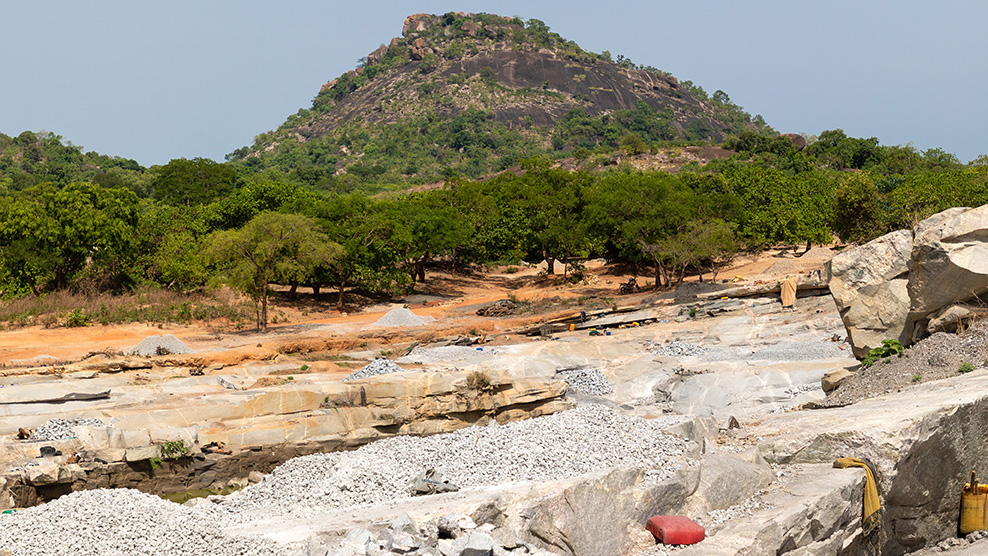
Work under way in a Côte d’Ivoire granite quarry
SODEMI’s projects
SODEMI is currently working on eight exploration permits across the country for gold, nickel-cobalt, phosphate, lithium-tin, coltan, molybdenum, diamonds, and ornamental stones. The state miner also has shares in the Lauzoua manganese production mine, in the Guitry department in the southwest, owned by the Compagnie Miniere du Littoral.
Among the locations being explored are Eboinda/Adiaké in the south for phosphate, Sakassou in central Côte d’Ivoire for coltan, Séguéla and Tortiya in the north for diamonds, and Kaniasso, also in the north, for nickel-cobalt.
‘A typical project begins with planning the survey grid on Oasis montaj,’ Kouadio said, ‘followed by data acquisition in the field, importing this data into montaj, and creating a database for analysis, processing, and interpretation. The results are then visualised and interpreted, before inversions are carried out on VOXI for 3D views and modelling.
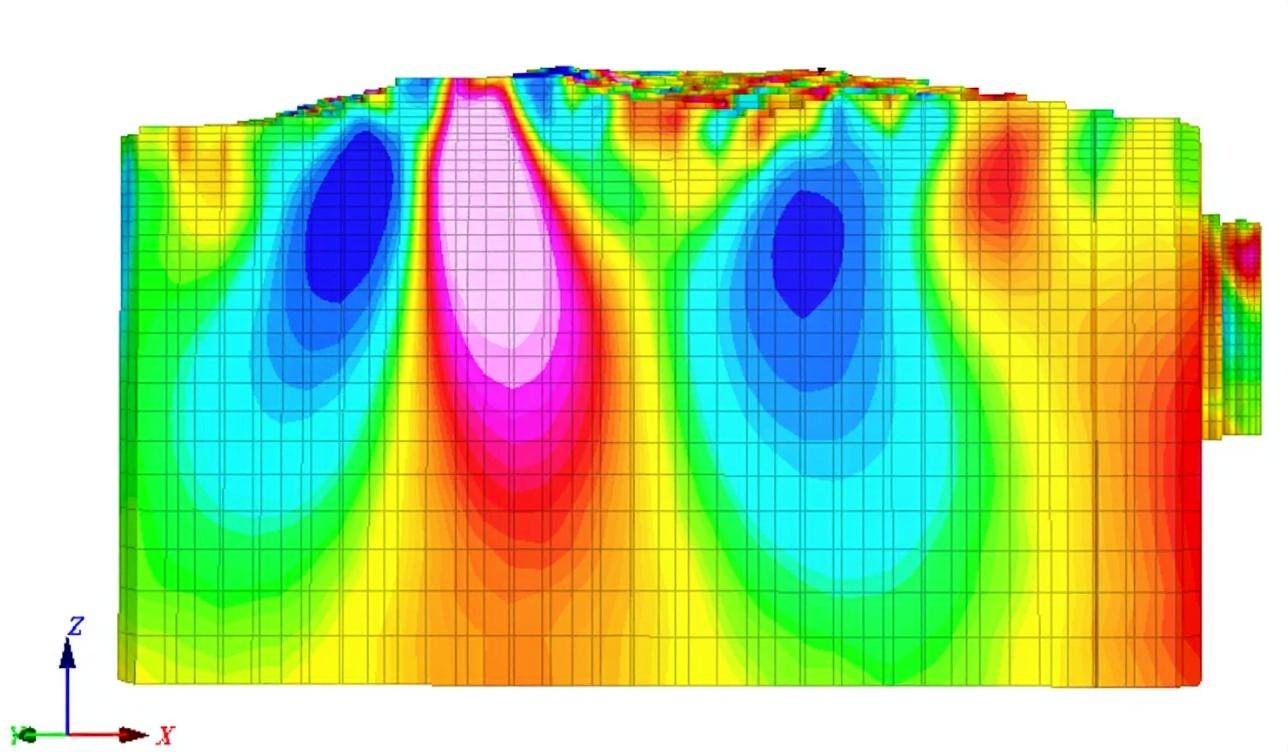
VOXI 3D inversion model used to define the depth and geometry of an interpreted geophysical anomaly.
‘In the context of the geophysical survey project at the Lauzoua manganese mine, these tools allowed us to process, analyse, and interpret the data on a daily basis. The VOXI software helped clarify the geometry, including depth, width, and dip, of the anomalies interpreted at the surface.’
Early challenges in adopting the software, such as training staff in using the tools and integrating data, were easily overcome, he said.
‘With the technical support from Seequent and customised training programmes, we were able to adapt to the software.’
How Seequent software helped
The use of Oasis montaj and VOXI had reduced the time spent on visualising, processing, and interpreting the data in 3D, Kouadio said.
‘We found that using the products has reduced data analysis time by 70%, allowing for faster and more informed decisions, which is equivalent to approximately five weeks of work.
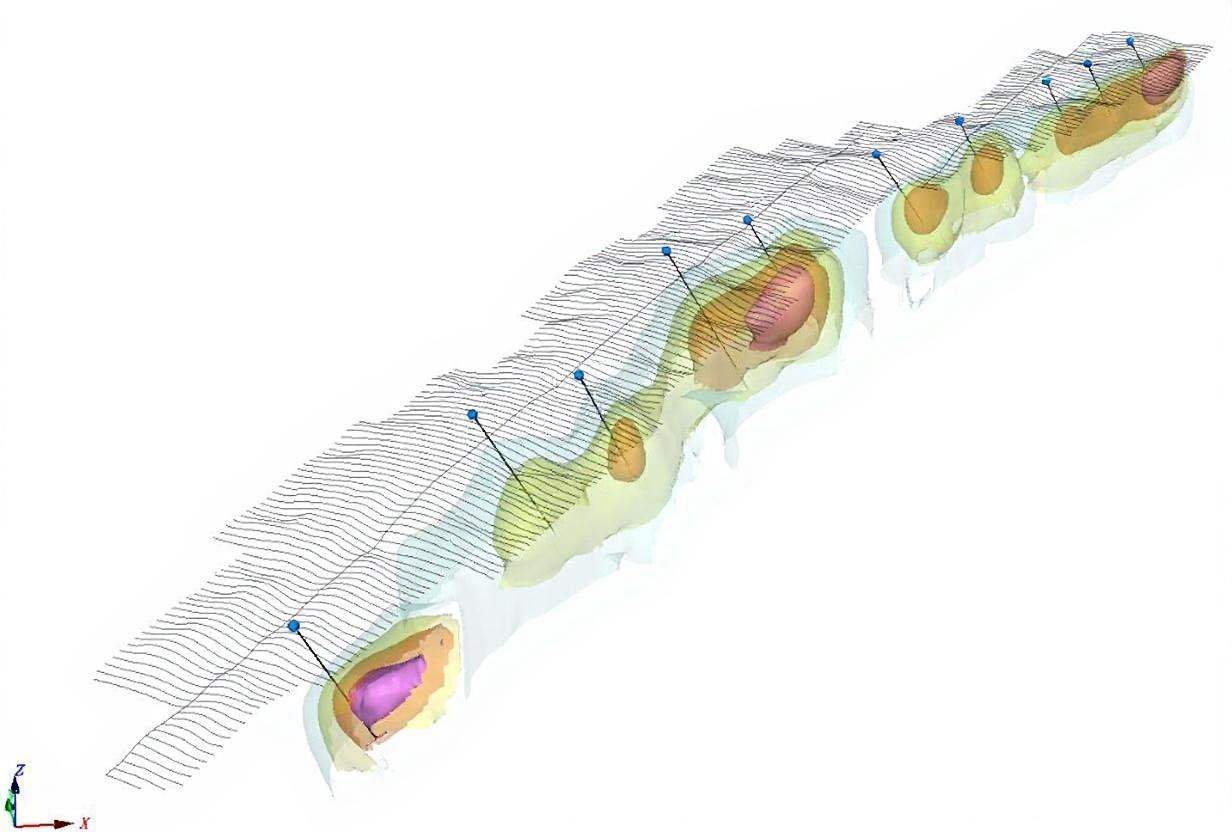
VOXI-derived 3D model showing interpreted geophysical anomalies and planned drillholes used to support exploration targeting.
‘In terms of environmental impact, the use of this software has optimised drilling targets, thereby reducing environmental damage and financial resources needed for drilling work.’
Better targeted exploration meant budgets could be adjusted and investments made elsewhere instead, Kouadio said.
‘Thanks to our work, discoveries continue to emerge at the Lauzoua manganese mine, promoting sustainable and responsible exploitation of these resources.’
Challenges for SODEMI
Despite the use of modern tools, SODEMI still faced a number of external challenges, especially around competition and the need for collaboration and partnerships, he said.
‘The mining sector attracts growing competition, including well-funded international companies, which can reduce opportunities for local businesses.
‘Also, establishing partnerships with other companies and institutions can be difficult, but it is essential for sharing knowledge and resources.’
Access to specialised training and experts in geophysics and advanced software could also be limited, which hindered the full adoption of modern technologies.
As well as having to overcome those obstacles, mining companies had to cope with the country’s inherent geotechnical variability, Kouadio said.
Related content:
* Cold water may be speeding up melting of ‘Doomsday Glacier’
* Seeing through the cover: Gravity gradiometry modelling in Tanzania’s Eyasi Wembere Basin
* Effective approaches to potential field modelling in hydrocarbon exploration
* Understanding the seafloor may unlock the secrets of disappearing ice sheets
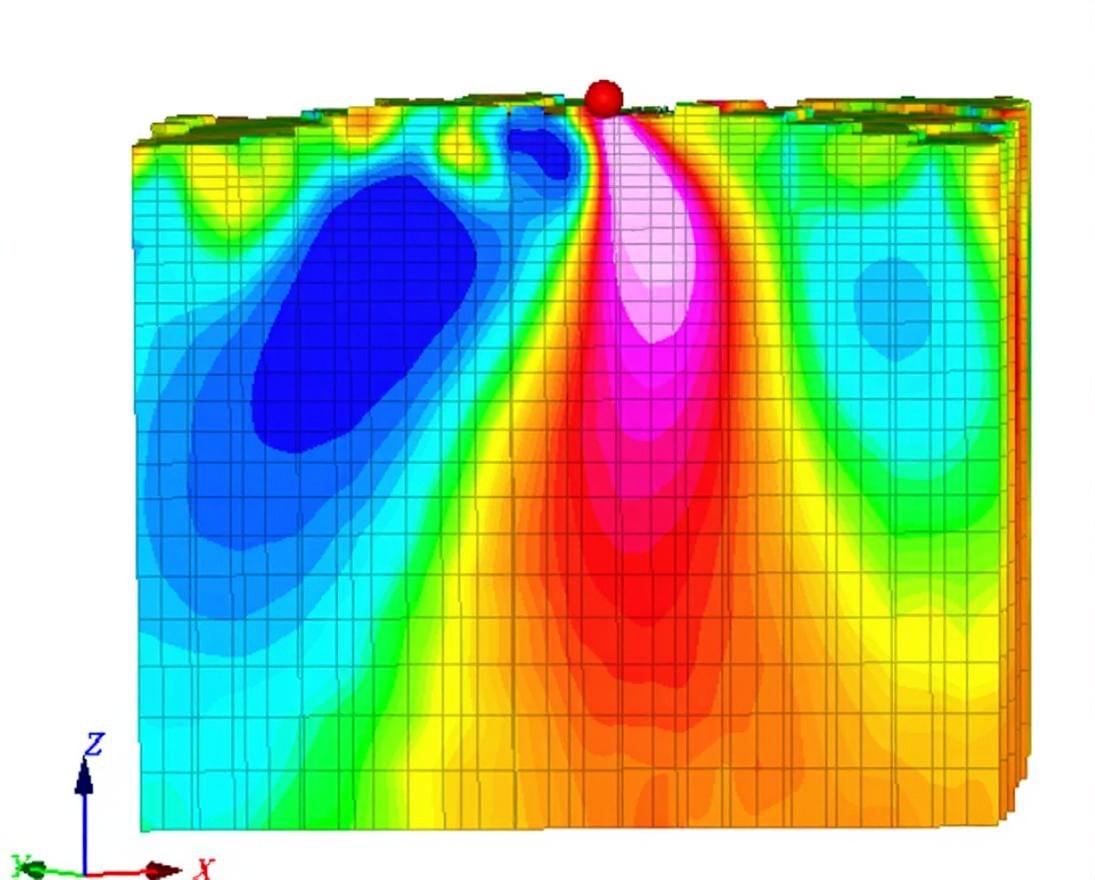
Cross-sectional view of a VOXI 3D inversion model showing the depth continuation of an interpreted geophysical anomaly.
‘Côte d’Ivoire has a geological diversity that can make the analysis and interpretation of geophysical data more challenging.
‘The solutions provided by Seequent play a crucial role in the processing and interpretation of geophysical data. They are essential tools for any geophysical exploration project.
‘I would like to encourage all companies considering similar solutions to invest in cutting-edge technologies like those offered by Seequent, as the right choice of these technological tools transforms challenges into opportunities.’
- SODEMI working on eight exploration permits, including gold and diamonds
- Data analysis time reduced by 70% using Seequent software
- Five weeks’ work saved in processing and interpretation
- Pinpointing drilling has reduced potential environmental damage.