Driver delivers AI geological modelling and domain interpretation analysis for drilling datasets
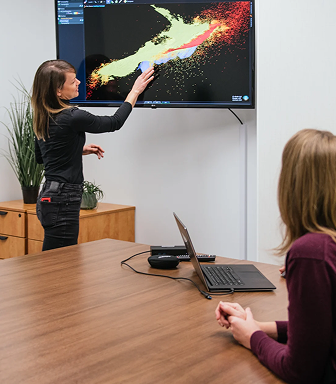
Driver is a cloud-based rapid analysis software that supports spatial exploratory analysis of drilling datasets. Integrated AI automates the analysis of lithologies and grade data, enabling teams to quickly reveal geological trends of their deposit, understand domains, and build better downstream models for with less manual effort and no coding.
Product benefits
Ground your models in data
Build better models, faster
Stay in control
See how Driver enables industry leaders to make data driven modeling decisions
Read the latest Driver success stories and see how leading exploration and mining teams use data-driven structural insight to sharpen their models, accelerate their workflows, and deliver defensible, sustainable projects around the world.
Built on the Seequent Evo platform
Driver runs natively on Seequent Evo, connecting your data, compute, and modelling tools in a connected workflow
Build models with a clear understanding of your deposit's structure
Driver is cloud-based exploratory data analysis software, powered by Seequent Evo, that uses AI to detect and quantify local geological continuity directly from your drilling data. Whether you work with numerical assays or categorical data, Driver reveals the 3D structural relationships controlling your deposit, giving you data-driven confidence before you start modelling and a direct pathway into Leapfrog.
Capabilities that set Driver apart
Driver gives geoscientists a data-driven view of their deposit's structural architecture before modelling begins. These capabilities work together to speed up exploratory analysis, reduce subjectivity, and make sure every model is informed by the fullest possible understanding of the data.
Product features include:
- Driver's AI algorithm - spatial continuity mapping Automatically detect and quantify local, 3D geological continuity trends directly from raw drilling data.
- Trend analysis for multiple attributes Compare spatial trends across multiple grade and geochemistry attributes to reveal deposit-wide relationships.
- Categorical analysis Quantify continuity and domain orientation directly from categorical data, such as lithologies, not just numeric grades.
- Automated interval classification Automatically group drilling intervals into geologically meaningful categories for faster domain and vein modelling.
- Integrated with Leapfrog Pass model-ready structural data into Leapfrog through Seequent Evo.
See how Driver can solve your specific challenges
See Driver applied to your own data. Book a demo and find out whether your deposit qualifies for a hands-on session.
Strategic insights and technical guides
Go deeper with Driver. Explore the free technical white paper, and guides that show how spatial continuity mapping works and how to apply it.
Build your skills with Seequent
Whether you are getting started or developing more advanced skills, find the right place to learn and connect. Follow structured training in the Learning Centre, explore advanced workflows through Mastery Series webinars, or exchange knowledge in the Seequent Community.
Learn in the way that works for you
-
Online learning paths for different skill levels
-
On-demand videos and practical exercises
-
Instructor-led courses with Seequent specialists
Connect and learn with other Seequent users
-
Ask questions and find practical answers
-
Learn from other users and Seequent specialists
-
Share knowledge in dedicated discussion groups
Enterprise-grade security and trust, built into the Evo platform
Built on Seequent Evo and Bentley Systems infrastructure, Driver delivers enterprise-grade security, data privacy, and compliance.
Resilience
Driver is built on a cloud-native, microservices-based architecture designed for high availability, scalability, and fault tolerance. It supports global operations with consistent performance, backed by robust, multi-layered cloud infrastructure.
Security
Evo follows a defence-in-depth model with Zero Trust access control, cloud-native tooling, and continuous monitoring. All data is encrypted at rest with AES-256 and in transit with TLS 1.2+, and the platform is reachable only over HTTPS. Security is built into the development lifecycle and verified by regular third-party penetration testing.
Privacy and recovery
Built natively on Seequent Evo, Driver safeguards your mission-critical data with stringent privacy controls: role-based access, end-to-end encryption, and GDPR-aligned governance. Beneath the surface, high-availability multi-zone replication, automated backups, and 90-day point-in-time recovery keep your data continuously protected, compliant, and rapidly recoverable.
Compliance
Driver is built and delivered under Seequent’s globally certified Information Security Management System (ISMS), accredited to ISO/IEC 27001:2013. This standard underpins everything we do: proactive risk management, granular access controls, rigorous incident response, and continuous operational improvement. Deploy Driver and you inherit proven, externally audited controls that safeguard your data.
Extend your capabilities with connected solutions
Driver works alongside the Seequent software you already use, from cloud data management in Seequent Evo to implicit modelling and estimation in Leapfrog.
FAQs
Answers to the questions geoscientists ask more about Driver, from the data it needs, to how its outputs into Seequent Evo and Leapfrog.
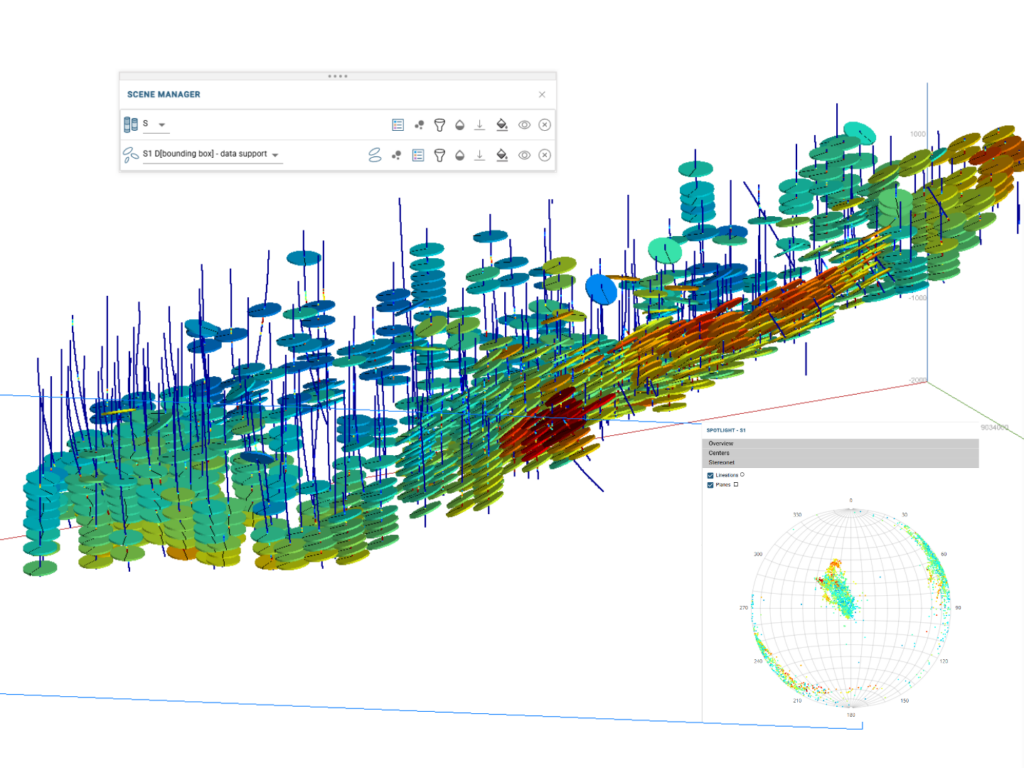
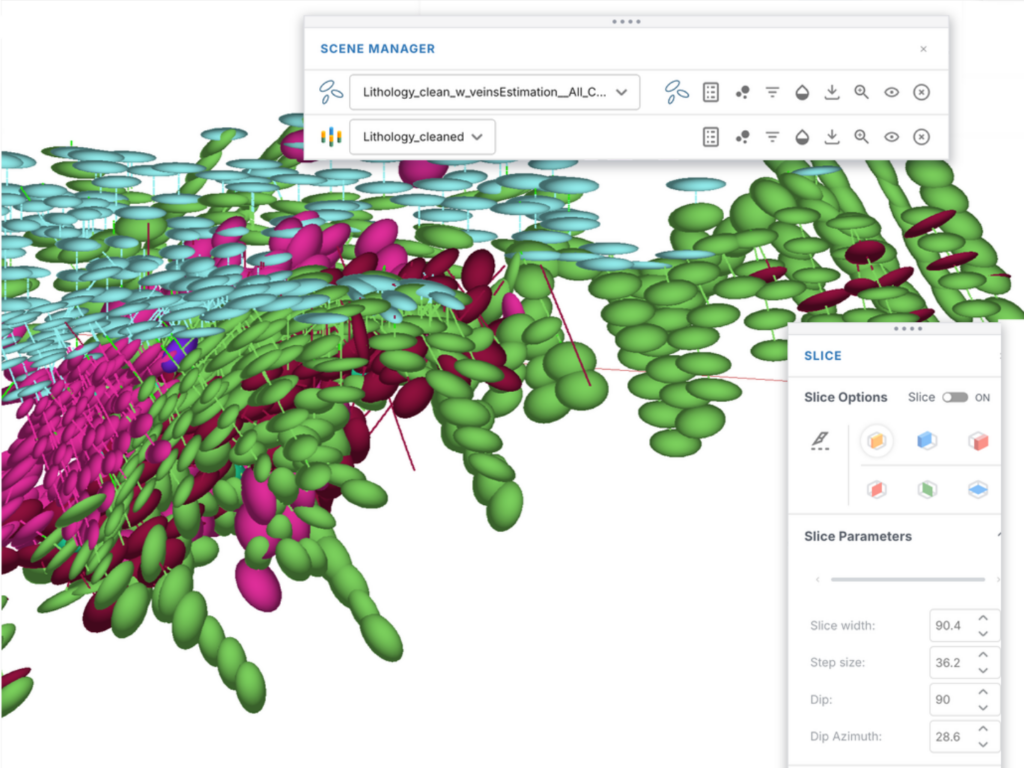
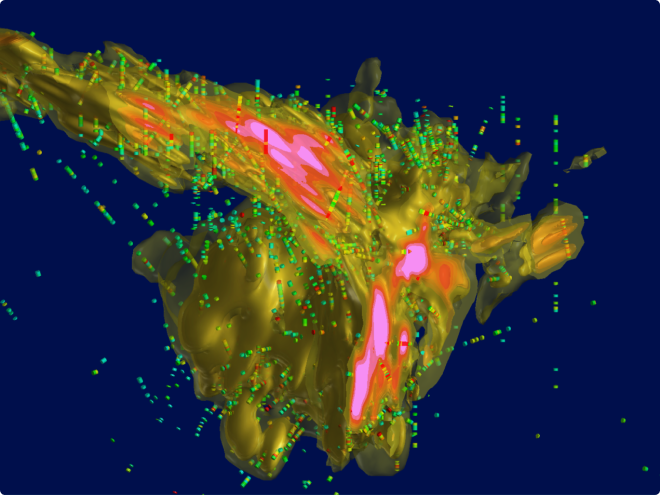
Driver’s AI algorithm, Spatial Continuity Mapping, evaluates geological continuity at locations throughout your deposit, mapping the directions in which your attribute is strongest. The result is a set of local anisotropy ellipsoids that guide your downstream modelling.
No. Driver’s algorithm, Spatial Continuity Mapping, is unsupervised machine learning: it learns structural patterns directly from each dataset it is run on, with no pre-trained model behind it.
Any 3D point data, typically downhole interval data with XYZ locations. Driver supports both continuous numeric attributes such as grades and geochemistry, and categorical attributes such as rock types and alteration codes. Upload data as CSV files or pull it directly from an Evo workspace as geoscience objects.
Yes. Compositing to a regular interval before analysis is strongly recommended. It removes high-frequency noise, ensures even spatial support across your dataset, and prevents localised oversampling from skewing the continuity Driver detects. Most Seequent Evo and Leapfrog workflows make compositing straightforward.
Driver needs good 3D spatial coverage and works best on advanced exploration through to production datasets. A good baseline: if you have enough data to run geostatistics, you have enough to get the most from Driver. It reveals features within your data and does not extrapolate beyond your drilling coverage.
Driver generates local trend models (ellipsoids, structural discs, and lineations) and wireframe volumes delineating the 3D extent of geological continuity. These can be downloaded locally or exported directly into your Seequent Evo workspace as geoscience objects.
Yes. Driver’s outputs are stored as open geoscience objects in Seequent Evo, and Evo’s open APIs and data models let you connect them to third-party and custom software. So you can feed Driver’s data-driven structural trends into the modelling and estimation tools your team already uses.
Stratigraphic sequence analysis is the process of interpreting how rock units are ordered, oriented, and connected through a deposit: which units correlate, where the boundaries between them sit, and how continuous each one is between drillholes. It matters because most of that interpretation still happens hole by hole. A geoscientist reads each drillhole, correlates units by eye, and carries assumptions about continuity across the gaps between holes. That is slow, hard to reproduce, and sensitive to who logged the data. When continuity and boundary relationships are assessed across the whole dataset at once, correlations become more consistent and trends that no single hole can show on its own begin to appear.
It feeds into it. Driver is not a replacement for Leapfrog or any modelling package. It sits upstream: it turns raw drillhole data into data-driven trends and structural insight, then passes those into the Leapfrog Geo workflow you already use. It is the analysis step that informs the model, not the tool that builds it. The geoscientist is in full control and makes the modelling decisions.