


By Fiona Jeffreys
By connecting data, modelling, and analysis in one workflow, Rana Gruber can update geological models faster to make mine planning decisions with greater confidence.
Operating in Norway’s Dunderland Valley, Rana Gruber is one of the country’s longest-established iron ore producers, with a clear focus on building a modern, low-carbon mining business. To support that ambition, the team needed geological models that could be updated quickly to enable more informed mine planning and operations.
With Seequent’s connected workflow leveraging Seequent Evo, MX Deposit, Leapfrog Geo, and Driver, the Rana Gruber team can move from data capture to subsurface insight with speed. New drilling and assay data now flows into models within minutes, enabling faster updates, stronger QA/QC, and closer alignment between geological understanding and decision-making.
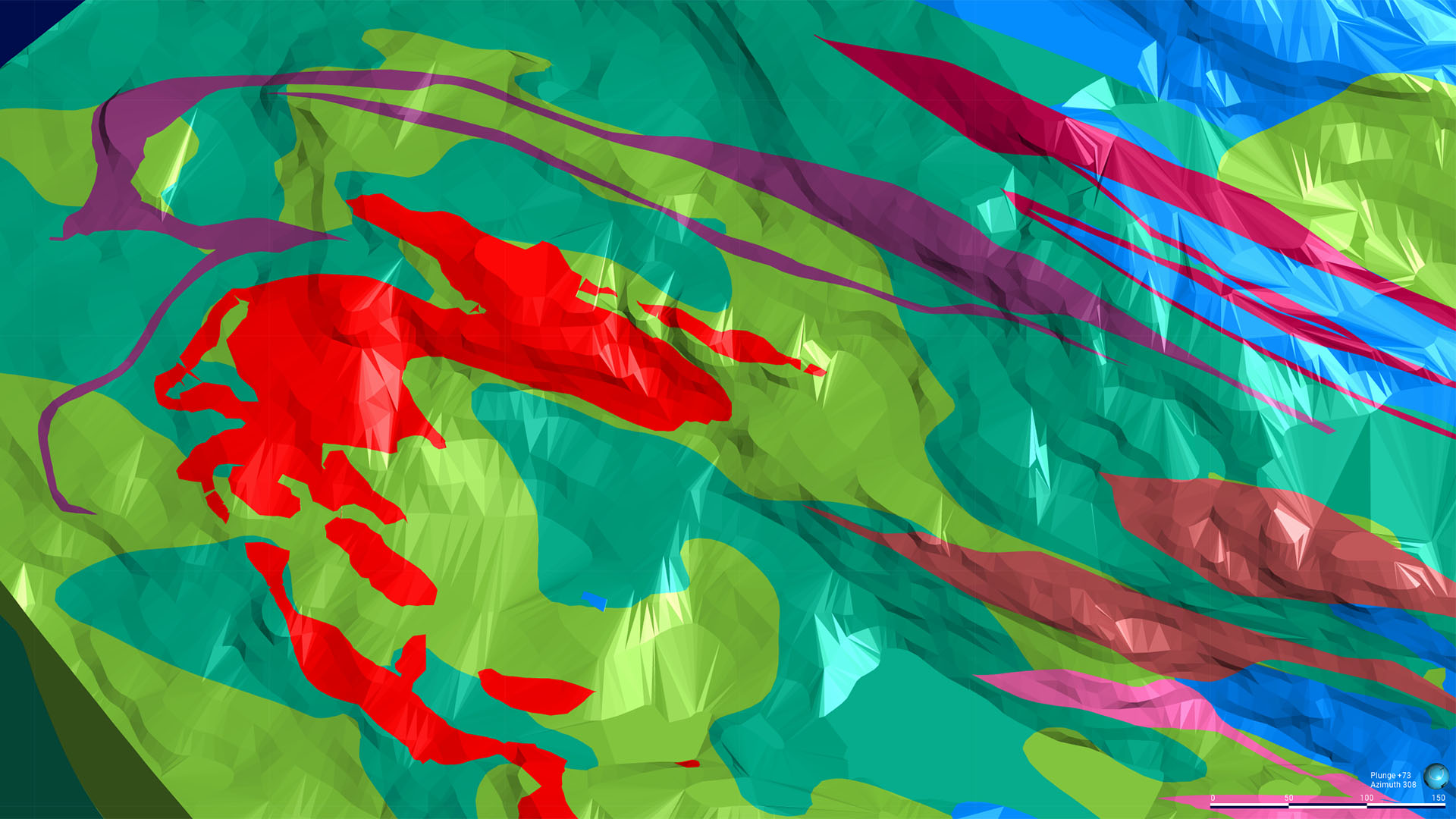
A Leapfrog Geo 3D model showing iron ore in red and purple, marble in blue, and mica schist in green (Source: Rana Gruber)
Keeping geological models aligned with the pace of mining
At Rana Gruber, geological modelling plays a central role in understanding the underground and to support fast-moving decisions across exploration, resource estimation, mine planning, and operations.
As datasets have expanded to include current drilling, subsurface mapping, and decades of historical logging, the team needed a workflow that could support faster updates without compromising geological quality and understanding.
‘Reliable geological models are essential to planning and strategy. We wanted our 3D models to become living datasets that evolve as new information comes in, not static deliverables updated only occasionally,’ said Alexander Kühn, Chief Geologist and Manager of Mine Planning.
‘Once the framework was in place, adding new drilling or assay data took only minutes – enabling us to update interpretations quickly and keep exploration and modelling closely aligned,’ said Kühn.
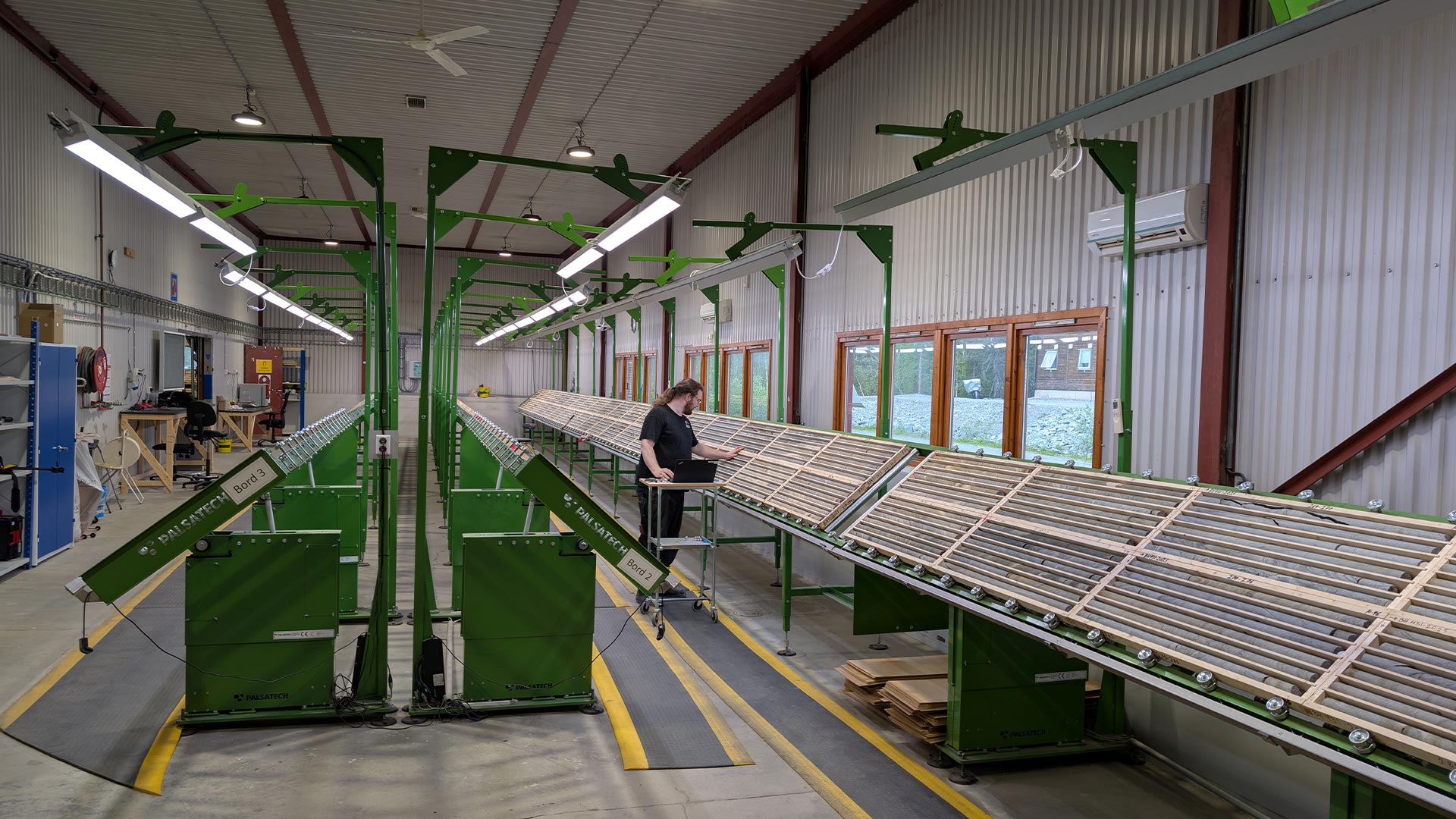
Rana Gruber’s workflow starts in the core shed with geological drilling data captured and stored in MX Deposit (Source: Rana Gruber)
How Evo connects Rana Gruber’s workflow
Rana Gruber’s connected workflow begins at the core shed, where the team captures and records geological drilling data in MX Deposit. Historical logging data from the 1950s onward is also stored there, creating a reliable central source for all geological information.
Drill data captured in MX Deposit is uploaded directly to Evo, Seequent’s open geoscience platform, to connect downstream with Leapfrog Geo, for 3D geological modelling and Driver, for rapid spatial analysis of drilling datasets.
Rana Gruber was an early adopter of Evo, which underpins its connected geological workflow. By linking data, models, and teams in one open ecosystem, Evo supports collaboration across workflows to help the team make more informed decisions.
‘The integration between MX Deposit and Leapfrog Geo through Evo gives us immediate access to new data while preserving data integrity. We also use calculated fields during logging to catch inconsistencies early, before they affect downstream modelling,’ said Jonas Dombrowsky, Resource Geologist.
‘Any new information such as logging, tunnel mapping or field structural data captured in MX Deposit and Evo can now be imported into Leapfrog in just a few clicks. This gives us a faster, more reliable way to bring all data sets into our models, update interpretations more often, and keep geology and mine planning aligned as subsurface conditions change,’ said Dombrowsky.
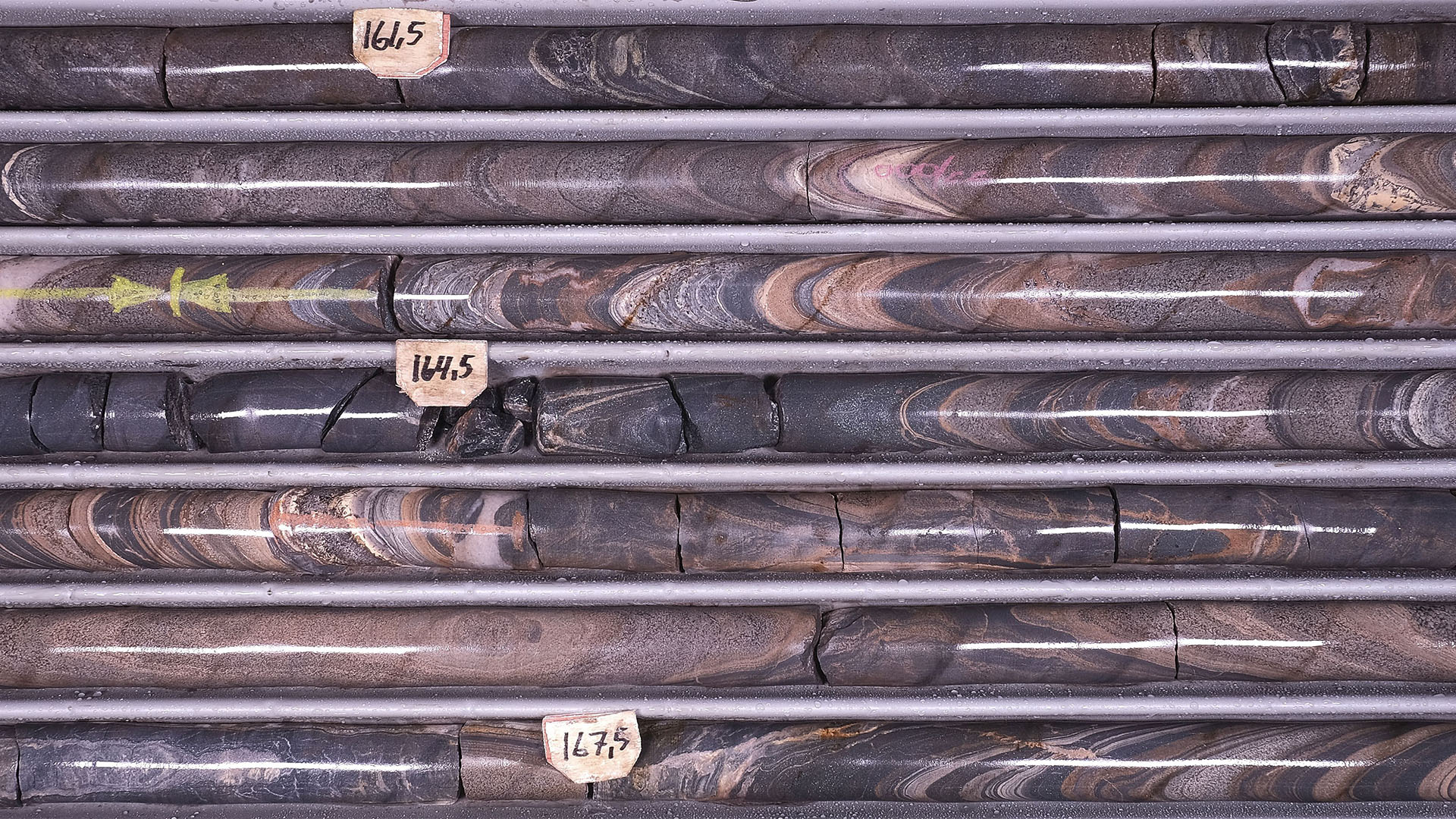
MX Deposit centralises drillhole and sample data, with fine-grained garnet fels shown in pink (Source: Rana Gruber)
A clear path from data capture to structural insight
With Leapfrog Geo, Rana Gruber can turn faster data updates into clearer, more actionable geological models.
The team combines historical drillholes, current drilling and mapping data to build interpretation frameworks that can unlock new value from legacy information across modern models. Assay relationships and geostatistical checks then help refine lithologies and define more meaningful domains.
‘A big part of the value comes from combining current drilling with historical data in a consistent way. We can bring together different vintages of information, understand their limitations, and still build coherent models robust enough for operational use,’ said Dombrowsky.
Driver adds another layer of speed and insight. By analysing spatial correlations in historical drilling datasets, its AI-assisted workflows help the team identify structural trends not consistently represented in legacy modelling. Geologists can test multiple scenarios quickly and feed those results back into Leapfrog Geo to strengthen interpretations.
‘Important structural information such as foliation or layering was not always logged consistently. Driver helps us extract multiple geological trends directly from the data in a fraction of the time it would take to generate even one trend manually,’ he said.
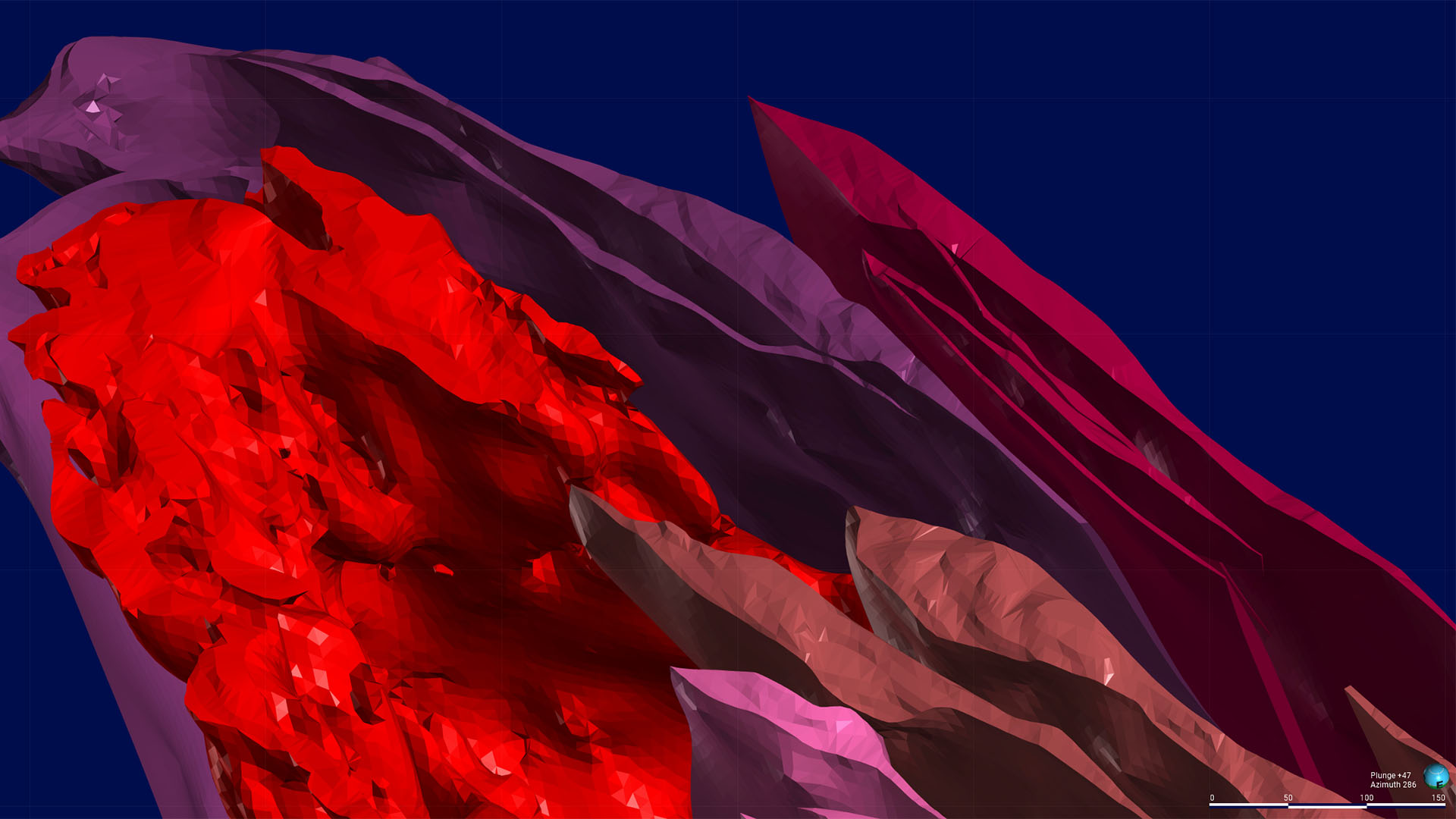
Combining drill core, mapping, and Driver outputs to show detailed structural trends within the ore body (Source: Rana Gruber)
Faster iteration, better planning, fewer surprises
The impact has been significant. Model recalculations that once took a long time can now be completed in minutes, giving the team more freedom to test geological ideas, structural concepts, and domain configurations. More frequent revisions also reduce the risk of planning decisions based on outdated interpretations.
‘Explicit modelling was a lengthy process, so before we brought implicit geological modelling in-house, updates were slower and the models were less effective as active planning tools,’ said Dombrowsky.
‘Now I can rerun the model for every new drillhole, which means we can adjust drilling, mapping and sampling updates on the fly, giving the operation much more agility,’ he said.
The benefits extend beyond orebody interpretation. The team has used Leapfrog Geo to model rock types with different mechanical properties, including fine grained garnet fels and brittle quartz-rich mica schist.
Understanding where different rock types occur helps planning teams anticipate ground stability changes to improve safety and reduce surprises for tunnelling crews during operations.
‘Because we can test multiple structural and geological scenarios quickly, we are not forced into a single interpretation too early. That improves both the speed of our workflow and our confidence in the final model,’ said Dombrowsky.
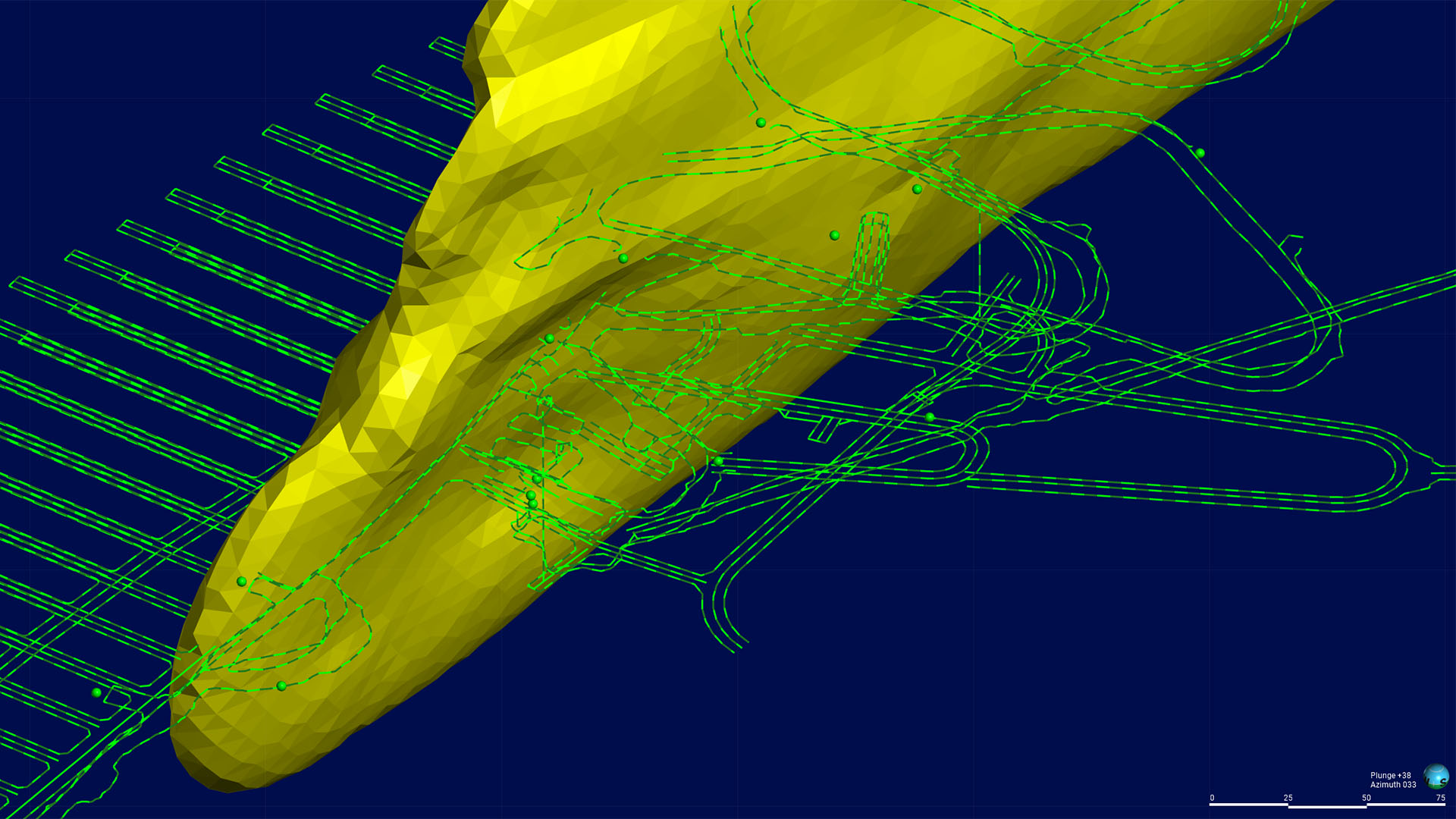
A model to identify quartz-rich mica schist for safer tunnelling and rock support planning (Source: Rana Gruber)
Greater transparency across teams and stakeholders
As Rana Gruber’s workflows have matured, collaboration has become more transparent across teams and with external stakeholders. Models can be shared more easily with consultants and Qualified Persons, making it simpler to review interpretations, assess sensitivity, and understand what has changed between iterations.
Connecting MX Deposit, Driver, and Leapfrog Geo through Seequent Evo also makes it easier to track model evolution – an important advantage for audits, reporting, and stakeholder confidence.
‘Decision-making is now based on actively maintained models rather than static snapshots. It is not just about building better models. It is about making assumptions, uncertainty, and model changes easier to understand and communicate. That transparency is essential if models are to support real decisions,’ said Kühn.
What’s next for Rana Gruber
For Rana Gruber, integrated and AI-assisted geological modelling is part of a broader push toward a more modern, data-driven mining business.
As the company continues to refine its workflows, frequently updated geological models will remain essential to identifying new mining areas, prioritising drill targets, and supporting detailed mine design.
In an industry where safety, efficiency, and sustainability increasingly depend on a deep understanding of the subsurface, the Rana Gruber team is showing how connected geological workflows can support faster, more confident and future-ready decisions.
‘Seequent’s connected workflow shows the value of adopting innovative technology early. When geological models, estimation, and mine planning are closely connected, we can direct our effort where it matters most – whether that means defining our next drill target or advancing an area into detailed planning,’ said Kühn.