



AI in geoscience is at risk of being over-promised and under-delivered. The constraint isn’t model capability – it’s data, context, and trust.
At Seequent, we believe the future of AI is not about tools alone. It is about enabling trusted, domain-specific solutions – new technologies can play an important role but should be carefully positioned against the outcomes they are aiming to achieve.
In this article, we will explore how new technologies can deliver genuine value to geoscientists, not just tools.
It all starts with the data
The heart of Seequent’s AI strategy is a simple principle: AI is only as good as the data it can access and understand.
Geoscience data is complex, sparse, and often trapped in silos. Without context, lineage, and structure, even the most advanced AI models struggle to deliver reliable outcomes. In high-stakes decisions – such as ore grade classification or resource estimation – outcomes are only as reliable as the completeness and trustworthiness of the data.
Seequent Evo can deliver a unified data layer – bringing together geoscience data, compute, and workflows into a single environment to reduce uncertainty and allow AI to deliver results our customers can be confident in.
This data foundation enables AI to operate within real geoscience workflows – where context, uncertainty, and data lineage matter. Without this, AI remains a general assistant. With it, it becomes capable of supporting domain-level decisions.
Once the data is consolidated, the work to build AI tooling can begin.
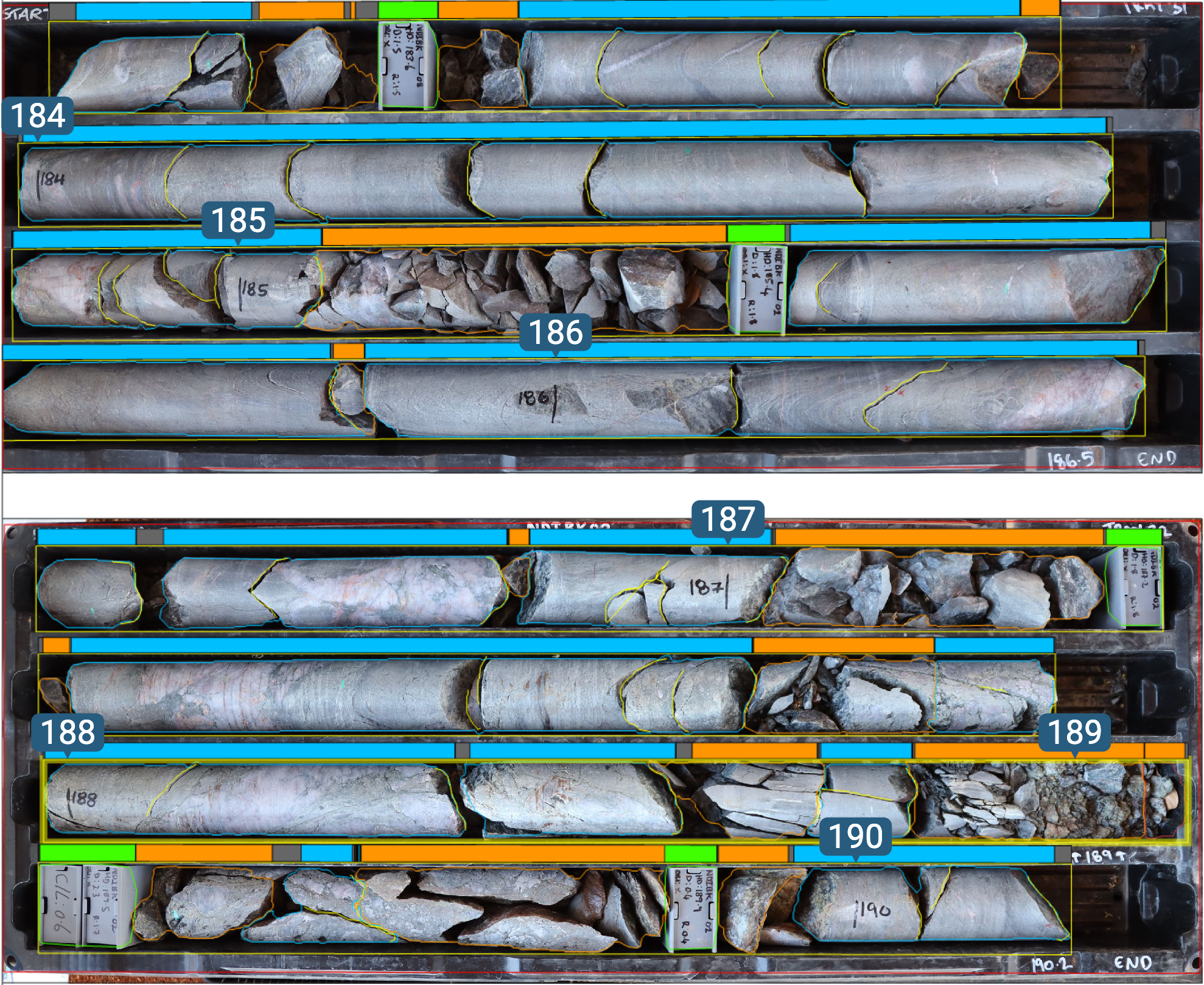
AI-powered core image analysis in Seequent’s Imago automatically detects and classifies rock core intervals, turning routine photo capture into structured, analysis-ready data.
What is vibe coding and why does it matter for Geoscientists?
Vibe coding is a way of building software where you describe what you want in natural language and let AI generate the code and the app, instead of writing it line by line yourself. This empowers scientists and domain experts to create tailored solutions for their proprietary data and unique problems without needing to code.
Seequent’s public Evo Python SDK provides a wrapper around our public APIs, making it easier to build things against Evo. It allows our users to vibe code applications built upon Seequent Evo with common vibe coding IDEs like Claude Code or VS Code.
Vibe coding enables users to rapidly bring ideas from concept to prototype and to solve their own unique challenges by taking advantage of Seequent Evo’s data and compute platform. But while vibe coding allows simpler customisation and rapid prototyping, it can also introduce risks including unvetted code, technical debt, and poor maintainability. Organisations must consider the trade-offs between speed and flexibility versus control and reliability in enterprise environments.
Where MCP fits in
Last year we released the Evo Model Context Protocol (MCP) server on GitHub. MCP is an emerging standard designed to help AI agents connect to external systems, data sources, and tools. It provides a structured way for AI models to query data, interact with applications, and operate safely within defined rules and permissions.
In simple terms, MCP acts as a bridge between AI (like Claude) and real-world systems (such as Seequent software), allowing agents to move beyond text-based reasoning and take action on enterprise data. It is like an API insofar as it helps systems connect to one another, but while APIs are meant for developers, MCP servers are meant to be used by AI.
Related content:
* Transforming geoscience with AI
* The billion-dollar gamble beneath every data centre
* Watch: Driver is about the ‘next generation of intelligent geology solutions’
*Openness will shape the future of geoscience
Bringing it together for our kriging demo
Earlier this year our team vibe coded an agent that used the Evo MCP server for kriging. It showed an AI agent taking a natural language request and automatically executing a full geostatistical kriging workflow on Evo data by orchestrating multiple steps – like selecting data, preparing models, and running estimation – through the MCP server, without the user writing any code. Its purpose was to demonstrate how MCP can expose tools, like the one used to access Seequent Evo’s kriging compute task, and domain-specific ‘skills’ to agents, enabling complex, expert-level tasks to be performed conversationally and highlighting Evo’s capabilities as an AI-enabling platform. This demonstrated a user performing a complicated geoscience task with just natural language, working on trusted data in Evo.
At Seequent, MCP and vibe coding are enablers – but not the centrepiece.
We view vibe coding and MCP as AI enablers for advanced users who want to build their own AI-powered workflows. It supports them by enabling:
- A standardised interface, reducing the complexity of connecting AI models to geoscience data and removing the need for custom connectors
- A mechanism for governance and control, ensuring secure access, auditability, and consistency in how data is used
- A way to expose Evo-based compute tasks (like kriging) to agents
- The ability to do all this using natural language
But we recognise that many of our customers wish to leverage AI as a capability, rather than having to build it themselves. Seequent is committed to continuing to build AI-powered solutions (like Driver and the image analysis feature in Imago) and are exploring other solutions like skilled agents in the future.
But we will continue to invest in tooling that enables AI (like our Evo Python SDK and Evo MCP Server).
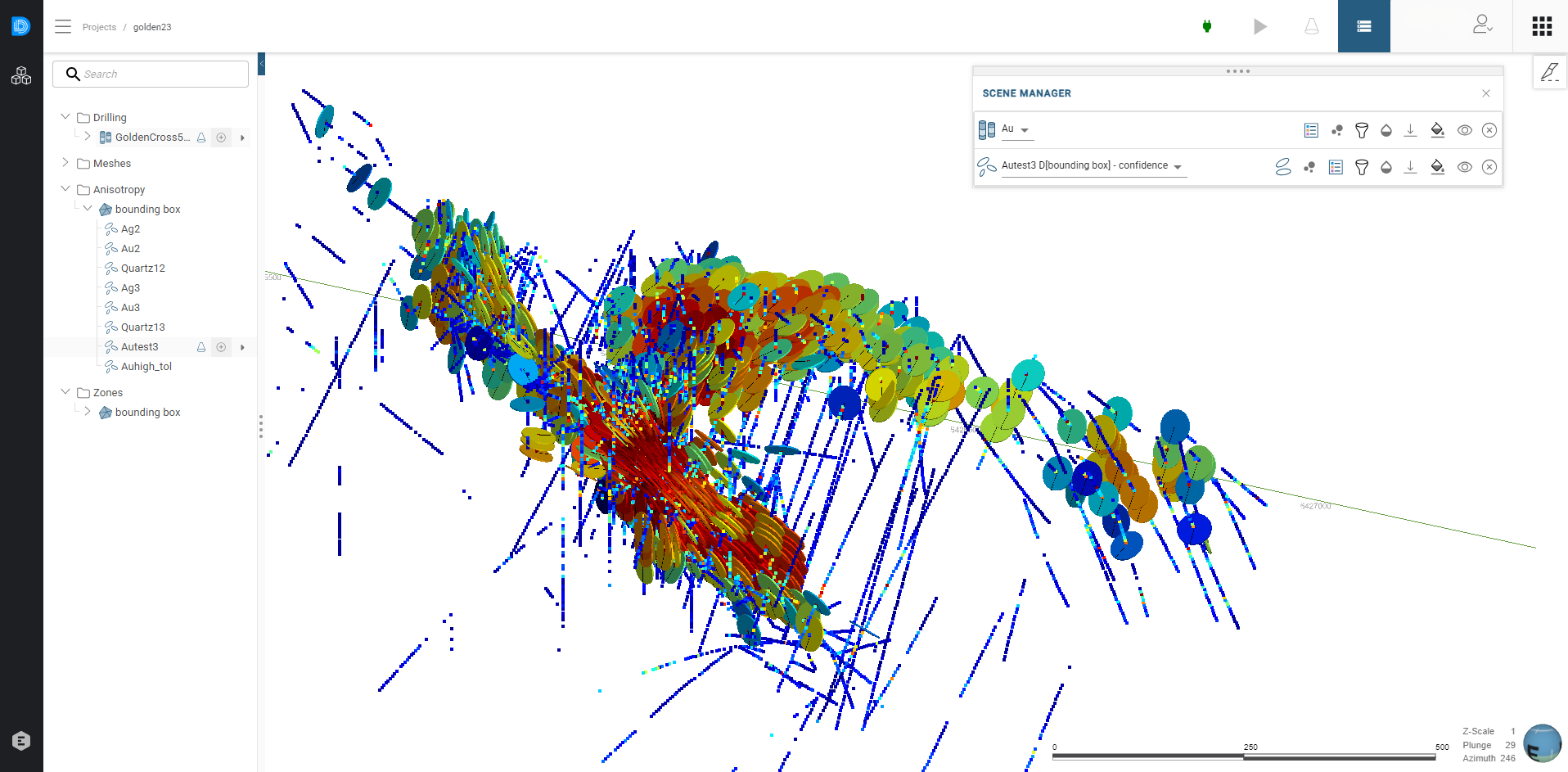
Seequent Driver uses AI to automatically analyse drilling data in 3D, helping geologists understand the structure of a mineral deposit faster and with less manual effort.
Moving from AI tools to purpose-built geoscience solutions
While MCP and vibe coding enable flexibility, Seequent’s primary focus is on delivering ready-to-use, purpose-built AI solutions.
Why? Because most geoscientists are not developers – and they shouldn’t need to be.
Our goal is not to give customers more tools – but to help them solve problems faster, with confidence. This will often mean delivering AI as capabilities within our products in the workflows geoscientists use every day.
At the same time, we recognise that some organisations will want to build their own solutions. For them, MCP and our Python SDK provide the flexibility to extend Evo and connect AI agents directly to their data.
This dual approach ensures ease of use and flexibility without compromising trust or reliability.
Cutting through the AI noise
The market today is filled with excitement – and confusion – around AI. Many solutions promise transformation, but fall short when it comes to trust, transparency, and real-world applicability.
AI will not transform geoscience through generic tools or standalone models. It will be realised through trusted data, embedded workflows, and domain-specific capability.
At Seequent, our focus is clear:
- Build a trusted data and compute foundation through Evo
- Deliver AI capabilities directly within Geoscience workflows
- Allow users to build their own AI solutions with open tools like the Evo MCP server and our Python SDK
For those looking for explore this further, our Evo MCP server is available on GitHub alongside more details about Seequent Evo.