


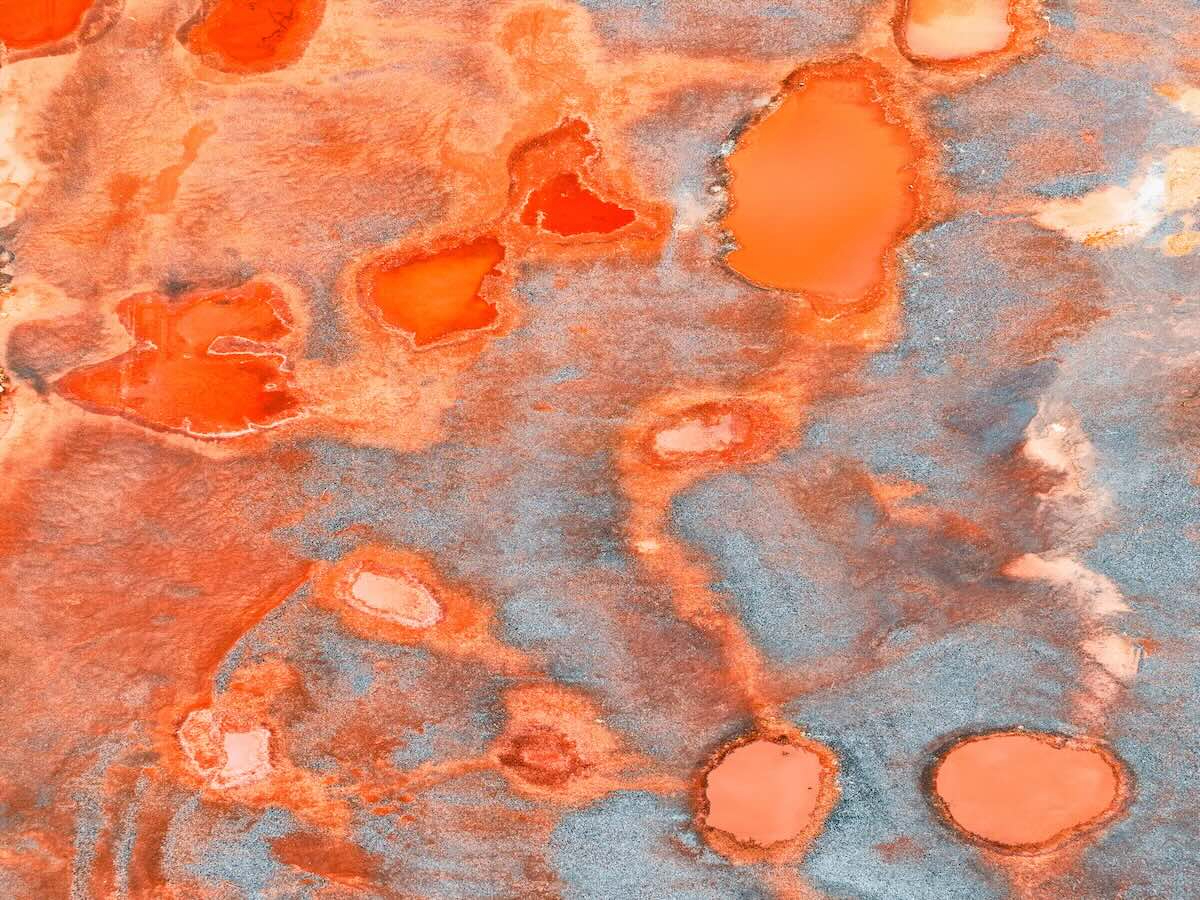
Rare earth elements, also known as REEs, are the topic of the day. Almost every news outlet highlights the rising global demand and active competition for resources, as REEs form an essential component inside high-end computational technology, smartphones, magnets, EV motors, and even wind turbines. However, what many don’t understand is that the supply struggle isn’t fuelled by the scarcity of the metals in the Earth’s crust. Let’s investigate this paradox and learn about challenges in the global supply chain as well as current research and future frontiers in REE discovery and production.
The rare earth element paradox
The name REE is truly a historical misnomer that has people confused as to why these metals are hard to come by. In truth, they are not rare at all but rarely found in pure form. Analytical chemists had a very difficult time separating the 17 lanthanide group metals using early methods which led them to believe they’d be scarce in nature. However, we now know that lanthanides, such as cerium, are even more abundant than copper in the Earth’s crust. Neodymium even outranks gold by orders of magnitude.
And yet the world faces a supply crisis that is entirely real. The main issue is not one of scarcity but of discoverability, extractability, and economic viability. As the global need for energy independence and computational capability accelerates, the resulting demand for these metals highlighted that the pipeline feed for REE’s is extremely thin. This is true for most critical minerals but the gap between a REE deposit discovery to mine development is proving much wider than for almost any other commodity and here is why.
Deposition and exploration methods
REE deposits can form through crystal fractioning in magma chambers. They originate from deep, metasomatised lithospheric mantle where low-degree partial melting concentrates incompatible elements such as highly hydrophilic REEs into primary alkaline or carbonatitic melts. The resulting intrusions are commonly emplaced within stable continental shields or failed rifts.
Non-magmatic REE ores form in unconformity-related hydrothermal alteration systems that have a strong structural control. They tend to be confined by fault zones at basin boundaries, with typical strike lengths of 200 to 300 metres. Locating them inside a sedimentary basin spanning tens of thousands of square kilometres is literally akin to finding a needle-in-a-haystack.
Another non-magmatic REE source is Ion-adsorption Clay Deposits or IACDs. These present a different constraint as their formation depends on a precise balance of intense weathering and low erosion. Tectonic uplift or sustained tropical rainfall post-formation can erase the deposit entirely. Here, both the exploration target and its preservation window are small.
So, what explorative methods other than rigorous mapping of potential host rocks or fertile alteration halos are viable? Most common ore types tend to have a well understood geochemical or geophysical signature. This is not necessarily the case for REE metals, but their immediate environment provides proxy signatures that can be explored.
- Magnetics can define alkaline intrusions and iron-rich carbonatites (beforsites) that contain high concentrations of accessory magnetite.
- Where alteration (fenitisation) takes place magnetic lineaments and breaks can occur.
- Additionally, carbonatite complexes are significantly denser than surrounding rocks and show up as distinct, localized gravity highs.
- In alkaline ring complexes, nested gravity anomalies map out successive phases of magmatic pulses highlighting late stages of fractionated melts leading to potential REE concentrations.
- Finally, Gamma-Ray Spectrometry (radiometrics) directly maps of Thorium and Uranium anomalies. The ultrapotassic alteration associated with carbonatite emplacement commonly shows up as alteration surrounding the core thorium peak.
In terms of common geochemical methods, field-portable XRF is unreliable for REEs due to spectral interference between rare earth and common transition metal emission lines. Standard acid digestion is often insufficient to dissolve refractory REE minerals; more expensive fusion techniques are required. Another non-intrusive technique with more success for detection in combination with geophysical exploration is hyperspectral analysis (imaging spectroscopy). This can be carried out on multiple scales from satellite detection (EnMAP and PRISMA) to drone scanning as well as direct core and thin section analysis.
In essence multiple methods exist that make it possible to find new sources for global REE supplies. So why is it still such a matter for concern and contention? Let’s discuss the economics.
Grade and economic feasibility
High grade means nothing if the mineralogy is wrong. In copper or gold exploration, a high-grade anomaly tied to few sulphide species is half the battle. In comparison, REEs can substitute into more than 200 different minerals and when they are locked inside refractory silicates such as eudialyte or zircon, the extensive pre-treatment, energy, and acid required to extract them can render an impressive-looking deposit entirely uneconomical. As such, only a handful of minerals, primarily bastnäsite, monazite, and xenotime, are processable at viable cost but they bear another issue. They all can be highly radioactive due to structurally trapped thorium and uranium impurities and so the extraction processes and separation of the actinide waste form another metallurgical challenge.
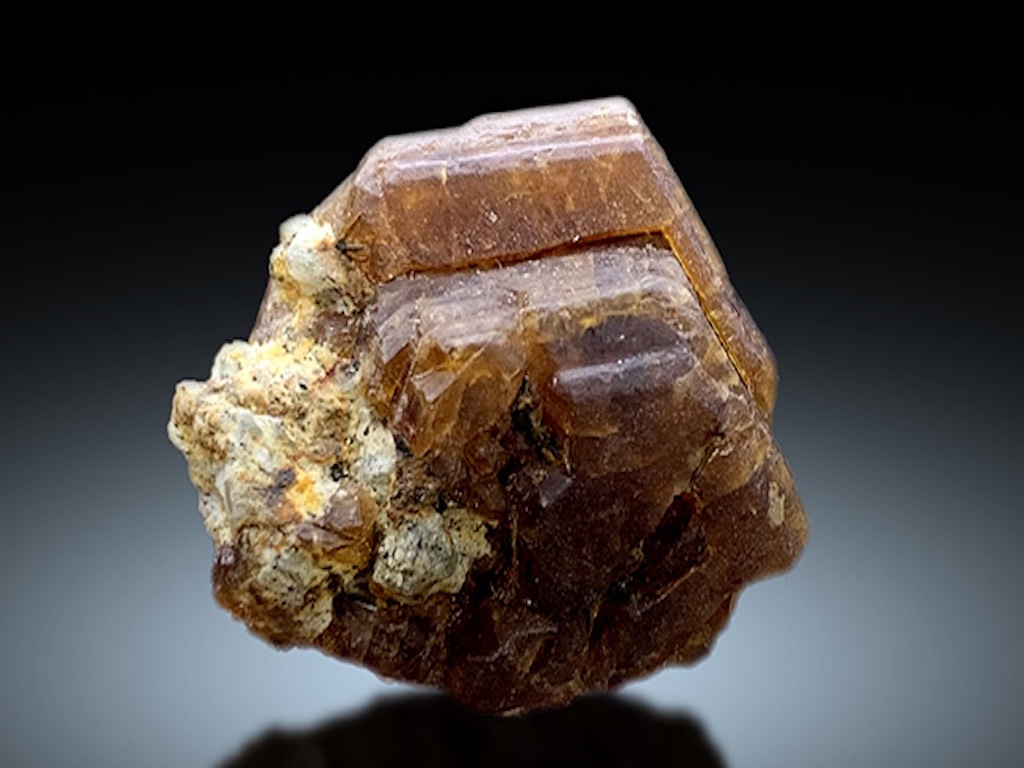
Only a handful of minerals, including bastnäsite, pictured, are processable at a viable cost but they present a different challenge – they can be highly radioactive.
Source: Shutterstock
IACDs are attractive targets because REEs can theoretically be released with a simple ammonium sulphate leach should the rare earth metal sit on the clay surface rather than being locked within insoluble mineral lattice. But determining whether a clay-hosted anomaly is genuinely ionic requires expensive laboratory tests unavailable in the field. Many compelling anomalies prove to be metallurgical dead ends.
The rare earth challenge is not finding the elements. It’s finding them in a form that can be extracted economically.
Dr Janina Elliott
The realities of rare earth element supply
Another differentiator in REEs is that they can be further subdivided into light and heavy REEs (LREEs and HREEs) based on their atomic weight and number. LREEs are geologically more abundant while HREEs have a true low natural abundance and face more severe structural supply deficits, which are at the core of some geopolitical concerns observed today. HREE deposits known and mined today are heavily concentrated in regions like southern China (*49%) and Myanmar (% unknown) which gives these economies a monopolistic position. However, this is not the only reason why China in particular holds such power over the REE space and controls up to **94% of the market.
Let’s look at Brazil as an example for a country rich in REEs such as cerium and neodymium (currently in production) as well as untapped resources forming about *23% of the global supply. As such, Brazil ranks only second to China to date. However, the lack of mid-market capability leads to the outsourcing of mineral refinement to strongholds such as China which adds another layer of complication.
If the world wants to build a more diversified REE market one requires not only find new and economically feasible deposits but also build the relevant infrastructure for a vertically integrated supply chain as well as produce and sell at a competitive price. An economy of scale relative to current standards will be hard to come by for many years. While price floors and government policies in favour of supply independence can help in these matters, this interaction impacts commodity spot prices and acts as a double-edged sword in the free market which is an interesting topic for another day.
A frontier worth watching – new approaches and research
Advancing active brine extraction
One area where the economics may eventually shift is rare earth extraction from brines. Geothermal fluids, oilfield-produced waters, and other subsurface brines can contain dissolved rare earth elements, creating the possibility of recovering critical minerals alongside existing energy operations. Unlike conventional hard-rock deposits, these resources are contained within fluid systems that in some cases are already being produced and managed.
While direct lithium extraction from brines has reached commercial deployment, rare earth recovery remains largely at the research and pilot stage projects currently conducted in the USA, Germany, Iceland and more. The technologies tested here consider the removal of REE as a secondary byproduct either through Electromigration and Electrohydrodynamic Separation, or Advanced Ion-Imprinted Resins (MRT). The former applies a perpendicular electric field to a flowing brine stream to force REE ions to migrate laterally based on their charge-to-mass ratio. The advantage of this technique allows for a complete bypass of physical filtration thus eliminating parasitic pumping loss and preventing silica scale clogging. MRT technology in comparison, employs macrocyclic ligands anchored to silica supports (adsorbent resin) that mimic the exact hydration shell and ionic radius of specific lanthanides thus selectively binding REE and excluding background salts.
The economic case is still being proven due to unresolved concerns about binding competition in salt-rich brines prematurely saturating adsorbents, post-Lithium-extraction silica scaling, and reinjection constraint due to the fouling of wells with additives that can lead to deep aquifers contamination.
Nevertheless, geothermal systems and large geothermal fields such as the Salton Sea may represent an intriguing future convergence of clean energy production and critical mineral supply. As geothermal exploration expands, the same subsurface understanding used to map heat-bearing fluid systems could also help evaluate their potential as secondary sources of critical minerals.
Related content:
* How technology innovation is powering the next era of critical mineral discovery
* Shaping the present, building the future: why mining matters
* From complex to confident: a new era for radiometric processing in Oasis montaj
* Watch: Better targeted mining a step towards public acceptance
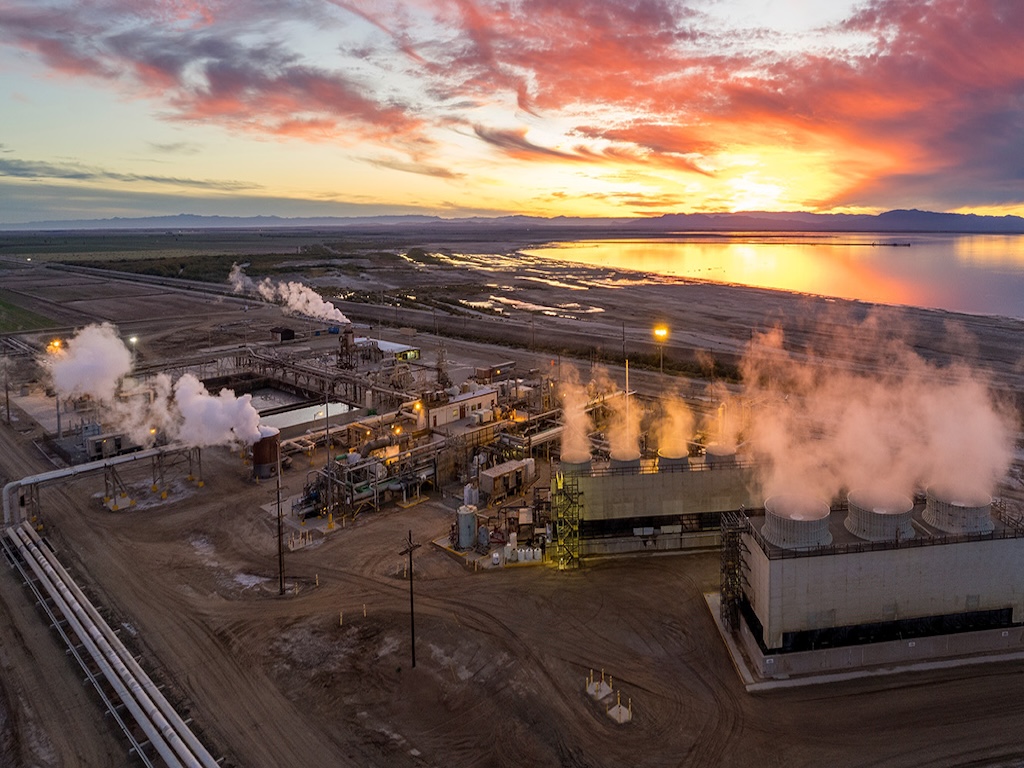
Geothermal fields like the Salton Sea, pictured, give a glimpse of an intriguing future in which clean energy production and critical mineral supply converge.
Source: Shutterstock
Final thoughts
In conclusion, the REE supply problem is not related to their scarcity. The elements are there. What is rare is the integrated capability to find deposits reliably, characterise them accurately, and extract their value economically and with minimal environment impact due to their unique chemical signature. Embracing targeted mining is a crucial step towards public acceptance. The industry is already on a path to develop new, smaller footprint extraction processes but this doesn’t address today’s demand and the issue of hard rock deposit exploration. Here, an advancement of geophysical and geochemical scanning methods from the regional to grain scale combined with a holistic data integration approach is key. The output of focused surveys and multi-analytical exploration methods need to be combined in a cloud-computational environment that allows for the large data volumes to be curated and analysed methodically and quickly. Only then, the exploration to production timeline can be minimised to a degree that will allow a more globally competitive REE market to begin developing within this decade.