


Oasis montaj Resistivity and Induced Polarisation (DC-IP)
Oasis montaj Resistivity and Induced Polarisation (DC-IP) extends Oasis montaj with tools for importing, quality-controlling, and preparing DC resistivity and induced polarisation survey data.
It is used to validate electrode layouts, assess data quality, and organise 2D and 3D DC-IP ground surveys, reducing the risk of errors and rework.
The DC-IP extension is used once survey data has been acquired and works with electrode-based resistivity and IP datasets collected from ground surveys.
The DC-IP extension requires an active Oasis montaj licence and is available as a 12-month named or shared subscription.
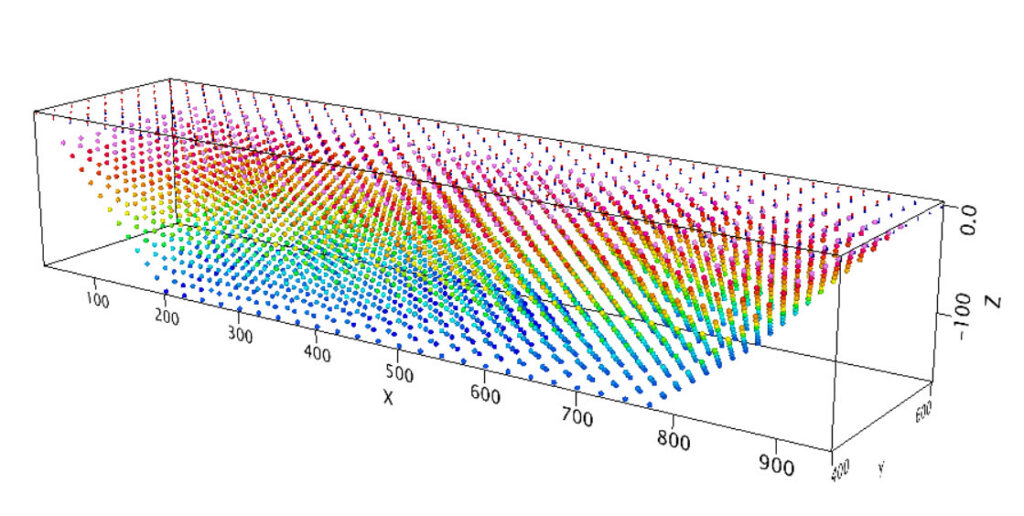
Key Benefits
Prepare DC‑IP data for interpretation and inversion
Oasis montaj DC‑IP is used when resistivity and induced polarisation survey data needs to be checked, organised, and prepared prior to interpretation or inversion. It supports method-specific quality control and data review to ensure survey geometry and measurements are suitable for reliable downstream analysis.

Validate electrode configurations and survey geometry
Confirm electrode layouts, array configurations, and survey geometry are consistent with the intended survey design.

Identify DC-IP data quality issues early
Detect common DC-IP data issues, such as incorrect polarity, poor coupling, or inconsistent measurements, before interpretation or inversion is attempted.

Review survey coverage and responses
Assess survey coverage and data responses using maps and 2D pseudosections to support validation and interpretation.

Prepare DC-IP data for reliable interpretation and inversion
Organise DC-IP datasets so they are ready for interpretation or inversion.
Key Features
Supported methods and data types
Methods: DC resistivity, induced polarisation (IP)
Data types: electrode‑based survey data, pseudosections, derived datasets