



By Colleen O’Hanlon, Corporate Content Lead
The Bentley Systems’ 2025 Impact Report highlights a clear shift in how artificial intelligence is being applied across infrastructure projects: away from experimentation and towards practical, decision‑critical use within trusted engineering workflows.
A central theme of the report is AI as a force multiplier – accelerating analysis, improving optimisation, and helping engineers respond to growing complexity, from climate risk to rising demand on infrastructure systems. Crucially, the report reinforces that AI only delivers value when it is grounded in high‑quality engineering data and deep domain expertise.
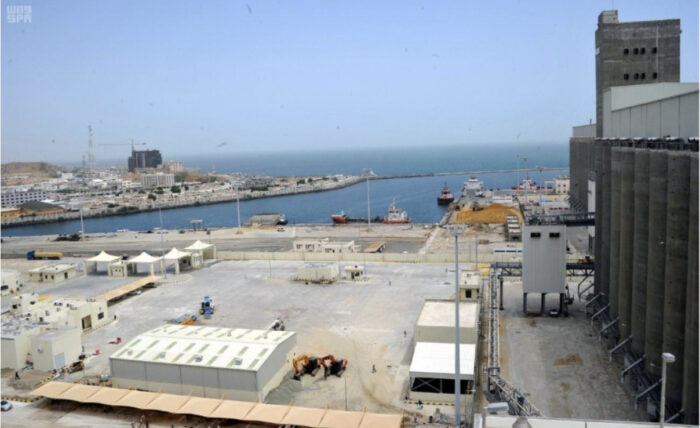
The food security warehouse (bottom left) at Jazan City Port was saved by GeostruXer using Seequent’s PLAXIS 3D.
This is where subsurface intelligence plays a defining role.
One of the projects featured in the report shows how Seequent, the Bentley subsurface company, is helping translate AI ambition into practical engineering outcomes. At a major grain storage facility at Jazan City Port in Saudi Arabia, Seequent customer GeoStruXer used PLAXIS 3D to develop a detailed ground model that underpinned AI‑enabled optimisation of micropile design. The approach reduced material use, lowered embodied carbon, and avoided the costly reconstruction of a critical food‑security asset.
The report also highlights how AI is supporting more sustainable energy systems, including a geothermal project from Fervo Energy that shows how AI data centres can tap geothermal power to reduce carbon footprint — an example Seequent CEO Graham Grant describes as ‘the frontier of a whole new wave of potential renewable energy technology’.
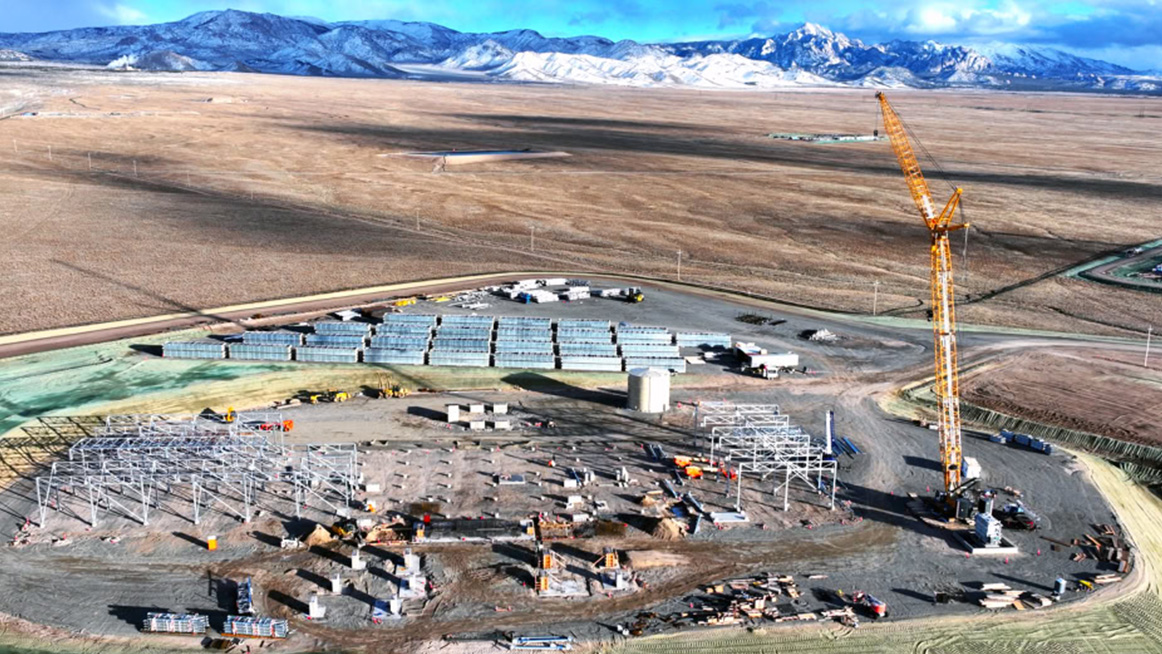
Fervo Energy’s Cape Station demonstrates how combining technical ingenuity with digital innovation is helping reshape the geothermal energy landscape (Source: Fervo).
These examples illustrate a broader point reinforced throughout the Impact Report: AI does not replace engineering judgement – it amplifies it. When applied to well‑calibrated subsurface models, AI can rapidly explore design options, quantify risk, and support decisions that balance safety, cost, and sustainability.
The report also highlights the growing integration between Seequent and Bentley technologies, connecting subsurface models with wider digital engineering environments. This integration enables multidisciplinary teams to work from a shared understanding of ground conditions – a foundational requirement for resilient infrastructure.
As infrastructure owners, operators, and investors face increasing pressure to deliver assets that perform over the long term, the combination of AI and subsurface insight is becoming a strategic advantage. Bentley’s 2025 Impact Report offers a timely view of how that advantage is already being realised – and the role Seequent’s customers are playing in turning AI ambition into measurable impact.