



By Paul Gorman
Keeping spent nuclear fuel safe into the vastness of geological time is not a job to be taken lightly. It is the ultimate exercise in subsurface risk management.
In Finland, nuclear-waste management company Posiva’s deep geological repository for spent fuel on Olkiluoto Island (ONKALO) has a safety assessment lasting 1 million years.
‘It’s going to be eternal, an eternal solution,’ according to Principal Geologist Antti Joutsen.
‘Once all the waste canisters are placed and the repository is eventually closed, its safety will no longer depend on continuous maintenance or monitoring. It’s a passive solution.’
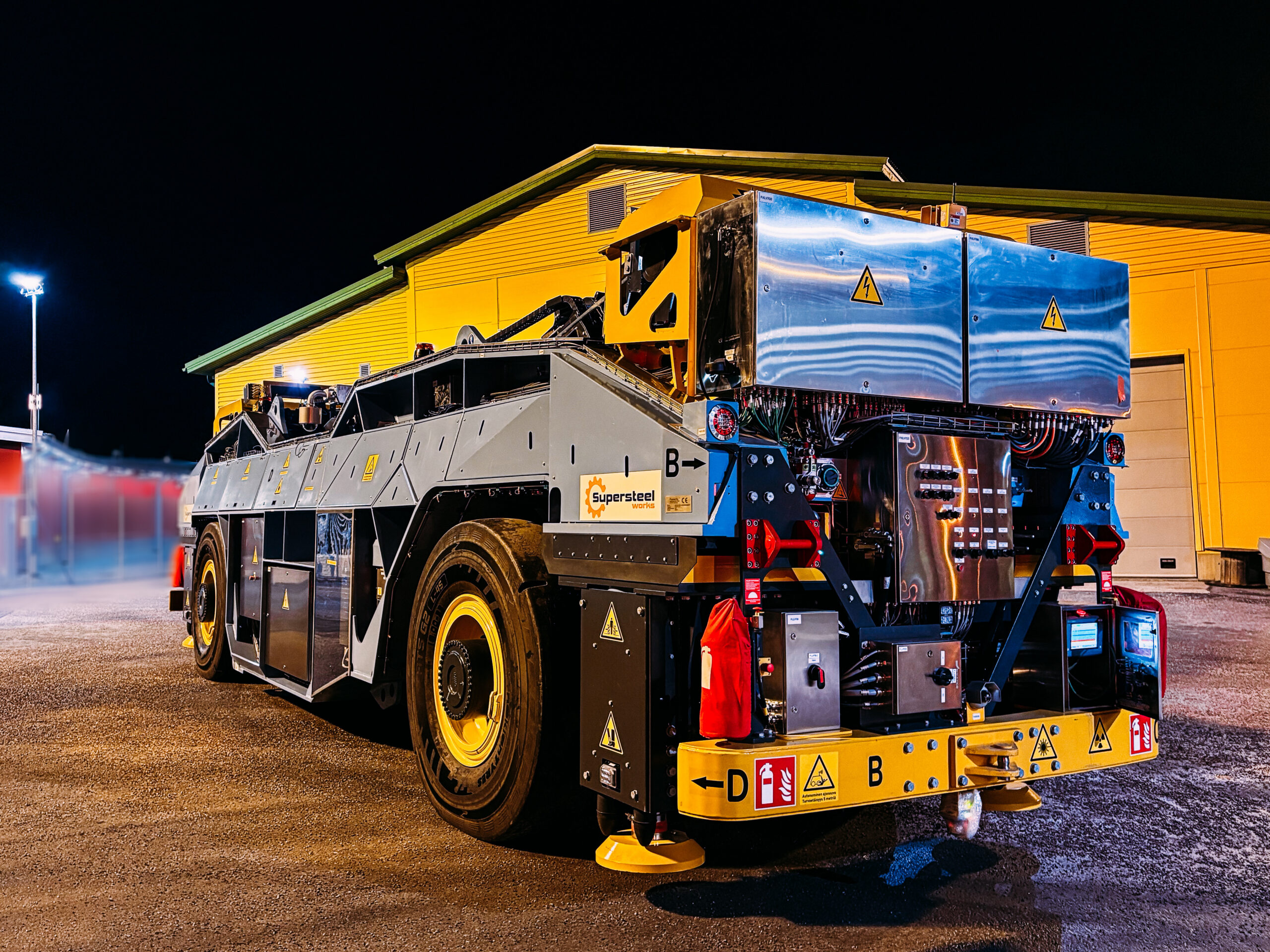
The canister transfer and installation vehicle, known by its Finnish abbreviation KSAA (kapselin siirto- ja asennusajoneuvo), is one of the most demanding pieces of equipment in the final disposal facility. Its task is to transport the disposal canister underground and install it with high precision into a deposition hole more than eight metres deep. The completion and commissioning of KSAA have been a critical part of the progress of the entire final disposal project.
Source: Posiva
To ensure groundwater, fractures in the bedrock, chemical action, even ice ages and earthquakes, will not compromise the safety of the canisters and tunnels over many tens of thousands of years, Posiva used Seequent’s Leapfrog Geo and Central to pinpoint the most stable and suitable areas of the 1.9-billion-year-old metamorphic gneiss bedrock below the site.
Olkiluoto Island, in the Eurajoki municipality on Finland’s west coast about 225km northwest of Helsinki, is home to three of the country’s five nuclear reactors, operated by Teollisuuden Voima Oyj.
In early August, Finland’s Radiation and Nuclear Safety Authority (STUK) issued a favourable statement on Posiva’s operating licence application and published its safety assessment, supporting the granting of the operating licence. Then, on October 22, the Finnish Government granted Posiva the operating licence for the encapsulation and final disposal facility for spent nuclear fuel located in Olkiluoto – the first of its kind anywhere in the world.
In August, Posiva also began drilling the first deposition holes intended for actual final disposal.
Before final disposal can begin, Posiva must also complete the remaining testing and commissioning activities and the required regulatory steps. After these are completed, Posiva will become the first company in the world to begin the industrial-scale final disposal of spent nuclear fuel.
How was the Olkiluoto site chosen?
Nuclear power enjoys broad public acceptance in Finland, where last year it accounted for about 37% of electricity generation. It has also played a crucial role in reducing emissions – last year, 96% of Finnish electricity was carbon neutral.
The latest survey commissioned by Finnish Energy found 66% of Finns had a positive view of nuclear power and only 8% viewed it negatively.
Joutsen believed one of the main reasons for that was Finland had taken a very long-term and systematic approach to nuclear power and nuclear-waste management.
‘Responsibilities have been clearly defined, regulation has been independent, and one of the fundamental principles has been that the generations benefiting from nuclear energy should also take responsibility for managing the waste it produces, rather than leaving the issue for future generations to solve.
‘What is perhaps most significant about Finland is the continuity of this work. The development of final disposal has continued for more than 40 years through site selection, extensive research, underground construction and regulatory review.
‘We are now reaching the point where decades of scientific, engineering, and regulatory work are being turned into actual final disposal operations.’
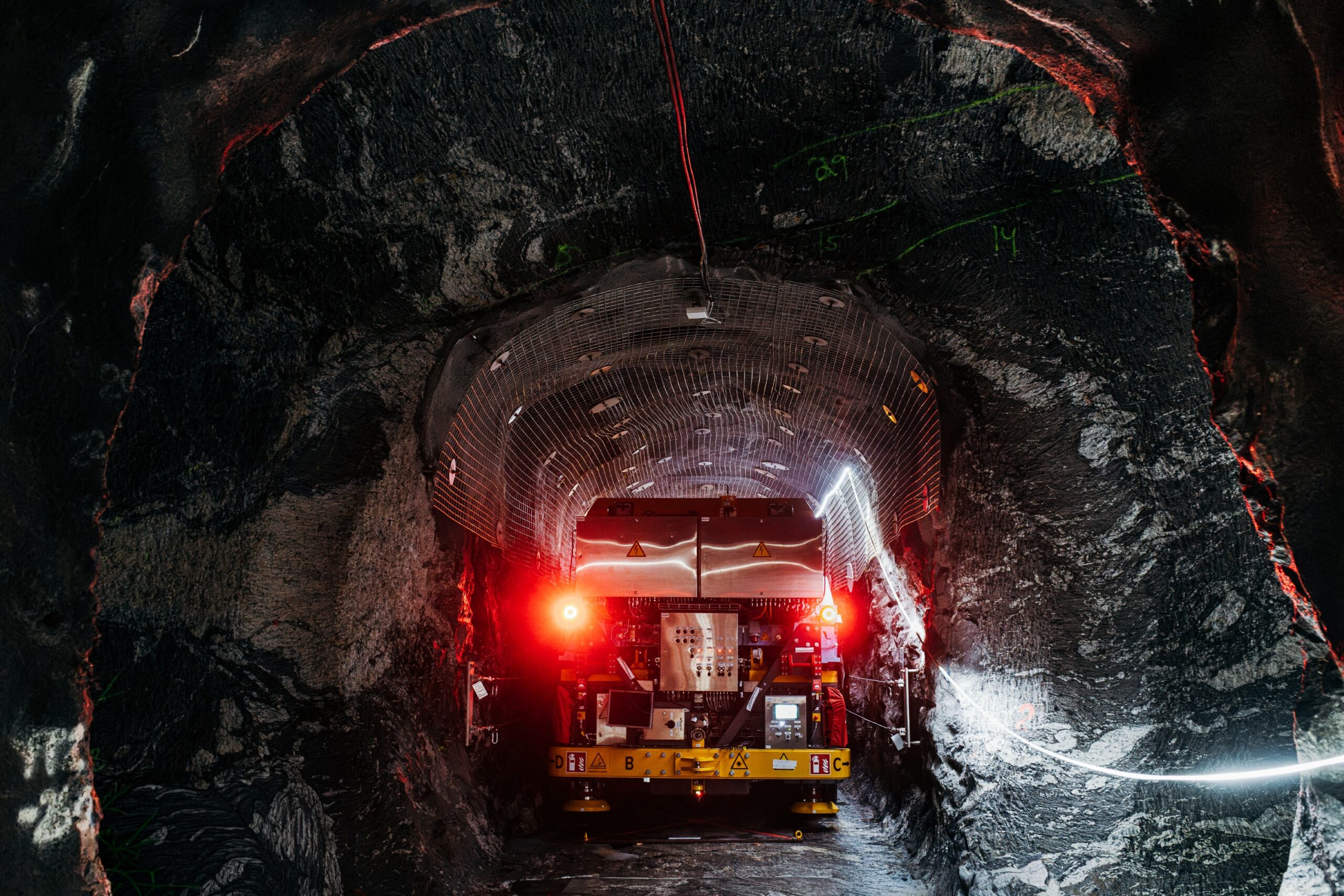
The photo shows KSAA in the joint functional test tunnel in ONKALO®. As the photo illustrates, there is not much extra room in the tunnel: the large installation vehicle has been designed to operate with precision within the dimensions of a deposition tunnel.
Source: Posiva
When the deep repository is fully developed, it will comprise around 50 km of tunnels over an underground area of about 2 sq km. With the current scope of design, the facility can accommodate approximately 6500 tonnes of uranium in spent nuclear fuel, corresponding to about 3300 disposal canisters.
The canisters have a 5cm-thick copper shell around a cast-iron insert and will be placed into 8m-deep deposition holes in the tunnels over about 100 years, and surrounded by a bentonite clay buffer. Once all the canisters are in place, the tunnel will be backfilled with bentonite.
Public acceptance was a major factor in choosing the site, Joutsen said.
‘The municipality of Eurajoki is used to nuclear energy – the power plants have been there for decades and it’s a major employer in the area. The municipality also benefits from the jobs and the property tax revenues generated by the power company, both of which are important for the local economy.’
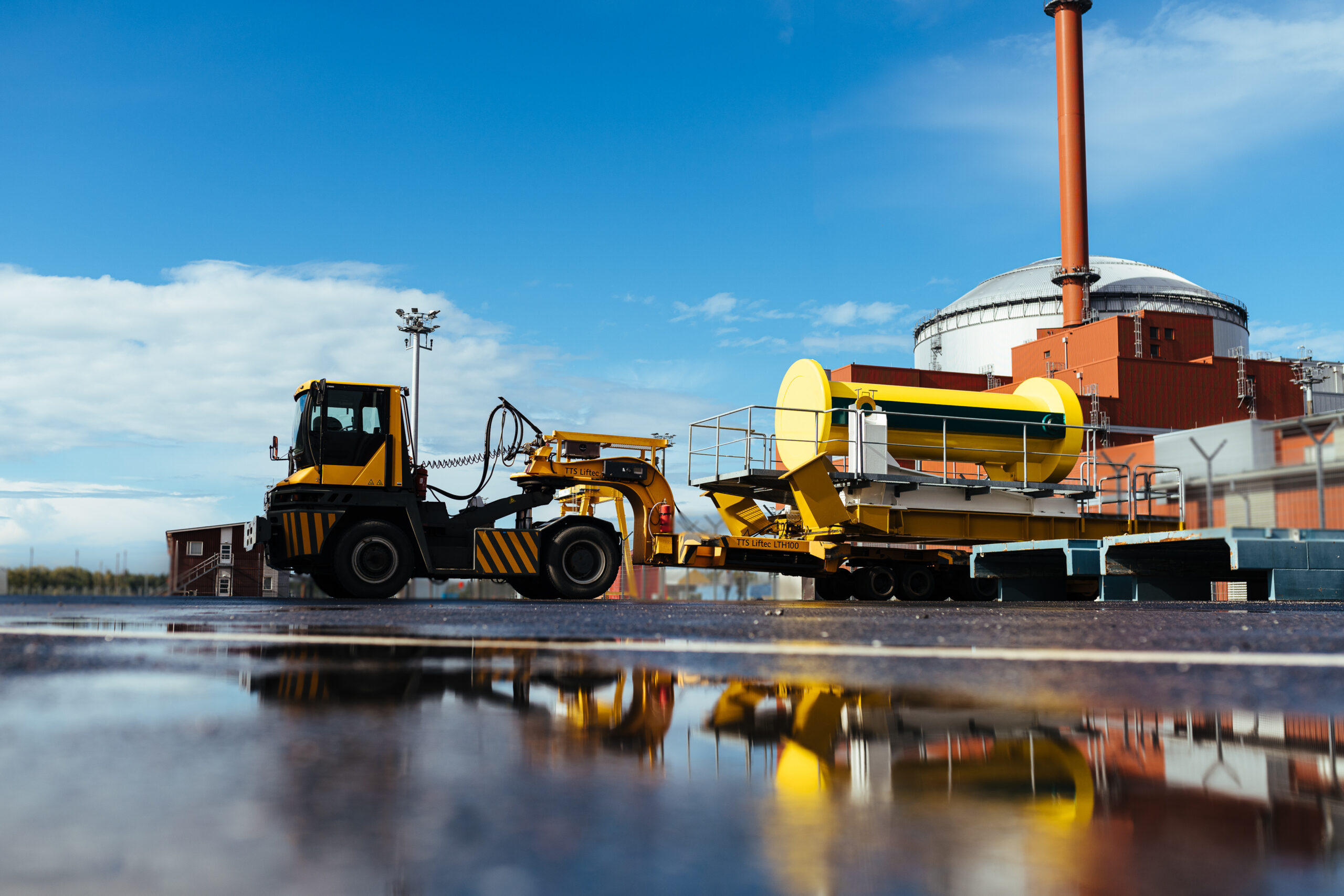
The photo shows the transfer cask being transported from the interim storage facility for spent nuclear fuel to the encapsulation plant. Spent nuclear fuel will be transported in this cask to the encapsulation plant for encapsulation.
Source: Posiva
How geological modelling supports the repository
Seequent’s software is being used to play a key role in Posiva’s management of geological information, in maintaining up-to-date models, and will continue to support the safe and efficient operation of the repository.
‘Our current way of working would be very difficult, if not impossible, without Seequent’s products. I’m using it all the time, almost every day – it’s a vital part of our daily activities.’
Seequent’s software helped Posiva strengthen the scientific and technical foundation underpinning the site.
‘Ongoing site investigations, the construction of new underground facilities, and operations for spent-fuel disposal must all progress simultaneously and interact closely with one another. The platform allows us to update our geological models efficiently, reliably, and at a pace that matches the needs of the organisation and the repository programme.
‘In practical terms, we estimate that model update times have been reduced by as much as 90% from the technical point of view, compared with what would be achievable using more traditional 3D-modelling software.
‘At the same time, model quality and confidence have improved significantly, enabling better-informed engineering and repository planning decisions,’ Joutsen said.
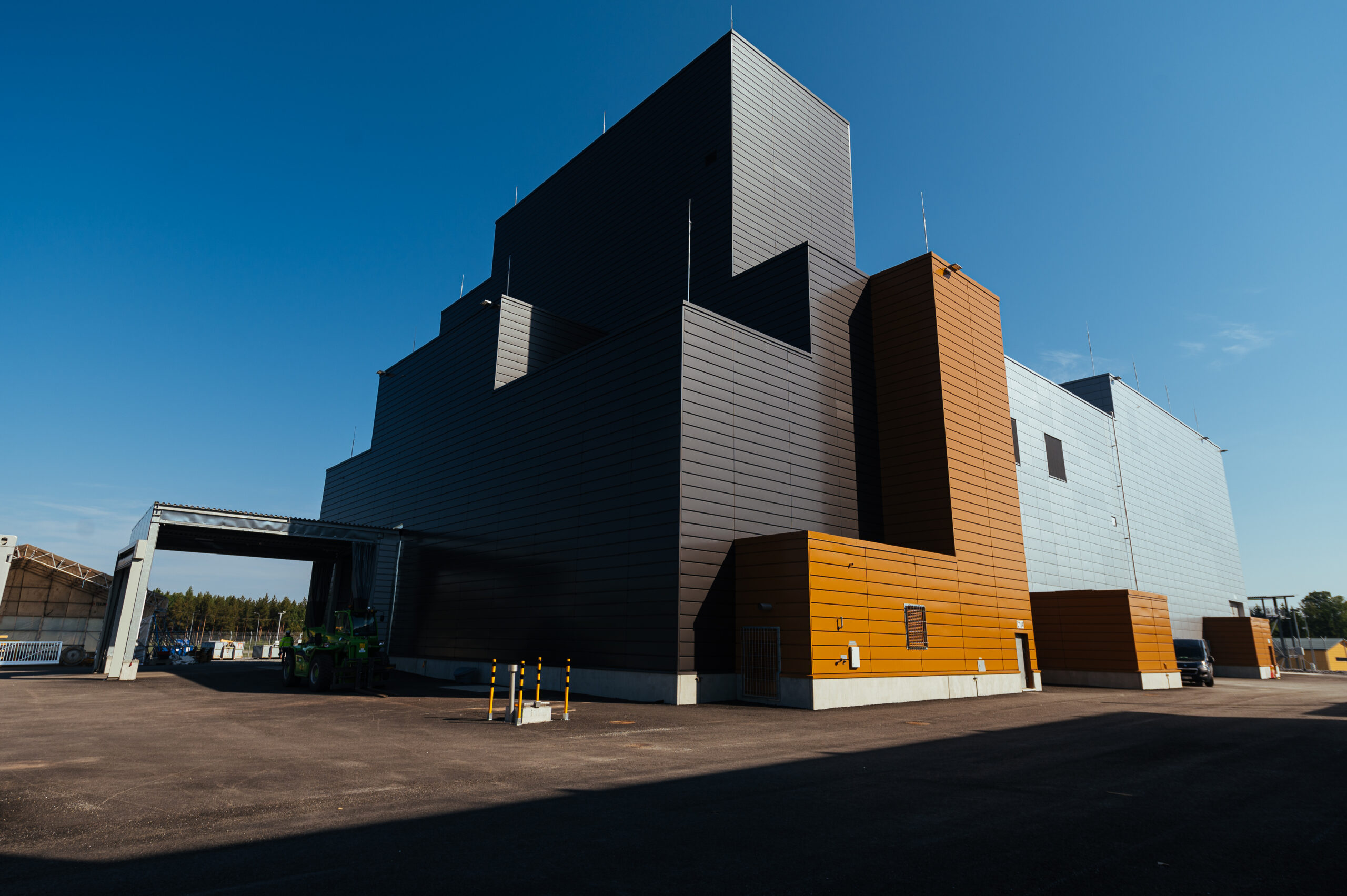
A view of Posiva’s encapsulation plant looks like from the outside. Construction of the building was completed in May 2022, after which work has continued with equipment and system installations, commissioning, testing and trial runs. In the encapsulation plant, spent nuclear fuel will be packed into disposal canisters before being transferred more than 400 metres underground into ONKALO® for final disposal.
Source: Posiva
Leapfrog Geo had enabled more accurate and robust modelling of complex fault and fracture systems.
‘These models form an important part of the technical basis supporting repository design, rock-suitability classification, and safety-case development, all of which contribute to the regulatory review and approval process.
‘The real strength of Leapfrog Geo is its ability to work dynamically with evolving datasets. Data can be imported quickly and efficiently, and there is no need for extensive manual digitisation because geological objects are generated automatically, according to the rules and parameters defined by the modeller.
‘The ability to seamlessly import and export multiple file formats is also a major advantage.
‘Central also enables model versions to be updated efficiently by different modellers, while allowing personnel working across various processes to easily access and review the models directly within Central.’
The impact of Seequent’s software on his role at Posiva was ‘very significant’, he said.
How the repository keeps spent fuel safe
ONKALO is designed to accommodate approximately 6500 tonnes of uranium in spent nuclear fuel at the site during the next 100 years.
‘We have five reactors in Finland, TVO’s three units at Olkiluoto and Fortum’s two units at Loviisa. All of the spent fuel produced by these during their whole life cycle will be disposed of,’ he said.
‘The newest reactor, Olkiluoto 3, is a 1600-megawatt unit and among the most powerful nuclear power units in the whole world. It started regular electricity production in 2023 and has a planned service life of at least 60 years, and then there is the cooling period for the spent fuel, which needs to be cooled down for about 40 years so that the radiation level and the heat-production level have diminished to a level where it is possible to take it down to the repository.’
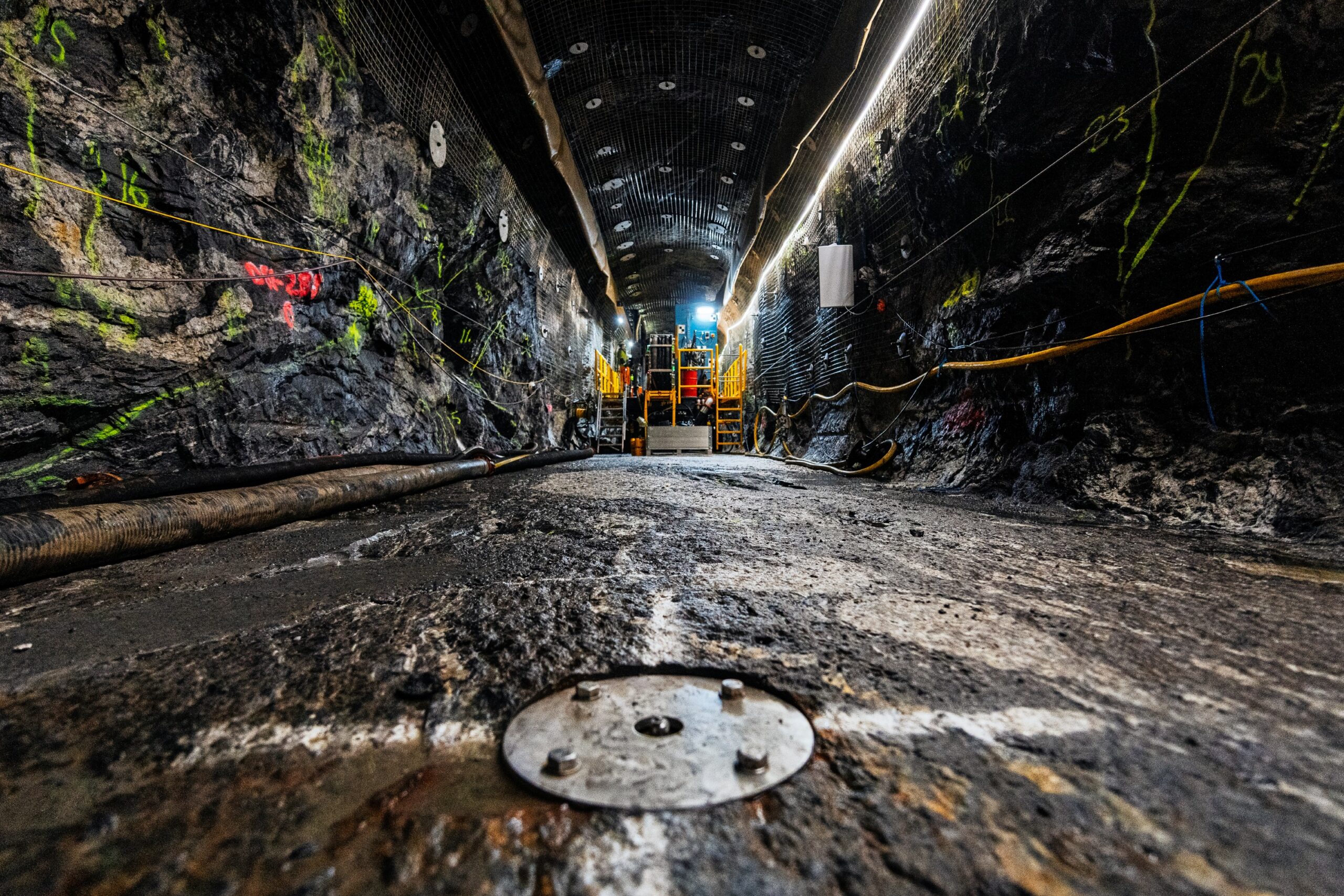
Deep underground, more than 400 metres below the surface in the Olkiluoto bedrock, drilling of the very first deposition hole intended for actual final disposal began in late August 2026.
Source: Posiva
During the first few hundred years after disposal, the radioactivity of the spent nuclear fuel remained relatively high, making this a particularly important period for the engineered barriers. Beyond that, the radioactivity would decline gradually, although some isotopes could remain hazardous for tens of thousands of years.
‘The villain we are trying to protect against is the groundwater in the bedrock – the amounts are very small and the flow velocities are very slow, but groundwater is basically the only thing that can bring harmful radioactive substances to the ground surface, kind of acting as an elevator.
‘We have several barriers that prevent or limit the release and transport of radioactive substances.
‘First of all, there is the copper canister that is extremely resilient against corrosion in an unoxidised groundwater environment. The second barrier is the bentonite clay surrounding the canister. When it becomes saturated with the groundwater, the bentonite swells and forms a dense buffer with extremely low hydraulic conductivity, which limits the water flow around the canister.
‘Finally, the bedrock itself is also a natural release barrier as the repository is located at a depth of over 420 metres in stable rock, which provides favourable and predictable conditions for the other engineered barriers and limits potential transport pathways to the surface.’
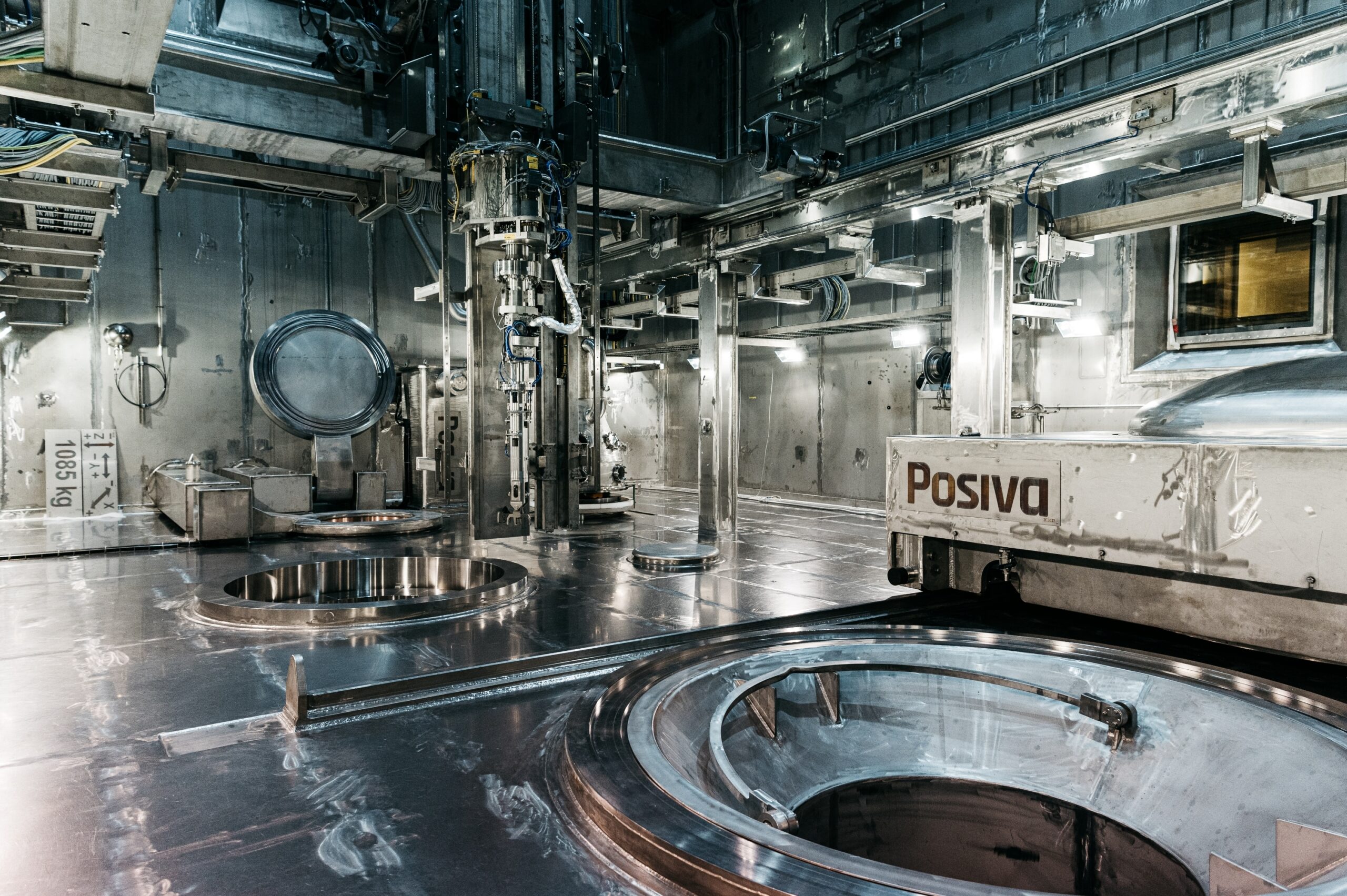
This is what it looks like inside the fuel handling cell at Posiva’s encapsulation plant. This is where the spent fuel assemblies are lifted from the transfer cask, dried and transferred into the disposal canister. The entire process is carried out remotely in radiation-shielded facilities, and the concrete walls of the handling cell are approximately 1.3 metres thick.
Source: Posiva
The site was being developed, and would be operated, in a phased manner, to minimise disturbance to the groundwater system.
‘We excavate a few new deposition tunnels, then we bore the holes on the floors of the tunnels. Then the operational phase takes place, and all the canisters planned for that tunnel are put in place. And at the same time, somewhere else, new investigations and new excavations are going on.’
It is Joutsen who has borne much of the responsibility of finding the repository’s sweet spots to ensure the canisters are placed in suitable bedrock for long-term safety.
The site and the operation showed Finland’s commitment to dealing with its own spent fuel.
‘Finland is demonstrating that the back end of the nuclear fuel cycle can be managed responsibly in practice, not only planned on paper.’
- Long-term safety assessment of final disposal extending up to 1 million years;
- Facility accommodates about 6500 tonnes of uranium in spent nuclear fuel;
- Final disposal takes place at a depth of approximately 430 metres;
- Model update time cut by up to 90% using Seequent software.