


By Colleen O’Hanlon, Corporate Content Lead
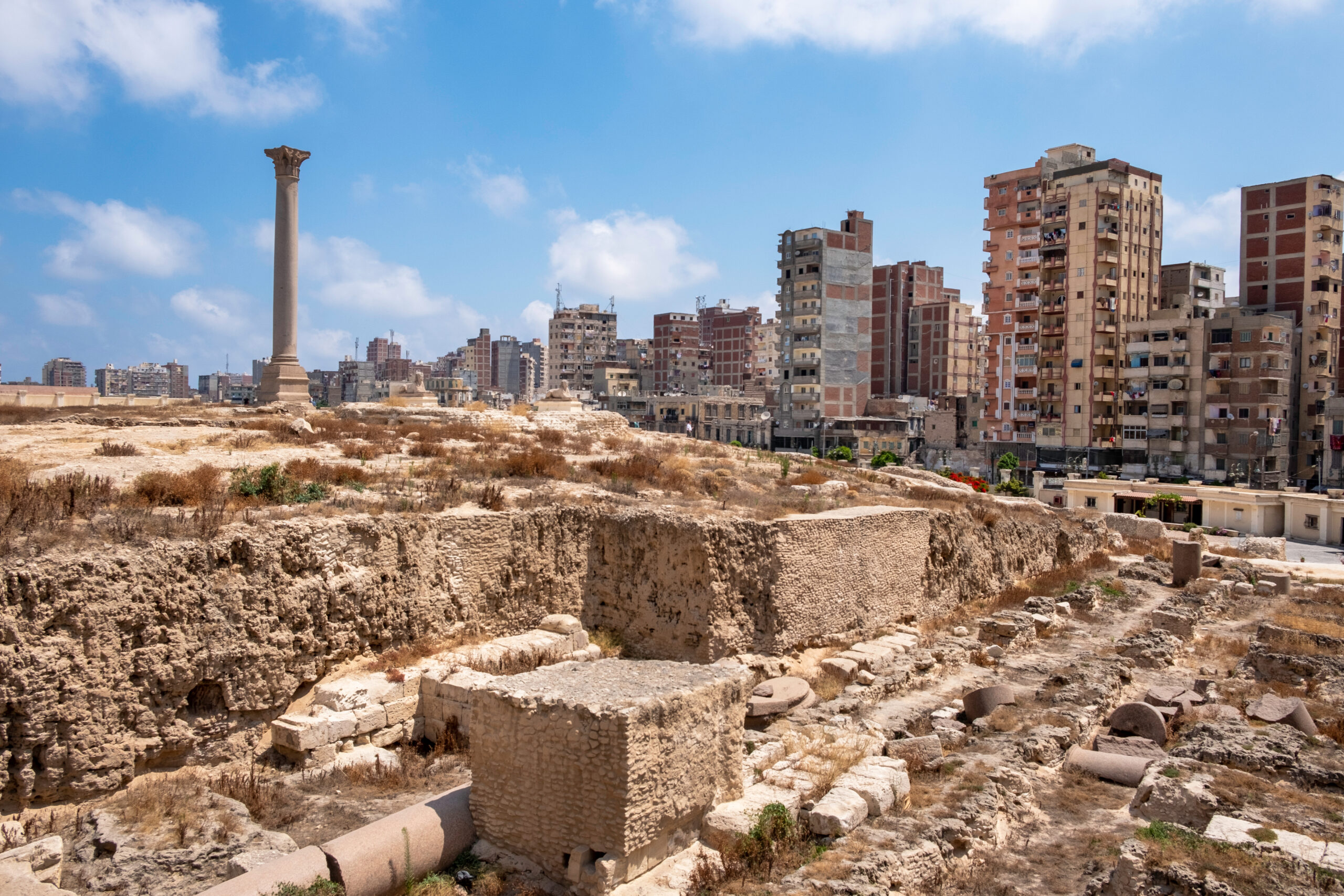
In the heart of Alexandria, Egypt, stands one of the ancient world’s most impressive feats of engineering: Pompey’s Pillar. This massive Aswan red granite monolith, weighing approximately 285 tonnes, has stood for centuries as a testament to Roman grandeur, commemorating the Roman Emperor Diocletian’s suppression of an Alexandrian revolt and was erected in his honour as a triumphal monument in the late third century AD.
However, beneath this towering monument lies a hidden vulnerability – a complex network of ancient Greek tunnels, known as the Serapeum, carved into a local weak geological foundation that is increasingly under threat.
A groundbreaking new study by Professor Sayed Hemeda from Cairo University highlights how technology is now the front line in protecting this invaluable site from the dual pressures of time and climate change.
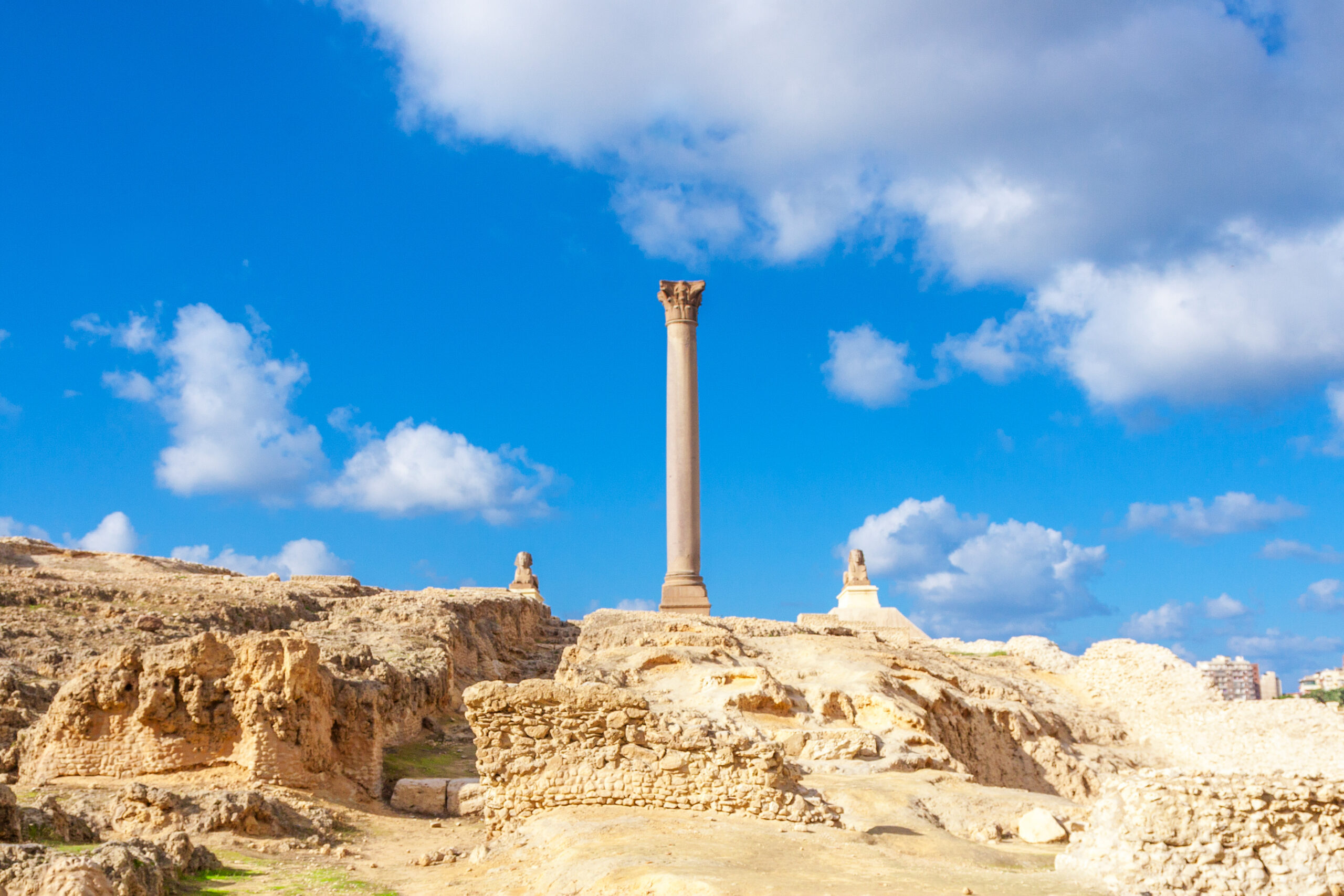
Pompey’s Pillar and sphinx at Serapeum of Alexandria. Professor Hemeda’s research has revealed a vulnerability hidden beneath it.
Source: Adobe Stock
PLAXIS: the preservation technology of choice
To assess the risk without disturbing the sensitive archaeological site, Professor Hemeda turned to advanced numerical modelling. Using Seequent’s PLAXIS 2D, a specialised geotechnical finite element software, he developed a sophisticated digital simulation to analyse the Soil-Structure Interaction (SSI) between the massive granite pillar and the fragile tunnels below.
‘Modelling Pompey’s Pillar and the Greek tunnels beneath it in PLAXIS revealed complex soil-structure interactions, stress redistributions, and potential failure mechanisms that traditional empirical or analytical methods could not capture,’ he said.
- Identify ‘hotspots’: The analysis revealed critical stress concentrations at the corners of the tunnel roofs, where the rock is stressed to approximately 64% of its ultimate capacity.
- Calculate the factor of safety: The study determined a current static Factor of Safety (FoS) of 1.55. While conventionally considered stable, this marginal value offers a ‘precarious’ long-term outlook as weathering continues to weaken the rock.
- Uncover a geotechnical paradox: Fascinatingly, the model showed that while the pillar’s weight creates dangerous shear stress, it also generates a stabilising ‘clamping’ effect (confinement pressure) deep within the rock mass, which currently helps the system support itself.
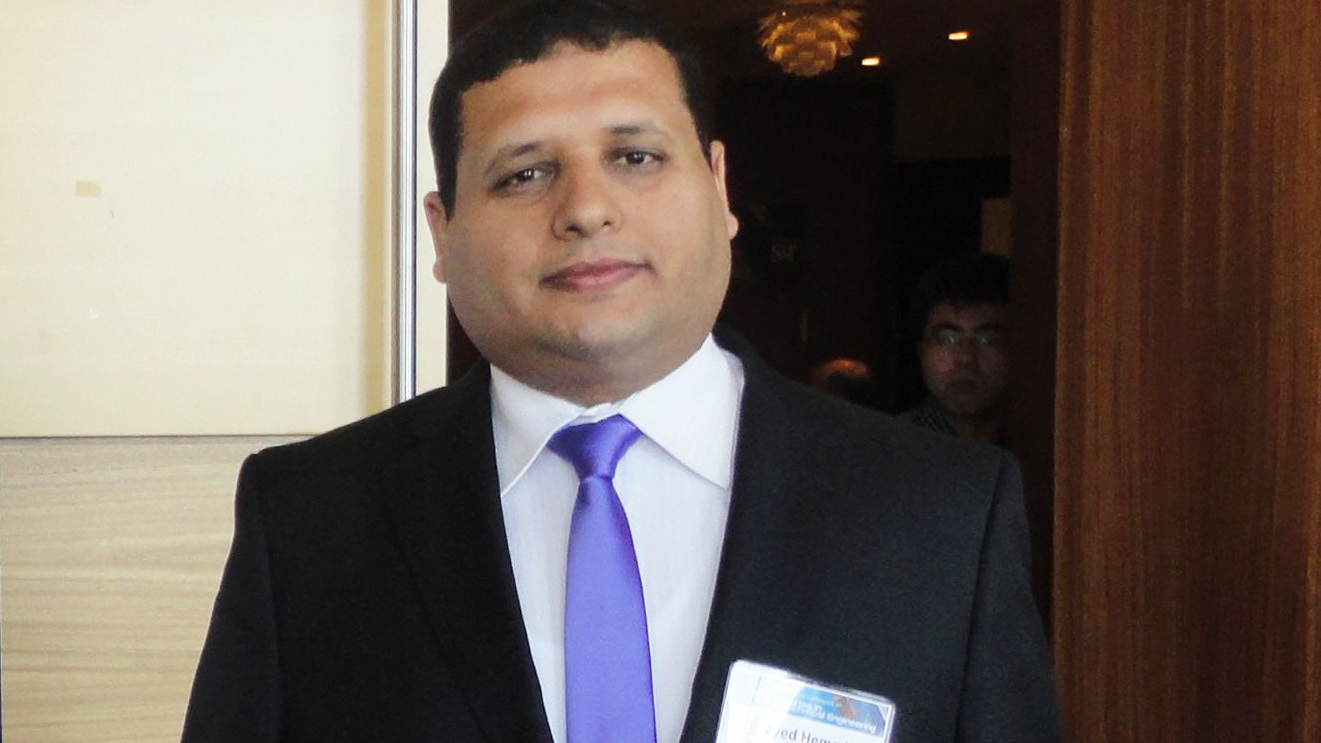
Professor Sayed Hemeda from Cairo University
Source: Supplied
The future of heritage: AI and real-time monitoring
Professor Hemeda’s work doesn’t just diagnose the problem; it provides a roadmap for the future of heritage conservation. The paper advocates for the transition toward AI-powered digital twins and Surrogate Models (SMs).
Unlike traditional, time-consuming simulations, surrogate models can be trained on existing data to provide real-time structural health monitoring. This means conservators could receive instant alerts if environmental changes or seismic activities push the stress levels at Pompey’s Pillar beyond safe thresholds.
‘Pompey’s Pillar itself remains structurally stable, but the underground tunnels and galleries beneath it are far more fragile erosion, groundwater seepage, and centuries of neglect mean that intervention is approaching a critical stage,’ Professor Hemeda said.
Without stabilisation, collapse of sections of the subterranean Serapeum complex could eventually undermine the monument’s base, the study found.
Technology as a guardian
The preservation of Pompey’s Pillar is no longer just a task for archaeologists with brushes and trowels; it is a challenge for engineers with sensors and software. By leveraging tools like PLAXIS to understand the complex interplay between ancient architecture and the earth, we are moving from reactive repairs to proactive preservation.
Professor Hemeda’s research proves that while the stones of the Serapeum may be ageing, the technology used to protect them is just beginning to reach its full potential.