


By Paul Gorman
Geothermal’s potential to deliver reliable, low‑carbon power on a global scale is clear. The challenge now is how quickly the sector can move from promise to repeatable, investable reality – across diverse geology, markets, and operating conditions.
To explore what that transition will require, we spoke with Dr Kristie McLin, Principal Investigator at the Utah FORGE (Frontier Observatory for Research in Geothermal Energy) project, the world’s only field‑scale underground laboratory dedicated to advancing enhanced geothermal systems.
Geothermal heat may be below the surface everywhere, but the challenge is to make it viable, regardless of location and geology.
‘If you can bring the cost down enough to drill deeper and drill hotter,’ Utah FORGE’s new Principal Investigator, Dr Kristie McLin, said, ‘we would be able to develop geothermal systems in many places around the world, not just the obvious places that have the blessing of shallow heat.’
Dr McLin took up her new position with Utah FORGE in February and is now Director of Research and Science at the University of Utah’s Energy & Geoscience Institute.
Utah FORGE is widely considered the only field-scale geothermal research facility of its kind, a dedicated underground laboratory studying enhanced geothermal systems (EGS) in an open-access research environment.
The FORGE project began with a Department of Energy funding initiative to reduce the cost of EGS, leading to a competitive site selection process and the eventual establishment of the Utah FORGE field laboratory after confirming suitable subsurface conditions. The project has since focused on drilling, hydraulic fracturing, and circulation tests to demonstrate and advance geothermal technologies.
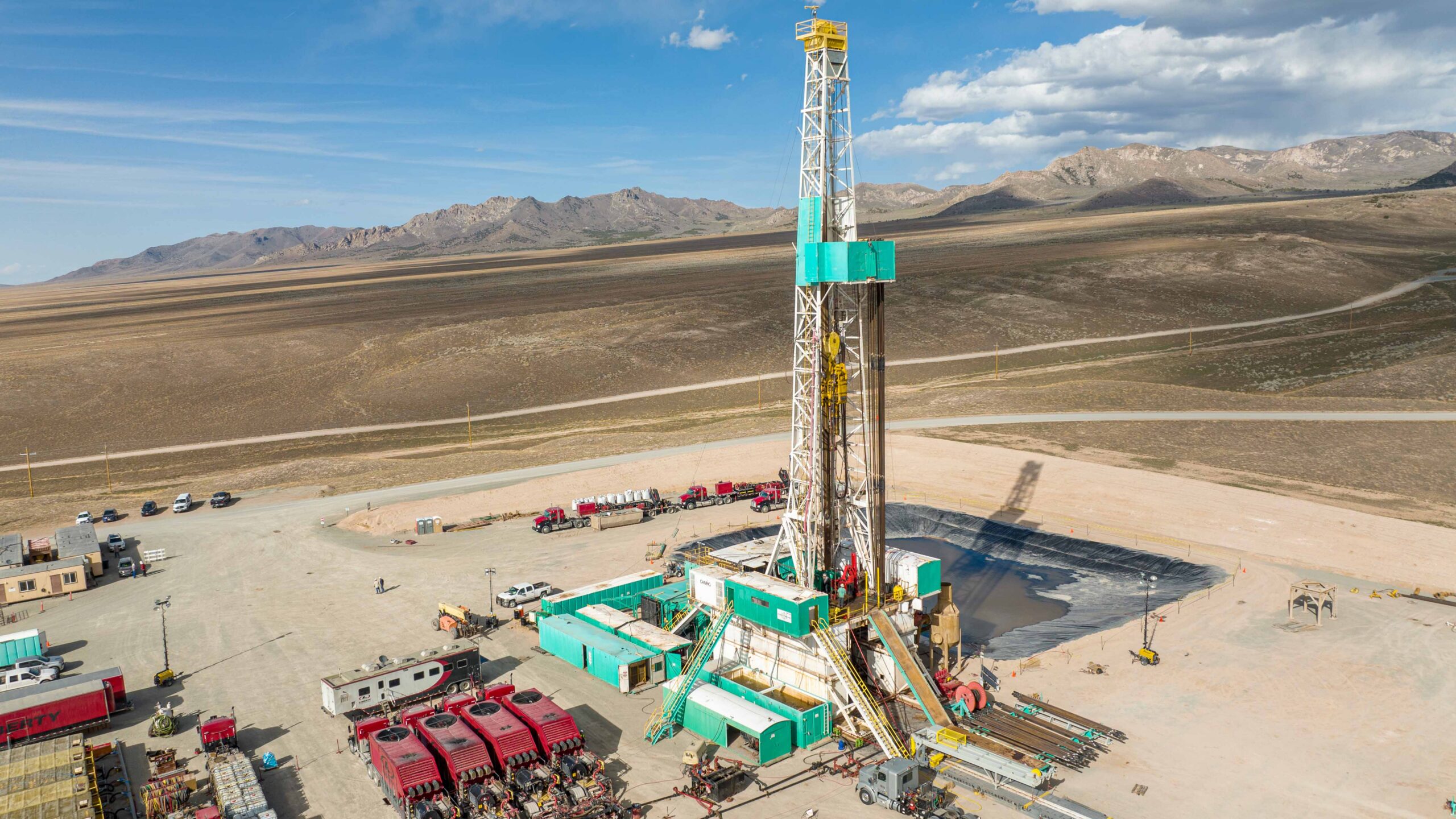
Utah FORGE is widely considered to be the only field-scale geothermal research facility of its kind.
Source: Utah FORGE
It has two directionally drilled wells reaching around 2400m (8000ft) in depth on a 5sq km site near Milford and uses advanced oil and gas-industry technology to engineer geothermal reservoirs in hot, dry rocks which lack permeability.
‘Geothermal everywhere’ is one of Dr McLin’s visions for the energy source.
‘In an ideal world, the success of geothermal depends on the right geological structures, water availability, and permeability,’ she said.
‘A lot of different elements have to come together in harmony, and you don’t always get that.
‘We need to be pushing the boundaries of going to areas where maybe the conditions aren’t as ideal for enhanced geothermal. Maybe it’s different rock types, maybe being able to go to higher temperatures, because the economics are more and more favourable as you can get to those higher temperatures.
‘If we can continue to develop those technologies that get us to those higher temperatures, then the cost of going deeper isn’t as prohibitive in development for enhanced geothermal systems.’
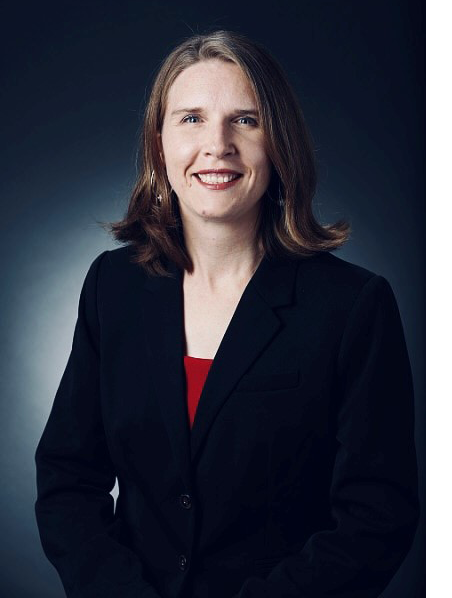
Utah FORGE’s Principal Investigator, Dr Kristie McLin, says the challenge is to make geothermal heat available everywhere, regardless of location and geology.
Source: Utah FORGE
‘We can’t just continue little tweaks and optimisations to make this work in more places. We have to keep producing those huge step changes in technology to be able to build upon the success of Utah FORGE and spread it to more places.’
Geothermal energy faces an uphill battle against cheaper sources of power. That cost competitiveness is especially a major barrier in regions which already have cheap electricity.
‘Utah, for example, has one of the lowest power prices for consumers.
‘In the United States, it’ll be very difficult for investors to see a pathway to doubling or tripling electricity prices. So, if we can address some of these challenges, and increase the amount of power we’re generating versus the power that’s being taken off in operations, I think that’ll be another indicator to investors that geothermal is really becoming a premier opportunity,’ McLin said.
There has been rapid growth in global interest in geothermal power, and it is crucial to help different vendors who want to develop products for deployment.
‘We’ve had a lot of appreciation and value derived in those partnerships that will continue to help the geothermal industry as a whole. The more offerings that are available from more suppliers, the stronger and more resilient that supply chain is.’
The Utah FORGE team has been working with professionals from the oil and gas industry, offering training and visits to highlight what is different about the geothermal sector and the skills they have which are transferable.
Geothermal energy now has a much higher profile due to the interaction with the FORGE team, and more students are excited by geothermal opportunities, she said.
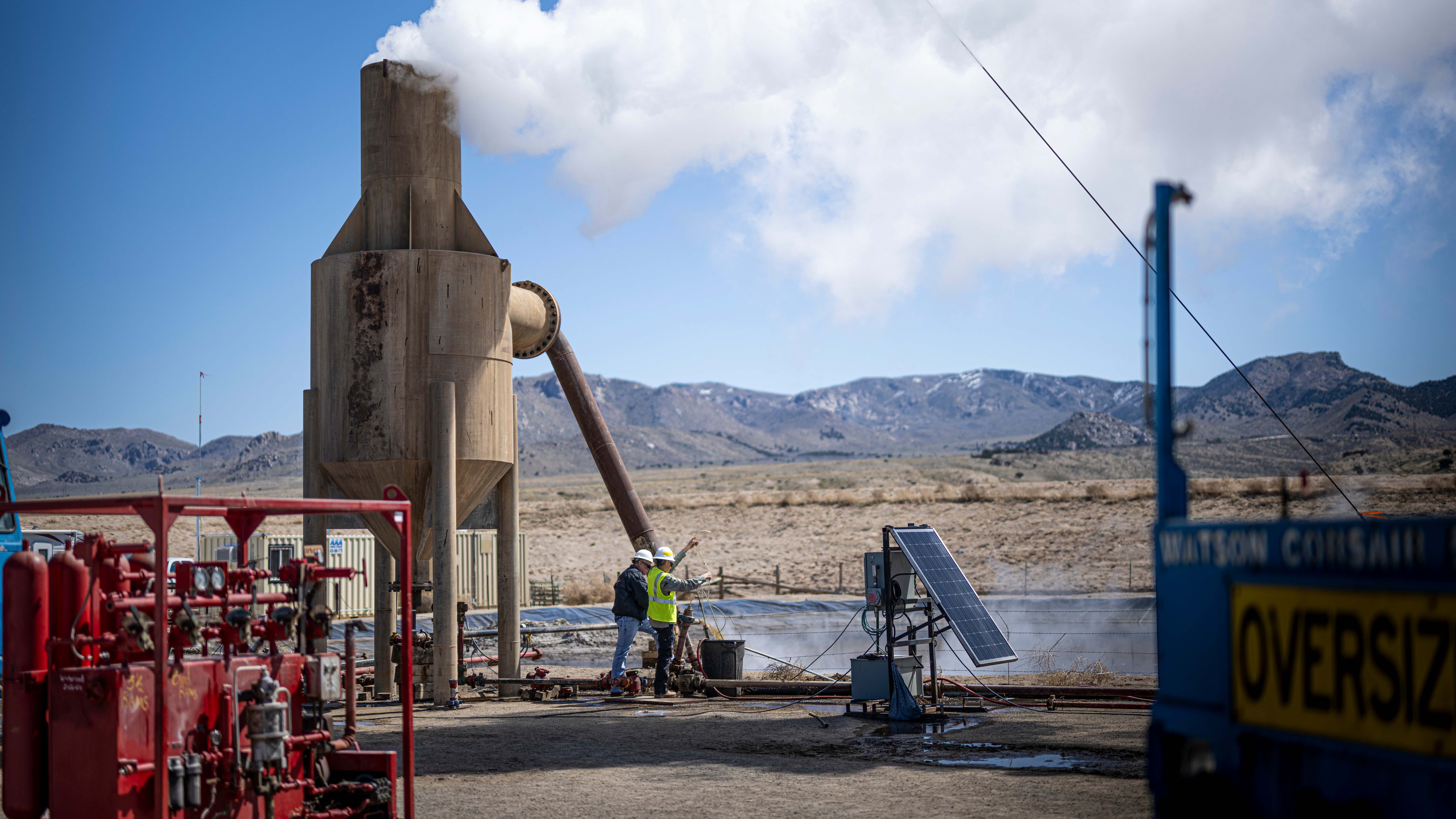
Utah FORGE has been guaranteed long-term federal funding through to 2028 and remains unique.
Source: Utah FORGE
‘When I first started studying geothermal energy, it was extremely niche. There were maybe 50 total attendees at the Stanford Geothermal Workshop every year, and everyone knew everyone. Then in the last few years the Stanford Geothermal Workshop has sold out at 450 attendees a year.’
FORGE’s strategy as a de-risking engine for the industry is crucial for international progress, Dr McLin said.
‘The focus of the Utah FORGE project has really been on generating data and sharing that. And so, we have to date over 133 terabytes of data that are available and open to the public, and we’re continuing to add more every day.
‘In commercial development, companies probably do not have the luxury of spending the amounts of money that have been invested in the Utah FORGE site to collect all of the data that we’ve been collecting.
‘Cores have been taken, cuttings have been evaluated. We have fibre-optic data, microseismic data. That’s why it’s so important that we use this extremely data-rich pilot to head towards innovations that commercial operations can leverage and really understand.’
The vast data set also provides an opportunity to carry out research for students and academics who otherwise wouldn’t have that ‘foothold’ to develop their own skills and theories.
Dr McLin stressed winning trust from the public, local communities, and nearby businesses as crucial to developing technologies and future geothermal projects.
There have been past instances of projects that have been shut down due to induced seismicity from drilling and hydraulic fracturing, which has led to bans on reservoir creation in some regions.
‘These are all areas that we really have to be very strong in our stakeholder engagement and assure people that this can be done safely, so that it can be deployed in more places.’
‘We have to be able to demonstrate that we can operate within tolerances that stakeholders are willing to accept. Demonstrate time and time again so that this can be done safely – we can produce clean 24-7 electricity without impacting your livelihood, your home, your businesses.’
‘We couldn’t do the work that we’re doing without the support of the local communities, without the support of regulatory agencies, without people understanding what geothermal energy is and why it matters.’
FORGE has many partners, official and unofficial, who have helped build what is shared publicly, she said.
Utah FORGE’s Principal Investigator, Dr Kristie McLin
FORGE has many partners, official and unofficial, who have helped build what is shared publicly, she said.
Among them is Seequent, the Bentley subsurface company, whose software enables them to create geological models from their extensive datasets, and share interactive versions of FORGE’s models on their public website using Seequent Central.
‘So, the public does not need to have a licence of Seequent’s Leapfrog Energy or any other software in order to be able to view our fracture model developed for the Utah FORGE site. We’re really happy to be able to leverage that partnership and our use of Leapfrog to build out those.
‘We’ve gotten so much positive feedback for people being able to see and turn and manipulate these different models to look at the fractures in the subsurface, how they relate to our wells, how they relate to the data we’ve collected.
‘That’s been a very positive partnership. In addition to being able to share our geologic models that have been built out on Leapfrog, we work with various universities on being able to interpret different aspects of the data we’ve collected.’
Other renewable forms of energy, including solar and wind power, can also be used as hybrid solutions wrapping around geothermal and to augment ‘parasitic losses’ from running the plant, Dr McLin said.
‘Some geothermal operators leverage solar for managing those parasitic losses, because solar is at its peak when there’s less efficiency in geothermal due to the temperature.
‘At the hottest time of the day, you don’t have as much of a temperature differential between your hot fluid and the hot ambient temperature, so your power generation is less efficient. By combining solar, for example, you benefit from not having to take your generation capacity of your geothermal offline.
‘Being able to combine different types of energy together to produce the most robust system and the lowest-cost system, you can test a lot of different things when you have other power generation nearby.’
A growing geothermal industry needs long-term and large-scale public investment, she said.
Utah FORGE has been guaranteed long-term federal funding through to 2028 and remains unique.
In the current phase, it is conducting additional circulation tests to really see how hard it can push these systems, with hopes to drill another well and conduct additional stimulation on the existing and new wells.
Dr McLin said the intention was to make bigger connections from further distances, and then conduct longer term flow tests, temperature decline, fluid losses, and hopefully eventually power generation.
‘You will not get to the point of understanding or knowledge that we’ve developed for this site for another decade and [for] another several tens of millions of dollars’ more of investment.
‘Where better to continue to advance technologies than somewhere that has been so well-characterised, so well-developed, and with the infrastructure already built and available?’
‘The Utah FORGE site continues to be a tremendous opportunity to advance research and development in continuing to bring down those costs and improve the efficiencies and enhance geothermal systems.’