


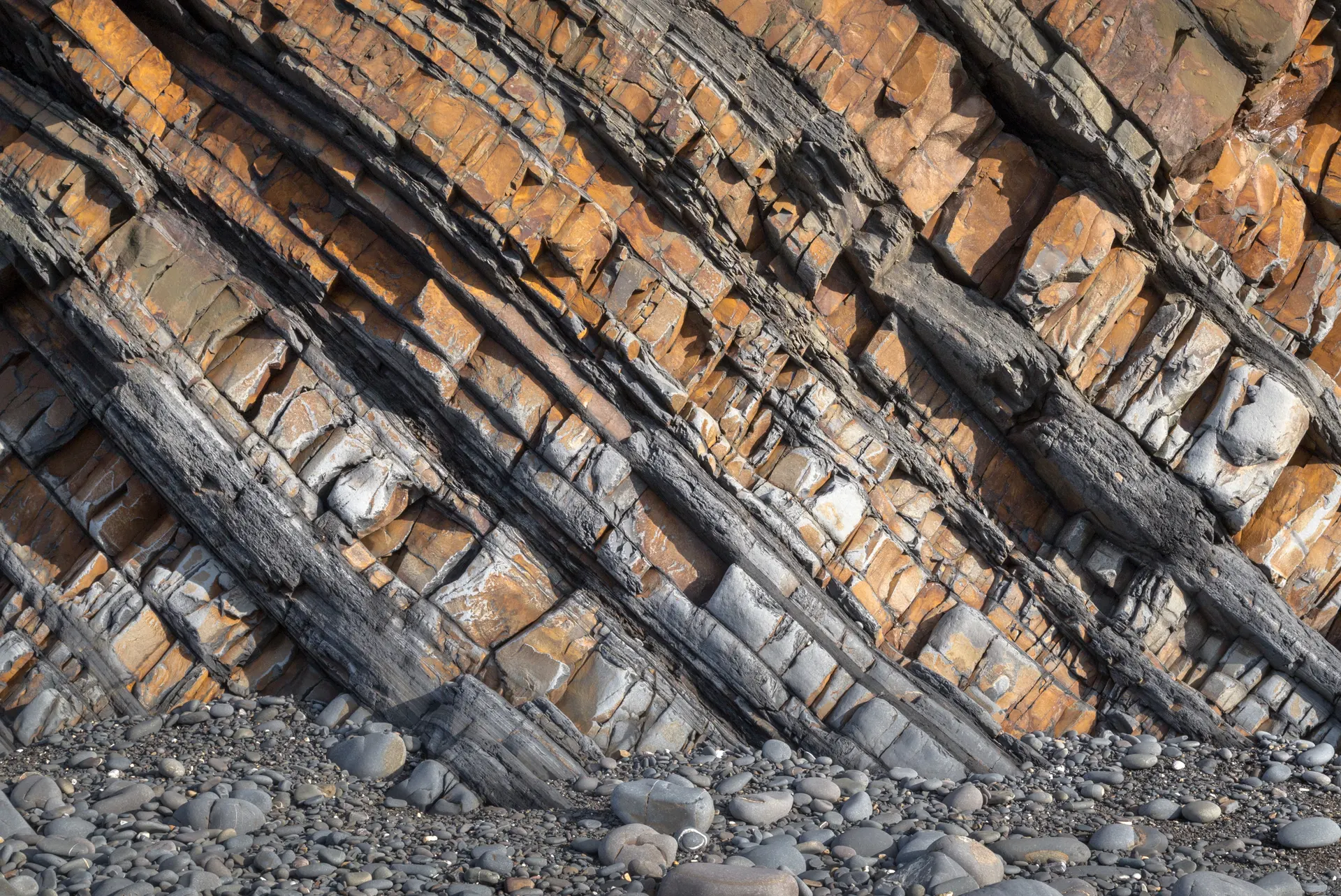
At events like AME Roundup 2026, the buzz around technological advancement in our industry is impossible to miss. It’s at the heart of so many great discussions. ‘What’s new in Leapfrog?’ is a question I often get asked, and I love to answer it.
I remember the first time I saw Leapfrog. Much like love-at-first-sight, I connected with it immediately, and, while this may not be true for everyone, it was a pivotal moment for me as a geologist. As a field assistant in a remote Yukon core shack, I was struggling to understand the bigger picture of what we were working on. It was difficult to see the forest (geological context) for the trees (stacks of core). Thankfully, the project geologist was aware of our need for context, and he shared the Leapfrog model with us, explaining how he created it and even giving us Viewer files to explore on our own devices.
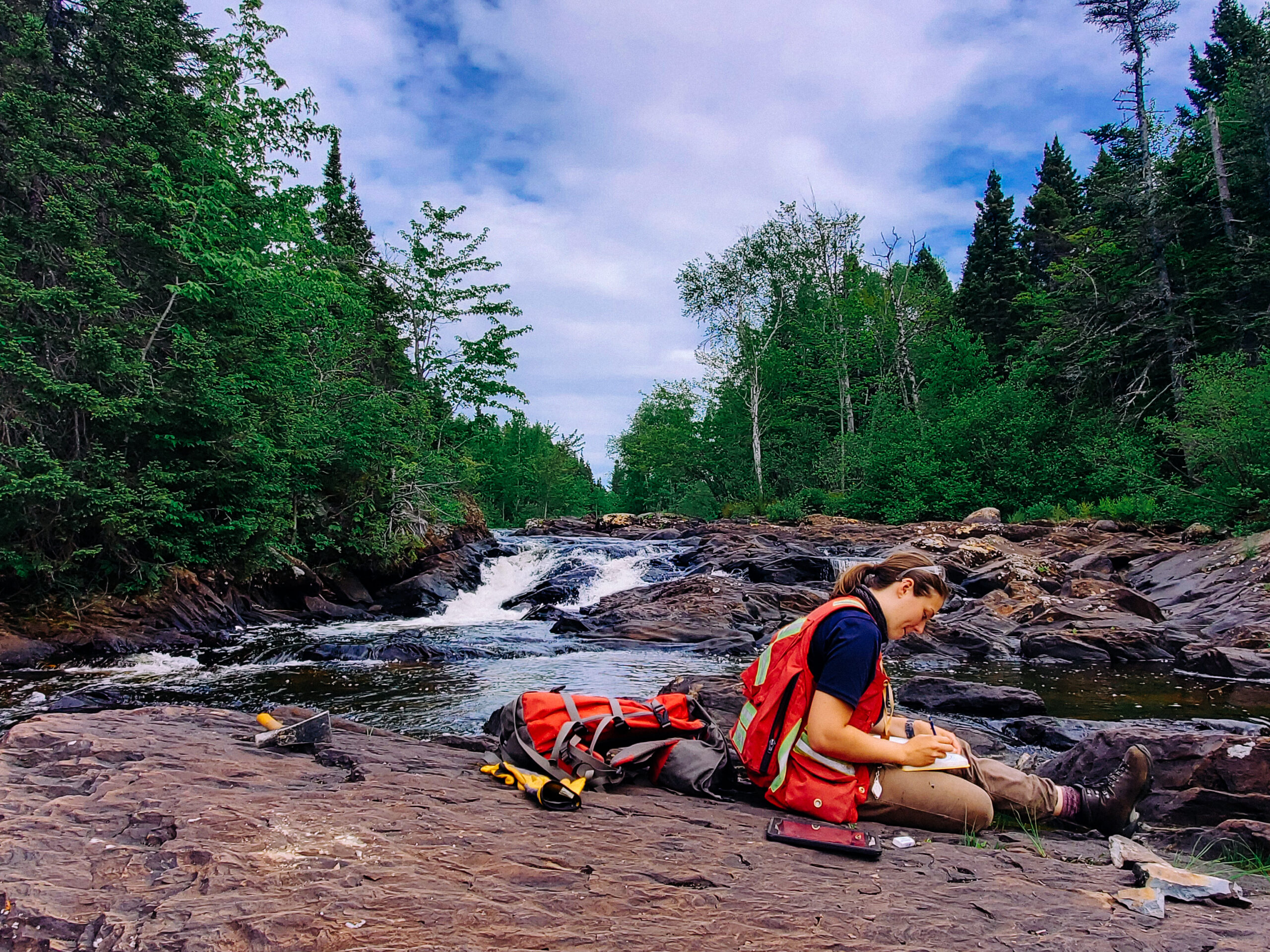
Field notes in action! What you can’t see: the half-eaten granola bar in my pocket and the internal debate about the nature of the folding along this creek.
Seeing our project modelled in 3D, and being able to easily swivel the model around, gave me this ‘aha’ moment. It gave purpose to every simple RQD measurement and careful vein description. I realised I wasn’t just collecting points of data and describing rocks; I was contributing to the interpretation of a complex geological system. That RQD measurement I was collecting would help to define a fault zone, and that vein I was describing would help to domain the mineralisation.
The power of perspective
It is a privilege to now channel this appreciation for 3D geological context into my daily job. I enjoy nerding out about ongoing innovation, especially since new Leapfrog features are influenced by feedback from geologists. In a previous role, I worked with a customer struggling to apply structural trends to their specific intrusion surfaces. That project was the first thing I thought of when last year’s structural geology enhancements were released. The update delivered the transparency and control we had needed when applying trends to a model, making it far easier to achieve geologically realistic results. Seeing that direct problem to solution evolution is what makes this work so rewarding.

Curious about what else is new in 2025.3? In this overview video, Rachel walks you through the key updates in the latest version of Leapfrog.
Leapfrog‘s integration with Imago brings your digital core shack into your 3D modelling environment. While I appreciated my time as self-proclaimed ‘core paparazzi’ photographing core boxes, labelling, cropping, and organising photos, I’m thrilled to see modern tools automating these time-consuming tasks, allowing geologists to focus on the core itself. Now, by integrating Leapfrog and Imago, you can use these images immediately by bringing core photos into Leapfrog, adjacent to 3D models or 2D striplogs, for a side-by-side comparison of your core and your recorded geological and analytical data for validation and interpretation.
Amplifying Leapfrog modelling
A big advantage of getting to work more closely with the product team is getting to see the early evolution of our other products, like our new geoscientific platform, Evo. Seequent Evo connects Leapfrog to a powerful ecosystem of cloud-hosted tools and applications, amplifying its functionality beyond desktop geological modelling.
Evo is a geoscience data and compute platform that enables integrated workflows and collaboration across Seequent and third-party products. It powers geoscience solutions for data processing, modelling, and insight generation. This drives innovation and enables users to continuously improve their workflows and business with open APIs and data.
This addresses a major industry pain point. The recent Geoprofessionals Data Management Report found that nearly a third of geoprofessionals still lack the information required for data-driven decisions, often due to poor-quality historical data and the absence of a single source of truth.
But what does Seequent Evo mean for you, the Leapfrogger? It comes down to more power, better collaboration, and unprecedented access to innovation and customisation.
First, it brings the raw computational power needed for more advanced geostatistical analyses, such as conditional simulation.
Second, it enables real-time collaboration. This eliminates the guesswork of “is this the latest file?” by providing a complete version history and ensures you find what you need with powerful spatial search capabilities. Tools like BlockSync also move your enormous block models to the cloud, enabling parallel workflows. This means the resource team can update one portion of the model while the grade control team updates another, all without creating conflicting copies and ensuring everyone works with the most up-to-date information.
Finally, Evo will give you the tools to compose tailored workflows to extend the Leapfrog experience. With new open-source SDK and AI-supported custom-scripting and automation, you can now build your own applications and automate unique processes.
This access to innovation comes in many forms; one being your powerful new teammate, Driver, an Evo cloud application with automated trend identification capabilities. Driver objectively identifies spatial trends, domain clusters, and structural continuity, rapidly, that may otherwise be overlooked.
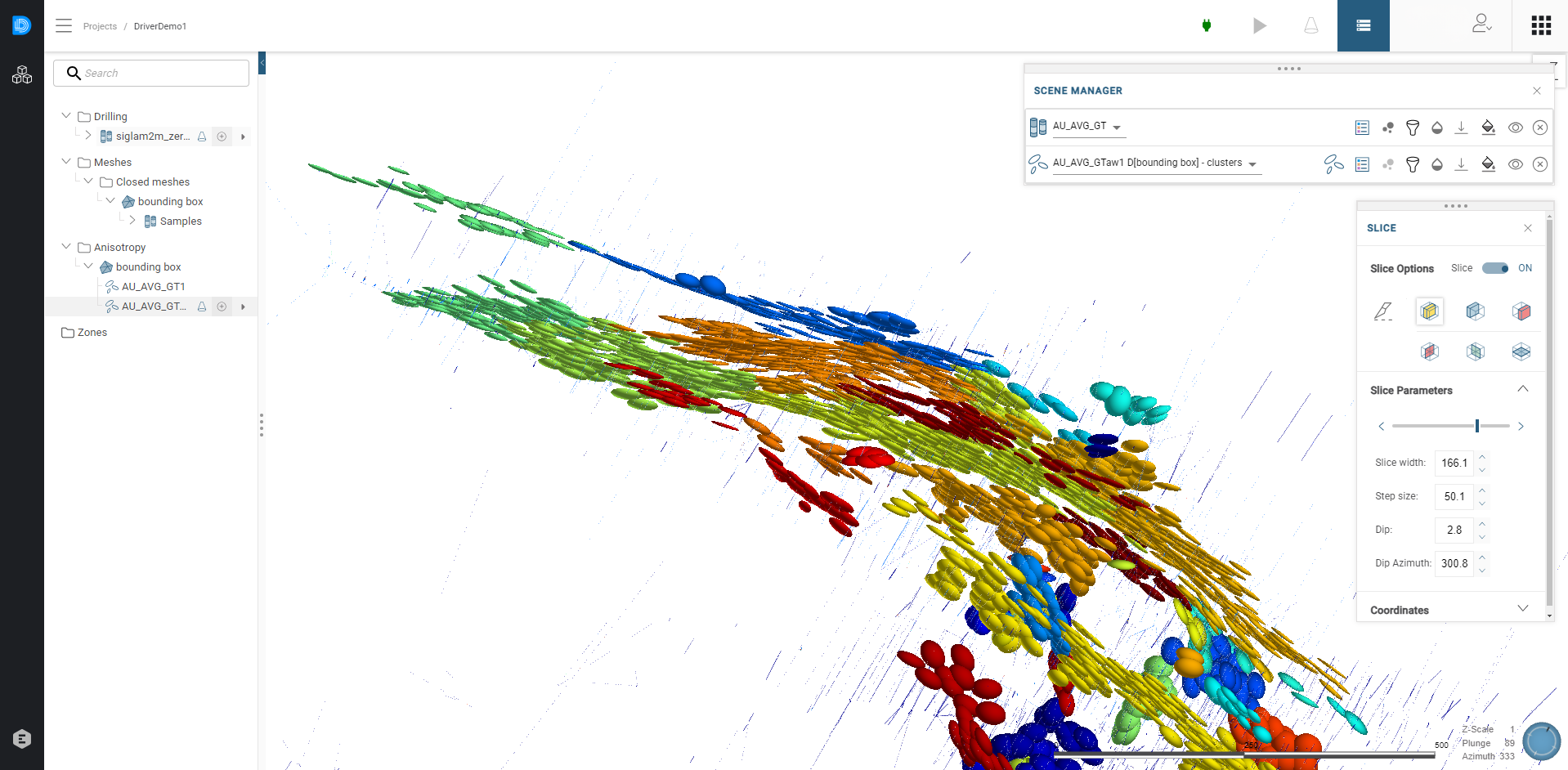
Here’s an image of Driver in action: Driver has taken scattered points and identified clear patterns in anisotropy, including clusters, which a geologist could use to help identify individual veins.
It is really, really cool, and, even better, it links directly back into your 3D environment. The outputs from Driver can be sent via the Evo cloud directly into your Leapfrog project and used as an input to create a structural trend, influencing your geological and numerical models. These outputs are equipped with metadata, so that you may easily filter for data that is higher confidence or better suited to your model. Trend modelling, a task that once took days manually, is now compressed into minutes or an afternoon!
Leaping forward
Seequent is as committed as ever to the core Leapfrog experience with a development pipeline packed with enhancements influenced by Leapfrogger feedback and a clear understanding of the challenges geologists face today. At the same time, the Leapfrog experience is being augmented. The ‘aha’ moment I had in the Yukon core shack, the power of perspective, is being extended across the mine lifecycle, connecting you with cross-disciplinary data and new insights from innovative applications available through the cloud.
Seequent proudly remains a company of geoscientists building tools for geoscientists. The technology is advancing, but our primary purpose remains: to solve the problems you face in the field.

One of my favourite weekly traditions in the Vancouver office is ‘Rock Wednesday,’ where we bring in cool rocks and chat about geology as a group.
We will be at PDAC 2026 (March 1-4, booth 829) showcasing Leapfrog, and I’d love to connect with you there. Feel free to ask our team for a sneak peek at new beta features or join the drillhole planning competition I’ll be hosting from 2-3 pm daily.
I will also be speaking at our booth on Tuesday, March 3rd at 11 am:
FrogTalk: Innovation for the modern modelling geologist
This talk explores the next leap in geological modelling, where powerful desktop upgrades and new cloud-based tools work together to offer unprecedented performance and insight for the modern geologist.
Happy modelling!
Stephanie Schweighardt, P.Geo.