



By Fiona Jeffreys
South Africa’s Council for Geoscience (CGS) leverages digital tech to advance mining innovation, data access, and workforce talent.
In a country rich with mineral resources, CGS’s impact is far-reaching. The leading African research institute draws on its premier facilities and deep expertise to advance the development of national mineral assets, such as gold, platinum, and diamonds.
Established under the Geoscience Act, CGS plays a vital role in supporting mining and exploration by advising the State and providing high-quality geoscience data and information, among other key functions.
With CGS’s adoption of industry-standard Seequent software to consolidate diverse data sets, reliable subsurface information is now more easily accessible for mining companies – to both support industry growth and reduce investment risks.
This strategic shift has positioned the council as a global leader in the sector and set a new benchmark for data transparency and technical excellence in Africa.
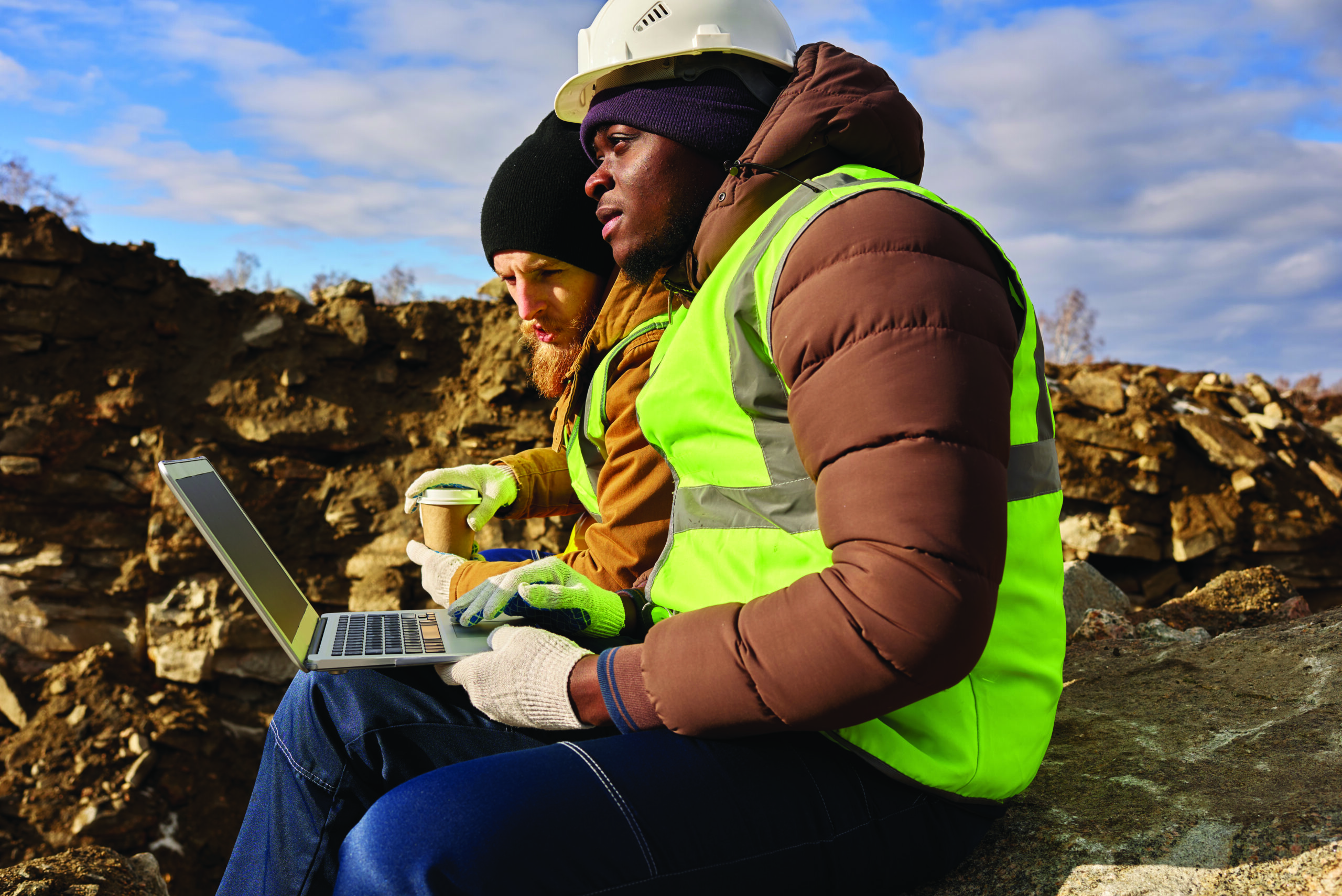
The Council for Geoscience (CGS) leverages digital technology to drive mining innovation, enhance data accessibility, and develop workforce talent in South Africa
(Source: Shutterstock)
Despite its mineral wealth, exploration investment in South Africa has declined in recent years due to deeper mining operations, higher costs, and limited access to geoscience data from legacy mines and past exploration projects.
The nation’s share of global exploration spend has dropped significantly, from roughly 5% in the early 2000s to approximately 1% today. With platinum-group metals, gold and diamonds the leading sources of exploration expenditure.
However, gold output declined due to higher costs from deeper mining, while diamond exploration dropped as reserves shrank and synthetic diamonds competed. The industry was also impacted by a global shift to mining shallower deposits elsewhere.
Still, with the growing international demand for critical minerals – which remain under-explored in South Africa – there is potential for renewed exploration activities within the country.
Abdul Kenan, Specialist Scientist, Mining and Energy at CGS, said, ‘Our opportunity lies in helping to reshape the country’s mining landscape. If data becomes easier to access, it encourages exploration companies to engage and invest to help drive growth and innovation in the sector.’
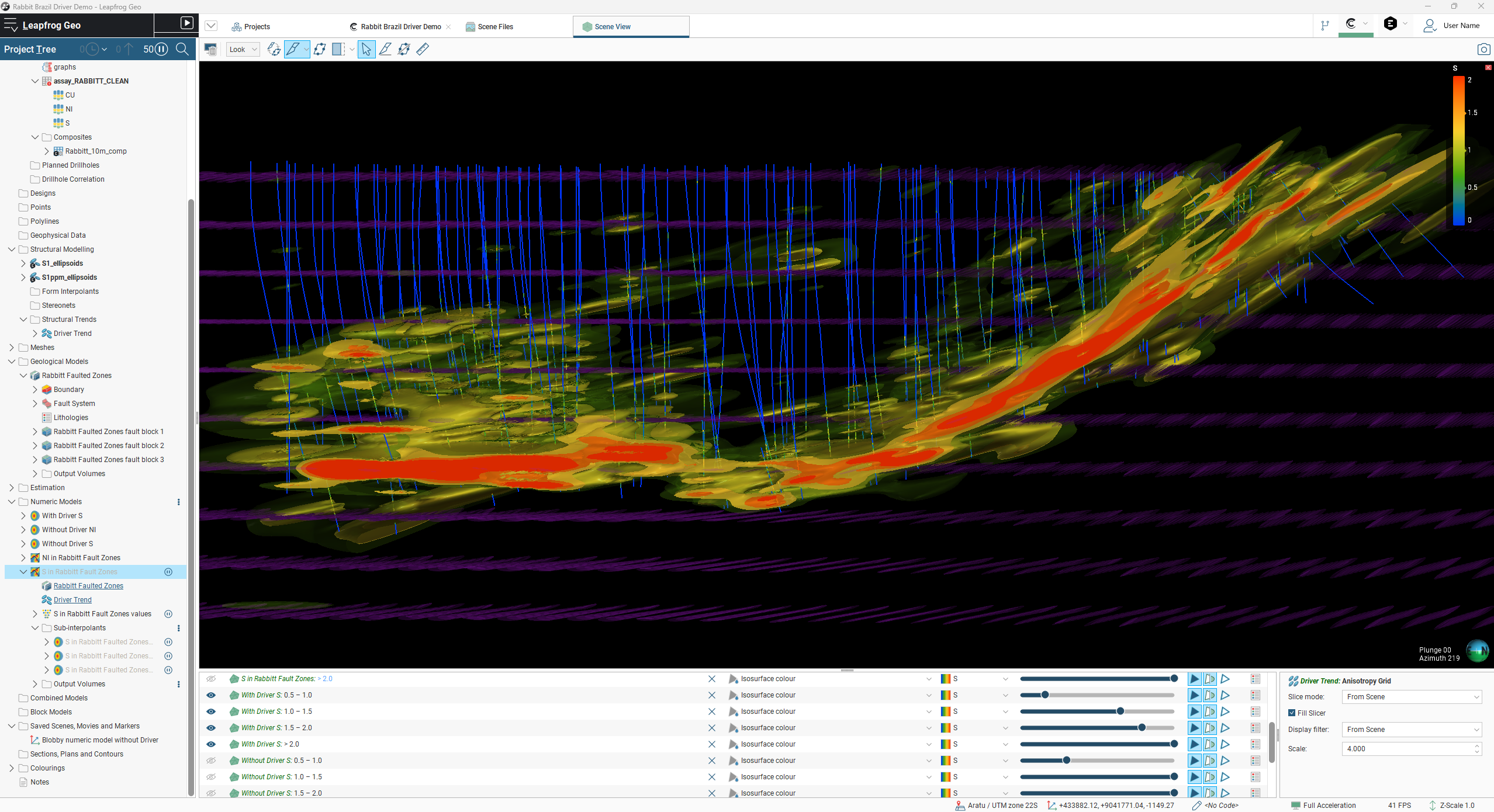
CGS uses Seequent’s Leapfrog Geo for rapid 3D geological modelling and Leapfrog Edge for mineral resource estimation.
(Source: Seequent)
Bringing historic data into the modern world
Recognising the need for modern, integrated solutions, CGS embarked on their digital transformation by adopting Seequent’s suite of mining solutions; Oasis montaj, Leapfrog Geo and Leapfrog Edge.
Oasis montaj helps process, map, QC, and interpret exploration data. Leapfrog Geo provides fast 3D geological modelling with easy workflows and quick data processing, and Leapfrog Edge turns resource estimation data into a visual, connected workflow.
Initially, CGS used only Oasis montaj – primarily for geophysical data processing and analysis. The platform acts as a central ecosystem that can integrate various data formats from other software, streamlining geophysical survey workflows.
‘For example, a mining team can use Oasis montaj to clean, quality check, and manage survey data throughout a gold exploration project, even when specialised processing might be done with other platforms,’ said Emmanuel Chirenje, Geophysicist at CGS.
‘We can combine diverse datasets, including decades-old borehole information, geological maps, and geophysical structural lineaments to construct robust models for future exploration,’ he said.
Chirenje emphasised the speed and effectiveness of Oasis montaj, ‘For 3D inversion modelling, depending on the size, I can produce an unconstrained model in less than five minutes.’
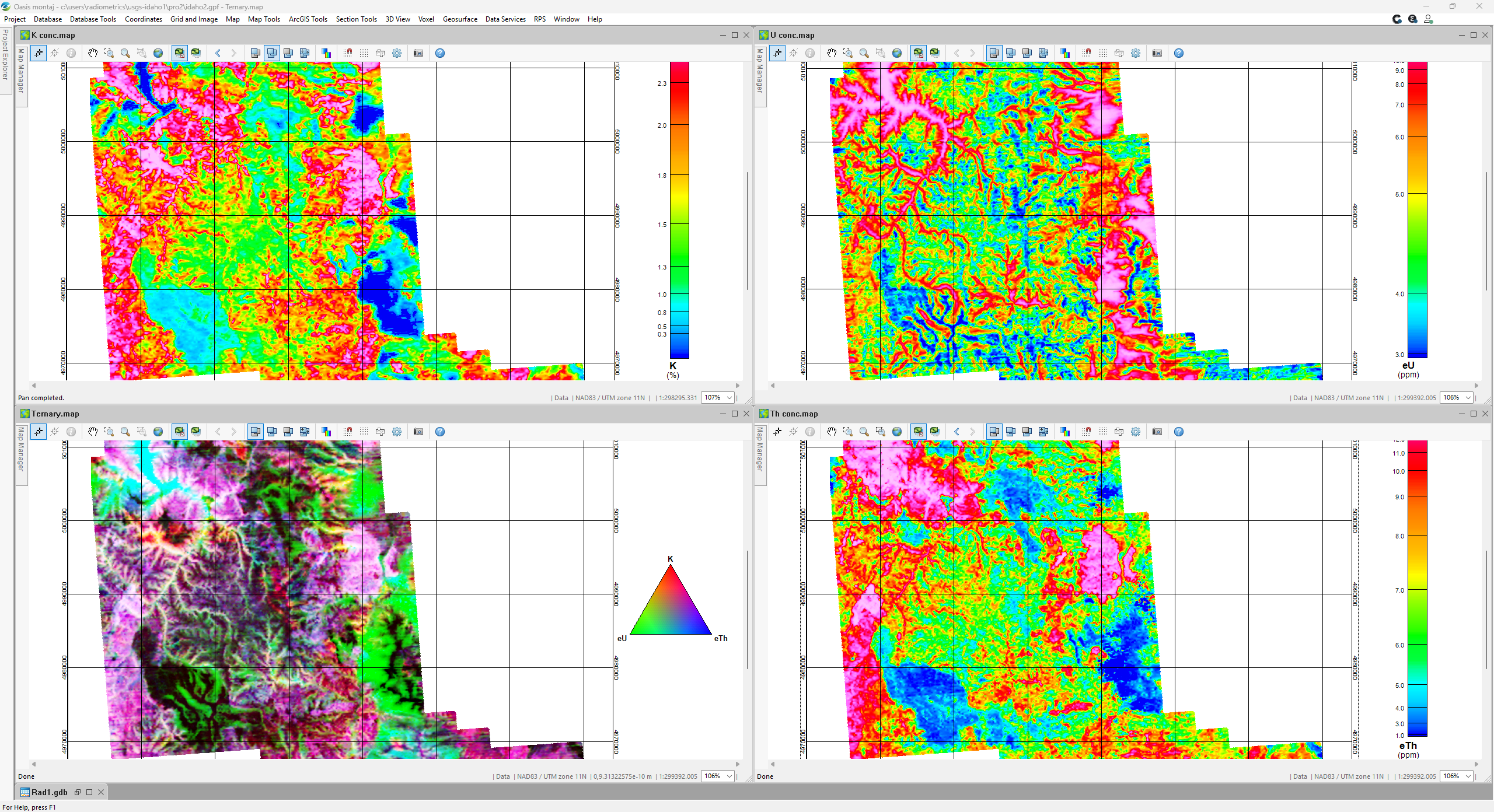
Seequent’s Oasis montaj rapidly processes and interprets complex geophysical mineral exploration data, as shown in this radiometric survey map.
(Source: Seequent)
Improving exploration potential with integrated workflows
As project demands increased in scale and complexity, the CGS team expanded their toolkit to include Leapfrog Geo and Leapfrog Edge, alongside Oasis montaj.
The council has seen clear advantages since implementing this workflow, including quicker modelling, better data integration, and reduced project timeframes.
‘Leapfrog really did exactly what it promised,’ said Kenan, highlighting its ability to dynamically add and update data, facilitate team collaboration and validate models in real time.
‘With Leapfrog Geo we can quickly build 3D geological models using historic data, cutting modelling time by at least half compared to previous software. This supports accurate regional and deposit-scale results, enables dynamic updates when new data arrives, and reduces redundant tasks,’ he said.
These 3D models can be used in Leapfrog Edge to dynamically update mineral resource estimates and better understand grade distributions within projects. Additionally, Seequent’s data and team connecting platform Evo provides conditional simulation tools, enabling resource geologists to more effectively analyse deposits and grade distribution.
‘For instance—let’s use a gold mining project as an example again—Leapfrog enables geologists to model how gold is distributed throughout the site. Colleagues can quickly verify and validate the results in real time, therefore making both the modelling process and validation much more efficient,’ said Kenan.
CGS’s Northern Cape initiatives showcased the impact of this technology: Leapfrog allowed precise resource estimation for iron and manganese, using data from newly drilled boreholes and integrating underused historical information for lead, zinc, and copper exploration.
While the council’s involvement in the Eskom nuclear power station surveys highlighted the wider societal advantages of these digital tools with Oasis montaj enabling aeromagnetic data processing for seismic hazard assessments.
- 5% → 1% – Global exploration share
- <5 minutes – 3D inversion models
- 50% faster – Geological modelling time
Solutions to shape the future of mining in South Africa
CGS’s leadership and influence in South Africa’s geoscience sector extends beyond technology adoption; it is actively shaping the future of mining through talent development and industry collaboration.
Many CGS employees have advanced from interns to experts, some earning PhDs, thanks to hands-on experience with Seequent’s solutions. Seequent’s ongoing technical workshops and dedicated support ensure that the CGS team can continuously upskill and maximise the benefits of these powerful tools.
Minenhle Buthelezi, a CGS Scientist, talked about the ease of transitioning to Seequent technologies: ‘We used Oasis montaj during our academic training, so adopting it at the Council for Geoscience was seamless for me. While Seequent’s training and support made it easier to overcome project challenges and help find alternative solutions.’
Helping to build tomorrow’s mining talent pipeline
The council’s outreach activities make use of Seequent’s Visible Geology, a free, one-of-a-kind, online educational tool designed to develop 3D thinking and visualisation skills in early geoscience students, while modernising classroom teaching.
Visible Geology aims to counterpoise the global decline in earth science enrolment in schools, by inspiring and educating future geoscientists. And it is helping to develop the expertise needed for South Africa’s evolving mining industry.
Buthelezi described how her career choice was sparked by, ‘a curiosity about Earth’s systems’ and, ‘the diverse opportunities available within geoscience including geology, geophysics – even astrogeology.’
She encouraged young people, especially women, ‘to explore geoscience’s broad opportunities,’ and the importance of, ‘lifelong learning, embracing new technologies, and building connections within the community to enrich their careers and knowledge.’
CGS also contributes to the development of junior exploration companies, fostering a dynamic environment for resource discovery by administering initiatives like the Junior Mining Exploration Fund.
As Kenan said, ‘Solving challenges for junior exploration companies is key to advancing exploration and ultimately shaping a country’s mining future.’